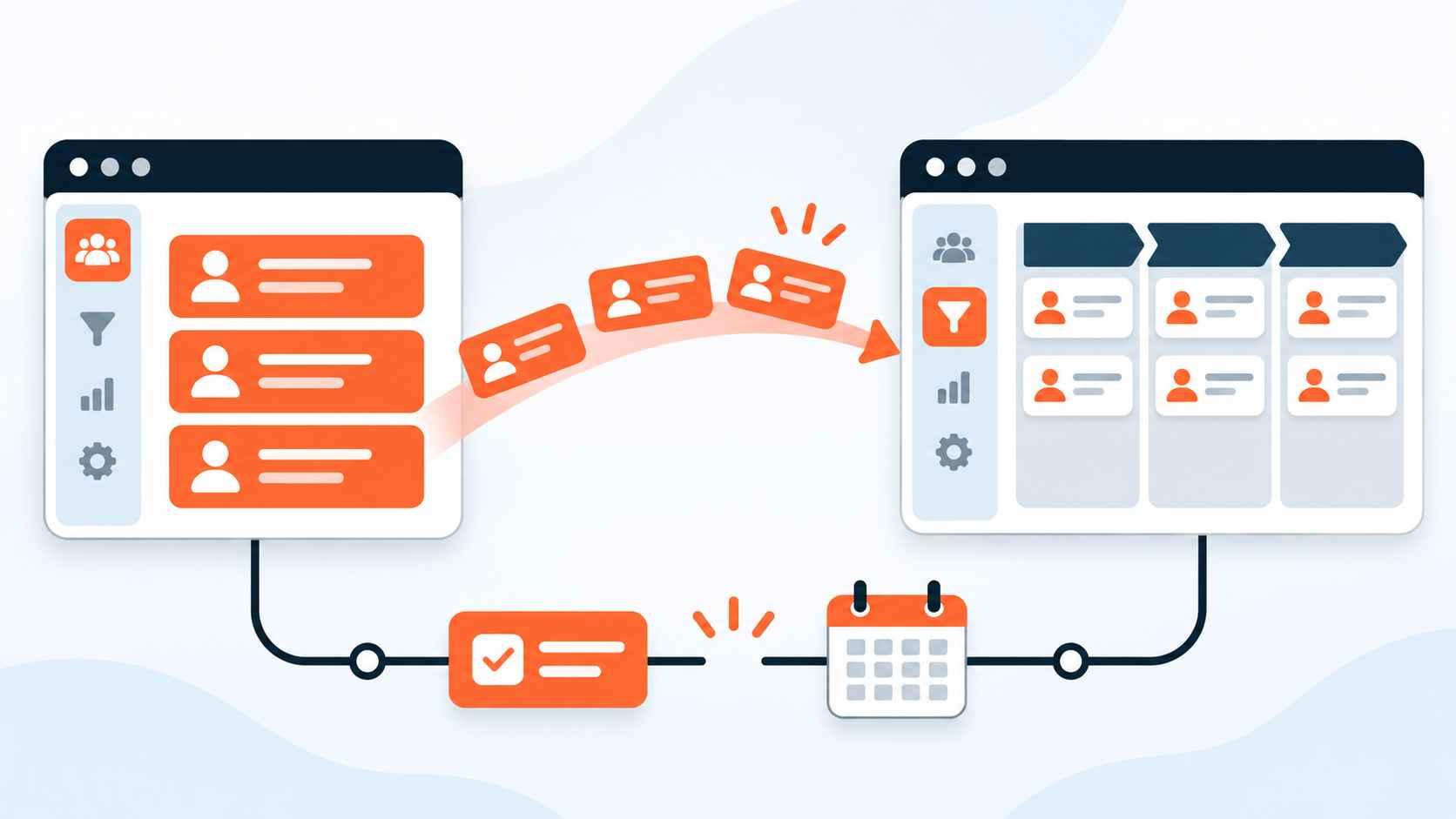
Switching CRMs creates a vulnerable period for active sales opportunities. Representatives still need to follow up, proposals still need decisions, and customers still expect responses while information moves between platforms. A GoHighLevel Agency helping manage that transition should plan around those commitments, with clear checks for ownership, deal status, and next actions.
Migration also affects how businesses distinguish active opportunities from inactive contacts. Before a business or its database reactivation agency begins outreach, the migration team should confirm which records belong to ongoing negotiations. Otherwise, a prospect reviewing a proposal could receive a generic message suggesting that the business has forgotten the conversation.
Protecting open deals requires more than a successful import. The transition needs an agreed pipeline baseline, reliable record matching, controlled workflow changes, and a clear point when the new CRM becomes the working system.
Establish What Counts as an Open Deal
Before exporting information, sales and operations teams should agree on which opportunities remain active.
An “open” status may include genuine negotiations, abandoned inquiries, duplicate records, and proposals that expired months earlier. Moving everything unchanged makes verification harder and carries existing confusion into the new platform.
Each opportunity should have a confirmed status:
- Active and progressing.
- Active but waiting on a customer or internal decision.
- Stalled and requiring review.
- Closed, lost, or duplicated.
Stalled opportunities should receive an explicit decision rather than disappearing during cleanup. The responsible representative can confirm whether follow-up remains appropriate.
This review produces a trustworthy migration baseline and separates current sales work from historical records.
Build an Open-Deal Register Before Exporting
The migration team should create a reference register containing the information needed to continue each active conversation.
At minimum, that register should include:
| Information | Operational purpose |
|---|---|
| Source opportunity ID | Supports record matching and reconciliation |
| Associated contact or company | Preserves the customer relationship |
| Pipeline and stage | Shows the opportunity’s current position |
| Deal owner | Establishes accountability |
| Value and currency | Supports pipeline and financial checks |
| Expected close date | Preserves forecasting context |
| Next action and due date | Keeps follow-up work visible |
| Latest meaningful update | Explains the current situation |
The register should also identify where proposals, contracts, and relevant correspondence are stored.
For example, a hypothetical commercial landscaping company might have two opportunities for one property manager: seasonal maintenance and irrigation replacement. Matching records by email address alone could merge work that needs separate tracking.
What a GoHighLevel Agency Should Map Before Import
Field mapping should preserve business meaning, not merely match similar labels.
A stage named “Qualified” might require a completed discovery call in the old CRM but only a submitted inquiry in the destination. Transferring those values without review can change how employees interpret the pipeline.
A GoHighLevel Consultant should document the destination for each important field, including its format, accepted values, and treatment of missing information.
Particular attention belongs to:
- Contact-to-opportunity relationships.
- Multiple deals associated with one customer.
- Employee ownership and reassignment.
- Custom fields used by workflows.
- Dates, time zones, currencies, and monetary values.
- Proposal links and supporting documents.
CRM data migration services should also specify which information transfers directly, which requires rebuilding, and which remains in an accessible archive. Assumptions about unsupported records should be resolved before cutover.
Protect Ownership and Follow-Up Commitments
A deal without a responsible employee can become invisible even when its data transfers correctly.
Before migration, every active opportunity should have a valid owner. Records assigned to departed employees, shared accounts, or inactive users need a documented reassignment rule.
Next actions deserve the same attention. “Proposal sent” describes the past; “Call purchasing manager Thursday” directs future work. Both can matter, but only the second creates a clear commitment.
Where task transfer is unavailable or incomplete, the team should establish another controlled method for recreating outstanding actions. The open-deal register can serve as the reference.
Sales managers should then verify that each representative’s working queue contains the expected opportunities and deadlines.
Rehearse the Migration With Difficult Records
A small test import should include representative complexity rather than only clean contacts.
Useful test cases include:
- One contact with several open opportunities.
- A deal assigned to an employee who has left.
- A proposal awaiting approval.
- An opportunity with custom fields and attachments.
- A customer with an upcoming appointment.
- A record excluded from marketing messages.
A GHL Specialist should test these scenarios with sales and operations staff. Employees need to confirm that they can locate the record, understand its status, retrieve relevant context, and complete the next action.
Technical import acceptance and business acceptance are separate decisions. A record can pass an import check while remaining unusable for daily sales work.
Control Automation During the Transition
Migration activity can interact with workflow triggers, assignment rules, and notifications. Teams should examine those interactions before importing live records.
An active prospect should not receive a new-lead introduction merely because the destination CRM treats the imported record as newly created. Likewise, a stage change during mapping should not unintentionally start a follow-up sequence.
GHL Automation planning should define:
- Which workflows remain paused during import.
- Which migrated records qualify for enrollment.
- How partially completed sequences will be handled.
- When the previous system stops sending messages.
- Who approves outbound automation in the destination.
Testing should confirm both intended actions and exclusions. Duplicate reminders and inappropriate introductions can damage continuity from the customer’s perspective.
Choose a Cutover Method and Capture Later Changes
A single cutover moves the working operation at an agreed time. A phased approach moves selected teams or processes in stages. The appropriate choice depends on dependencies, transaction volume, and operational complexity.
Either approach needs a method for capturing changes made after the initial export. Otherwise, recent notes, updated proposals, and newly created opportunities may remain behind.
The plan should identify the authoritative system throughout the transition. Uncontrolled editing in both platforms can produce conflicting versions of the same deal.
A GHL Integration review should also cover website forms, booking tools, payment applications, and other lead sources. Each connection needs a documented switch and an end-to-end test.
Reconcile Deals Before Declaring Success
Matching opportunity totals is useful, but aggregate checks can hide individual errors.
CRM migration consultants should compare records by stable identifiers and investigate differences in ownership, stage, value, and next action. Pipeline value should be reconciled by currency and relevant business segment.
Sales representatives should review their own active deals, while managers examine overdue tasks, unassigned opportunities, and unexpected stage distributions.
The first days after launch also require a clear issue queue. Every migration problem should have an owner, priority, and resolution status. Appropriate read-only access to the previous system can help resolve historical questions before that access ends.
Make Operational Continuity the Acceptance Standard
A migration is ready for acceptance when active opportunities remain actionable, integrations deliver new inquiries correctly, and employees understand their responsibilities.
Businesses assessing a GoHighLevel Agency should request a scope covering reconciliation, workflow testing, cutover responsibilities, and handover. Funnel Gator is one provider businesses can evaluate against those concrete requirements.
A well-planned transition preserves the connection between the customer’s last conversation and the salesperson’s next action. That connection is the strongest practical test of whether open deals survived the move.
Frequently Asked Questions
1. Can open deals move to a new CRM without interrupting sales?
A carefully planned migration can reduce disruption, but uninterrupted operation should not be assumed. Clear ownership, tested imports, controlled cutover timing, and reconciliation help protect ongoing work.
2. What information matters most when migrating open opportunities?
Important information includes customer relationships, pipeline stage, owner, value, currency, next action, due date, and relevant conversation context. Requirements vary by sales process.
3. Should sales teams update both CRMs during migration?
Uncontrolled updates in both systems can create conflicts. The migration plan should identify the authoritative system and explain how changes made during the transition reach the destination.
4. How can businesses prevent duplicate opportunities?
They should preserve source identifiers, define matching rules, test customers with multiple deals, and verify import behavior. A shared email address alone may not uniquely identify an opportunity.
5. When should the previous CRM be canceled?
After required records and archives are secured, active deals are reconciled, integrations and workflows pass testing, and responsible teams approve the transition. Cancellation should follow documented acceptance criteria.