


Custom Knives: A Complete Guide to Quality, Craftsmanship, and Everyday Performance
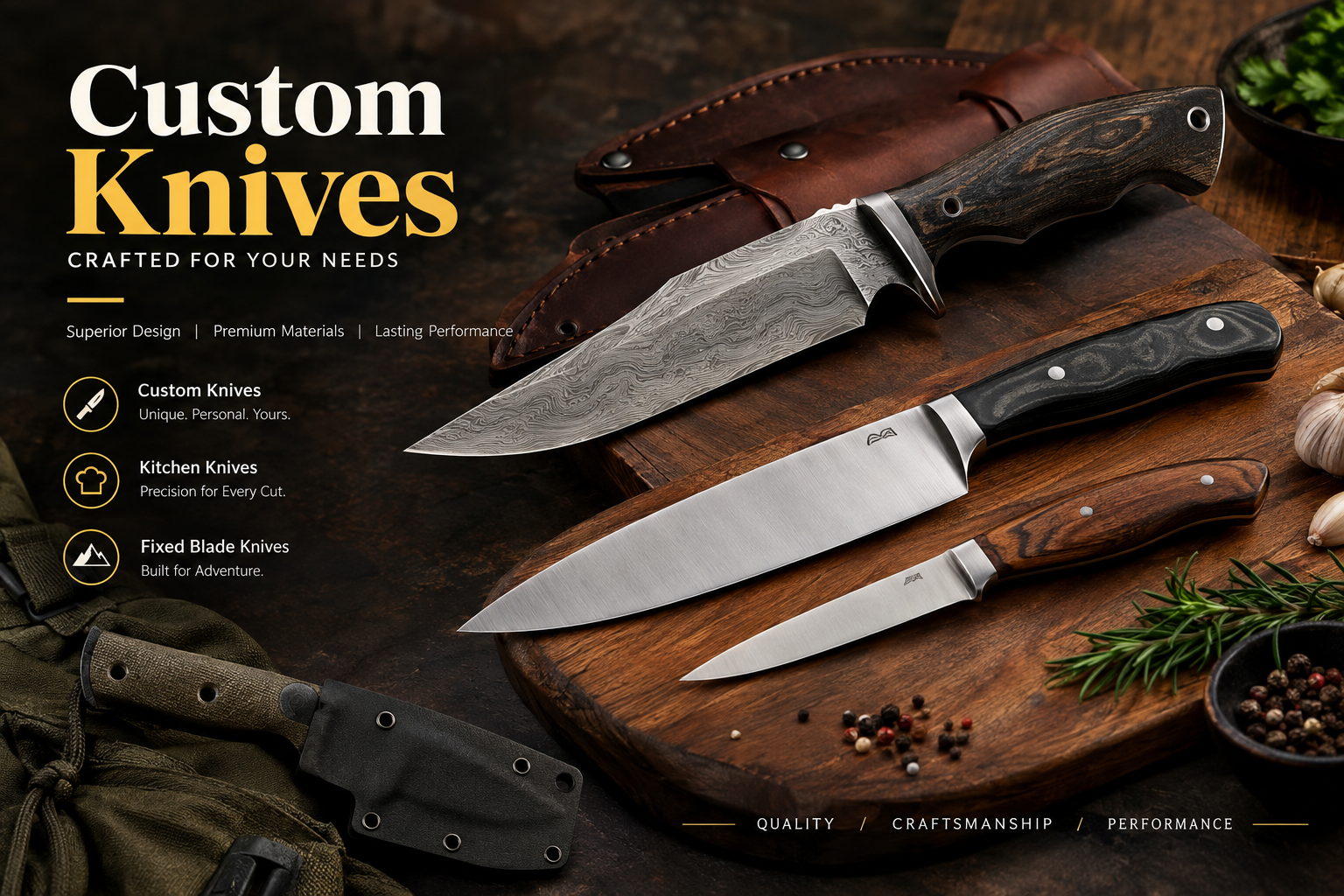
When it comes to choosing a knife, quality, functionality, and craftsmanship all play an important role. While mass-produced knives are widely available, many knife enthusiasts prefer custom knives because they offer a more personalized approach to design, materials, performance, and appearance. A well-made custom knife is not simply a cutting tool; it can also represent craftsmanship, individual style, and attention to detail.
Whether you are an outdoor enthusiast, collector, professional chef, or someone who appreciates finely crafted tools, understanding what makes a quality knife valuable can help you make a more informed choice. From blade geometry and steel selection to handle materials and overall balance, every detail can influence how a knife performs.
What Are Custom Knives?
Custom knives are knives that are designed or crafted with a greater level of individual attention than standard factory-produced models. Depending on the maker and design, customization can involve the blade shape, steel type, handle material, dimensions, finish, engraving, sheath, or other details.
One of the biggest advantages of custom knives is the opportunity to choose features according to personal preferences. Instead of purchasing a knife based solely on an existing design, customers may have the ability to select characteristics that match their intended use and personal style.
For collectors, custom-made pieces can provide a distinctive appearance and craftsmanship that is difficult to find in ordinary production knives. For people who use knives regularly, customization can also focus on practical considerations such as grip, weight, blade profile, and overall ergonomics.
Why Choose Custom Knives?
There are several reasons why people choose custom knives over conventional options. One important factor is individuality. A custom knife can be created with specific characteristics that reflect the owner's preferences.
Another consideration is craftsmanship. Handmade or individually finished knives often receive considerable attention during the shaping, grinding, finishing, and assembly processes. The result can be a knife with a distinctive character and appearance.
Customization can also allow users to prioritize function. Someone who spends considerable time outdoors may want a different blade profile and handle design from someone looking for a knife primarily for collection purposes.
The right combination of materials and design can also contribute to durability and comfortable handling. For this reason, it is useful to consider how and where a knife will be used before selecting its specifications.
Choosing the Right Blade Steel
Blade steel is one of the most important components of any quality knife. Different steels have different characteristics, including hardness, toughness, corrosion resistance, and edge retention.
A harder steel may provide excellent edge retention, while another steel may offer greater toughness and resistance to impact. Stainless steels are often selected when corrosion resistance is particularly important, whereas other steels may be chosen for their combination of sharpening ability and performance.
When selecting custom knives, understanding blade steel can help you choose a design that fits your intended application. A knife intended for outdoor use may require different properties from a knife designed for detailed cutting or display.
It is also important to remember that no steel is perfect for every situation. The best choice depends on how the knife will be used, how frequently it will be maintained, and which characteristics are most important to the owner.
Blade Design and Geometry
Blade geometry has a major effect on cutting performance. The thickness of the blade, grind style, edge angle, and blade profile can all influence how a knife behaves during use.
For example, a thinner edge may provide excellent cutting performance, while a thicker blade can offer additional strength for demanding applications. Different blade shapes are also designed for different tasks.
When ordering or selecting custom knives, blade geometry should therefore be considered alongside appearance. A visually attractive knife may not provide the desired performance if its blade design does not match its intended purpose.
A skilled maker can help determine an appropriate combination of blade shape and geometry based on the user's requirements.
The Importance of a Comfortable Handle
A knife handle is more than a decorative feature. It affects comfort, control, balance, and overall handling. A properly designed handle should feel secure in the hand and provide comfortable control during use.
Custom designs can offer a wide range of handle materials. These may include natural materials, wood, synthetic materials, composites, or various other options depending on the maker.
The shape and dimensions of the handle are equally important. A handle that feels comfortable to one person may not feel the same to another. This is one reason customization can be particularly useful.
For people who use knives regularly, ergonomics should be considered just as carefully as blade material and appearance.
Custom Knives for Outdoor and Everyday Use
Outdoor activities often require reliable and practical equipment. A properly designed knife can be useful for various general outdoor tasks, depending on local laws and the intended application.
For these situations, durability, grip, corrosion resistance, and ease of maintenance can all be important considerations. A practical outdoor knife should be selected based on the tasks it is actually intended to perform.
Some enthusiasts choose custom knives because they can request a particular blade profile, handle material, or sheath configuration that suits their outdoor preferences.
However, responsible ownership and use are essential. Knife users should always understand and follow the laws and regulations that apply to carrying, transporting, and using knives in their location.
Kitchen Knives and Culinary Performance
Knives are also essential tools in the kitchen. Professional chefs and home cooks rely on well-designed blades for preparation tasks such as slicing, chopping, trimming, and other food-related work.
Kitchen knives are generally designed with specific culinary tasks in mind. Chef's knives, utility knives, paring knives, bread knives, and specialty blades each have different characteristics.
When selecting kitchen knives, factors such as blade sharpness, balance, handle comfort, maintenance requirements, and intended food preparation tasks should be considered.
A high-quality kitchen knife should feel comfortable and controlled in the hand. Regular maintenance and appropriate sharpening can also help maintain its performance over time.
For people who enjoy culinary craftsmanship, a custom kitchen knife can combine functional performance with a unique visual design.
Fixed Blade Knives and Their Features
Another important category is fixed blade knives. Unlike folding designs, a fixed blade knife has a blade that remains in an extended position rather than folding into the handle.
This construction can provide a straightforward and robust design. Fixed blade models are commonly associated with outdoor, utility, camping, and collection purposes, although the appropriate use depends on the individual knife and applicable laws.
When choosing fixed blade knives, users should pay attention to blade construction, handle design, sheath quality, overall balance, and intended purpose.
A good sheath is particularly important because it can help protect the blade when the knife is being stored or transported. Users should always transport and store knives responsibly and according to applicable regulations.
Materials Used in Custom Knife Handles
Handle materials can dramatically change the appearance and feel of a knife. Natural wood, stabilized materials, synthetic composites, and other specialty materials are commonly used by knife makers.
Wood handles can provide a classic and natural appearance, while modern composite materials may offer durability and resistance to environmental conditions.
The choice ultimately depends on the owner's priorities. Someone focused on collecting may place greater importance on visual character, while someone using a knife regularly may prioritize grip, durability, and ease of maintenance.
This flexibility is another reason custom knives remain popular among people who want something more personalized than a standard production model.
Craftsmanship and Attention to Detail
The value of a custom knife often extends beyond its raw materials. Craftsmanship plays a major role in the final product.
Blade shaping, grinding, heat treatment, polishing, handle fitting, finishing, and assembly all require careful attention. Small details can influence both appearance and functionality.
A carefully crafted knife can have a distinctive personality that reflects the maker's techniques and design philosophy. This makes custom knives appealing not only as practical tools but also as collectible pieces.
When evaluating a custom knife, it is useful to look beyond appearance. Examine the consistency of the blade finish, handle fit, edge quality, overall balance, and quality of the sheath or accessories.
Maintaining Your Knife
Proper maintenance is essential for preserving knife performance. Even a high-quality knife can become dull or damaged if it is neglected or used incorrectly.
Regular cleaning helps remove moisture, food particles, dirt, and other contaminants. The appropriate cleaning method depends on the materials used in the blade and handle.
Sharpening is another important part of maintenance. Instead of waiting until a blade becomes extremely dull, regular edge maintenance can help keep it performing effectively.
Knives should also be stored in a safe and dry environment. Avoid using a knife for tasks it was not designed for, such as cutting materials that can damage the edge or using excessive force.
Custom Knives as Collectible Pieces
For many enthusiasts, knives are more than everyday tools. They can be collectible objects that demonstrate craftsmanship, design, and material selection.
A custom knife may feature unique blade finishes, specialty handle materials, decorative details, or a design created specifically for an individual customer.
Collectors often appreciate the story behind a knife, including the maker's techniques and the materials used to create it. Limited or individually crafted pieces can also have a distinctive character that makes them interesting additions to a collection.
However, collectors should research authenticity, craftsmanship, materials, and maker reputation before purchasing a high-value piece.
How to Choose the Right Custom Knife
Before purchasing a custom knife, start by identifying its intended purpose. Ask yourself whether the knife is primarily for cooking, outdoor activities, everyday utility, collecting, or display.
Next, consider the blade steel and geometry. Think about the balance between edge retention, toughness, corrosion resistance, and ease of sharpening.
The handle should also receive careful attention. Consider its shape, size, texture, and material. A comfortable handle can make a significant difference during regular use.
Finally, consider the maker's craftsmanship and reputation. Look closely at previous work, construction details, finishing quality, and customer feedback where available.
Final Thoughts
Custom knives combine functionality, craftsmanship, and personal expression. Their appeal comes from the ability to create or select a knife around specific preferences rather than simply choosing from a mass-produced design.
From blade steel and geometry to handle materials and finishing details, every component can influence the final result. Whether you are interested in outdoor equipment, culinary tools, collecting, or everyday utility, understanding these factors can help you select a knife that fits your needs.
At the same time, different knife categories serve different purposes. Kitchen knives are designed around food preparation and culinary performance, while fixed blade knives offer a non-folding construction that is often selected for outdoor, utility, or collection purposes.
Ultimately, the most useful knife is one that matches its intended purpose, is maintained properly, and is used responsibly. With careful selection and attention to craftsmanship, a well-made knife can provide reliable performance while also becoming a distinctive and long-lasting piece.

 English
 Arabic
 French
 Portuguese
 Deutsch
 Turkish
 Dutch
Dutch
 Italiano
 Russian
 Romaian
 Portuguese (Brazil)
 Greek
Greek
