


A Practical Guide to Food Packaging for Growing UK Food Businesses
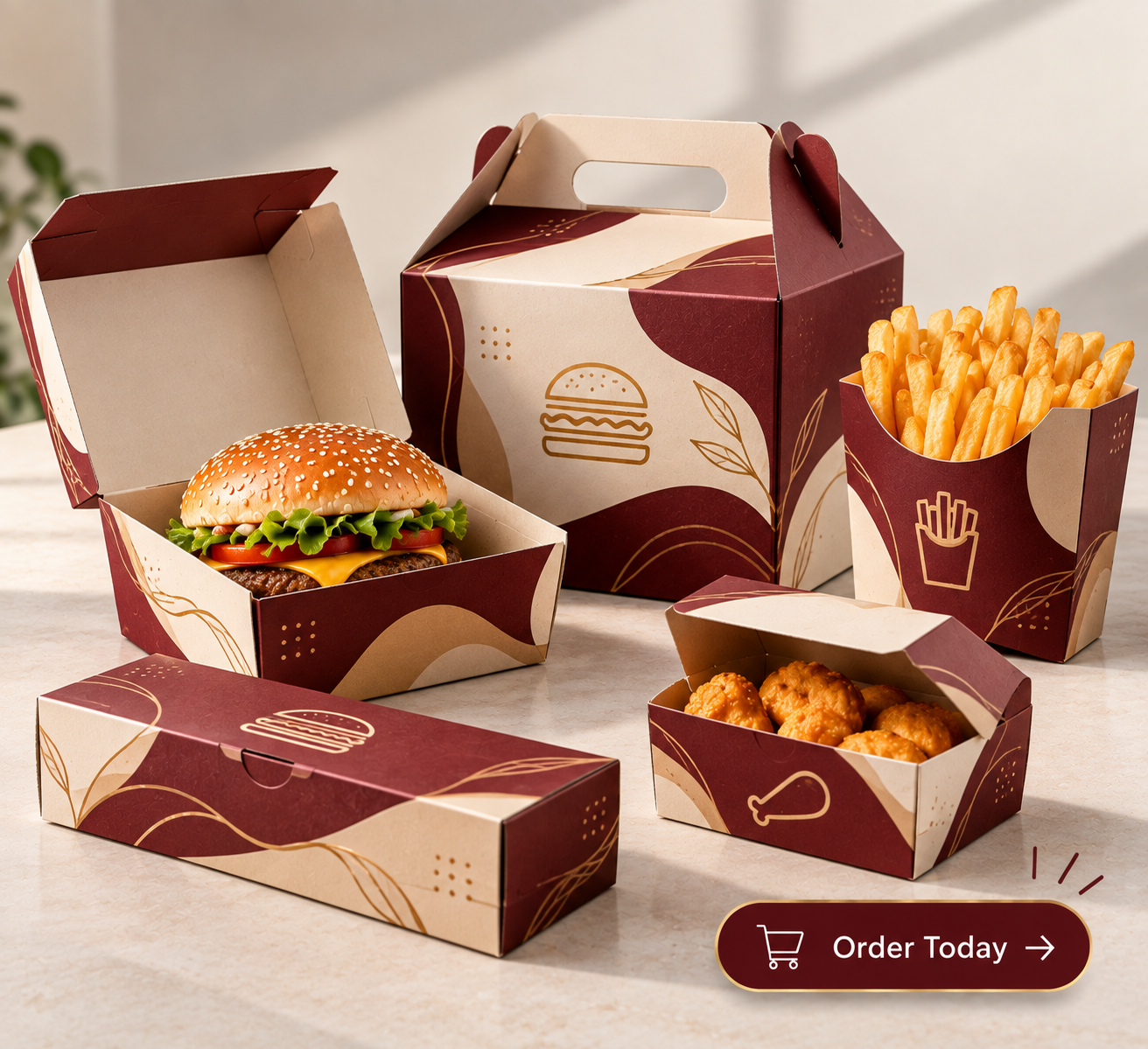
Running a growing food business involves more than preparing great meals. Customers also expect their food to arrive fresh, secure, easy to carry, and well presented. This makes custom food packaging an important part of daily operations for restaurants, cafés, bakeries, takeaways, street food businesses, and delivery brands.
The right packaging can protect food, make orders easier to handle, support portion control, and give customers a more consistent experience. Poor packaging can create the opposite result. Leaks, damaged containers, soggy food, or incorrect packaging sizes can quickly affect customer satisfaction.
For UK food businesses, choosing packaging should therefore be a practical business decision rather than simply a design choice. This guide explains the key factors to consider when selecting food packaging as your business grows.
Why Custom Food Packaging Matters
Food packaging has several jobs to perform at the same time. It should protect the food, make transportation easier, support hygiene, and provide a suitable eating experience.
Different foods also require different packaging. A burger needs a different structure from noodles, chips, cakes, sandwiches, or hot meals. Using one type of container for everything may appear convenient, but it can create problems with temperature, moisture, presentation, and portion sizes.
Custom food packaging allows a business to choose dimensions, materials, structures, and designs that better suit specific menu items.
Branding can also be added where appropriate. A clearly printed logo or simple brand design can help customers identify where their order came from without making the packaging overly complicated.
Choosing Custom Food Packaging UK Businesses Can Rely On
When looking for custom food packaging UK suppliers, businesses should consider more than the unit price.
Start with food suitability. Packaging intended to come into direct contact with food should be suitable for its intended use. Businesses should discuss whether packaging will hold hot, cold, dry, oily, or moist foods.
UK food businesses also need to consider relevant food-contact material requirements. Packaging suppliers should be able to provide clear information about their materials and their intended applications.
Other important factors include minimum order quantities, lead times, storage space, print quality, delivery costs, and consistency between repeat orders.
Growing businesses should avoid making large purchasing decisions based only on attractive mock-ups. A physical sample or small trial can help determine how packaging performs with real menu items.
Match Packaging to the Type of Food
The first question should always be simple: what food will go inside?
Hot takeaway meals may need packaging that can handle heat and steam. Fried foods often require a structure that helps manage moisture. Cakes and desserts need protection against crushing, while sauces require secure containers that reduce the chance of leakage.
Consider how long food normally stays inside the packaging as well.
A meal eaten immediately after purchase has different requirements from an order travelling for 30 minutes with a delivery driver. Test packaging under realistic conditions before making a large order.
This practical testing provides much more useful information than judging a container only by its appearance.
Cardboard Trays for Convenient Food Service
Cardboard food trays are commonly used for foods that customers can eat conveniently at counters, markets, festivals, food stalls, and casual dining locations.
They can work for items such as chips, snacks, baked goods, and certain fast-food products, depending on their construction and food suitability.
The tray should be large enough to hold the correct portion without making the food look lost inside it. At the same time, oversized trays can increase material use and take up unnecessary storage space.
Businesses should also consider grease resistance when serving oily foods. Ask the supplier what foods the tray is designed to hold rather than assuming every paper-based tray performs in the same way.
Personalised Takeaway Boxes for Delivery and Collection
Takeaway packaging often travels much further than packaging used for dine-in service. This means strength and closure become especially important.
Personalised takeaway boxes can combine practical protection with simple branding. A restaurant might add its logo, colours, website, or short message to its boxes.
However, design should never come before performance.
A takeaway box should close properly, remain stable when stacked, and suit the food inside. If customers regularly order several dishes together, businesses should test how the boxes fit inside delivery bags.
The right size can also help improve presentation. Packaging that is far too large may allow food to move during transport, while a container that is too small can affect appearance and make closing difficult.
Using Food Wrapping Paper Effectively
Not every menu item needs a full box or container. Food wrapping paper can provide a practical solution for burgers, sandwiches, bakery products, and other suitable foods.
Wrapping paper may also be printed with a logo or repeating pattern to create a consistent brand appearance.
Material selection remains important. Businesses should make sure any paper that comes into direct contact with food is suitable for that purpose.
The type of food also matters. Dry baked products and greasy hot foods may require different paper properties. Ask your supplier about grease resistance, coatings, printing, and recommended uses before ordering.
Custom Fast Food Packaging for Busy Operations
Speed is essential in many takeaway businesses. Packaging needs to be easy for employees to assemble, fill, close, and hand to the customer.
Good custom fast food packaging should support the workflow rather than slow it down.
For example, complicated boxes that take too long to assemble may create delays during busy periods. Packaging that does not stack neatly can also take up valuable preparation space.
Test new packaging with staff before placing a large repeat order. Ask employees whether it is easy to assemble and whether the closure stays secure.
Small operational details can become major issues when hundreds of meals are prepared each day.
Get the Packaging Size Right
Correct sizing can improve both performance and cost control.
Measure the actual food portion rather than guessing the required box dimensions. If possible, place a normal serving inside a packaging sample and check how it looks after several minutes.
Remember to account for toppings, sauces, garnishes, and side items.
Growing food businesses may benefit from standardising packaging sizes across several menu items. This can simplify stock management, but only when the same packaging genuinely works for those foods.
Avoid forcing different products into unsuitable containers simply to reduce the number of packaging types you purchase.
Think About Branding Without Overdesigning
Food packaging offers valuable space for branding, but it does not need to become an advertisement covered in text.
A clear logo, recognisable colours, and simple visual elements can often provide enough brand identity. Consistency across takeaway boxes, trays, wrapping materials, and bags can make the entire order feel more professional.
Always check artwork carefully before production. Review spelling, logo placement, print colours, dimensions, and contact details.
Digital mock-ups are useful, but physical printed samples can provide a better understanding of the final appearance when available.
Consider Sustainability Claims Carefully
Customers are increasingly interested in packaging waste, but businesses should avoid making environmental claims without evidence.
Terms such as recyclable, biodegradable, compostable, and recycled describe different characteristics. Whether packaging can actually be recycled may also depend on coatings, food contamination, local collection systems, and material combinations.
Ask suppliers for clear information about packaging materials and disposal guidance before making environmental statements.
Using appropriately sized packaging and avoiding unnecessary layers can also help reduce material use.
Work With a Reliable Packaging Supplier
As order volumes grow, packaging consistency becomes increasingly important. A dependable supplier should provide clear specifications for materials, dimensions, printing, minimum quantities, production times, and delivery.
Before ordering, provide accurate information about the food, portion size, required quantity, printing, finish, and expected use.
For large custom orders, approving artwork and testing samples before full production can reduce the risk of costly mistakes.
Businesses should also plan ahead. Waiting until packaging stock is almost finished can create unnecessary pressure if production or delivery takes longer than expected.
Final Thoughts
Choosing custom food packaging is about balancing food protection, convenience, presentation, cost, and operational needs. Growing UK food businesses should select packaging based on how it performs in real conditions rather than appearance alone.
Test containers with actual food, choose suitable sizes, check material specifications, and consider how packaging behaves during delivery. Options such as takeaway boxes, wrapping paper, trays, and fast-food containers should each be selected according to their intended purpose.
When packaging protects the food, works efficiently for staff, and gives customers a consistent experience, it becomes more than a container. It becomes a practical part of running and growing a reliable food business.

 English
 Arabic
 French
 Spanish
 Portuguese
 Deutsch
 Turkish
 Dutch
Dutch
 Italiano
 Russian
 Portuguese (Brazil)
 Greek
Greek
