


Does Laser Cleaner Price Affect Your Choice of Industrial Cleaning Equipment
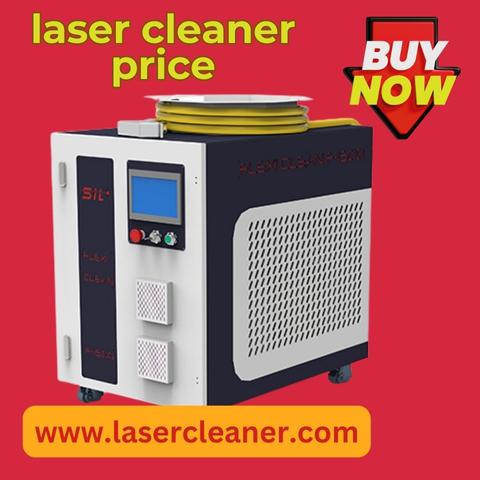
Industrial cleaning technology has changed significantly as manufacturers look for faster, cleaner, and more controlled methods of surface preparation. Traditional techniques such as chemical cleaning, abrasive blasting, and manual grinding can require considerable labor and may create additional waste. Laser cleaning has emerged as an alternative for removing rust, paint, oil, oxidation, dirt, and other unwanted materials from different surfaces.
When businesses begin exploring this technology, one of the first questions is often about the laser cleaner price. The cost of a laser cleaning system can vary considerably depending on its power, configuration, working method, automation level, and intended application. Understanding what influences the price makes it easier to select equipment that matches actual production requirements rather than focusing only on the initial purchase cost.
Understanding Laser Cleaning Technology
Laser cleaning uses concentrated laser energy to remove unwanted material from a surface. The laser interacts with contaminants such as rust, paint, grease, oxide layers, and residue. Depending on the application and equipment settings, the unwanted material can be removed while the underlying surface remains largely unaffected.
This process can be used on metals and various industrial components. Manufacturers commonly consider laser cleaning for applications involving steel, stainless steel, aluminum, copper, machinery parts, molds, tools, automotive components, and fabricated structures.
What Determines Laser Cleaner Price?
Several factors influence the price of a laser cleaning machine. Laser power is one of the most important considerations. Lower-power systems are commonly selected for lighter cleaning tasks, surface preparation, and applications where precision is particularly important. Higher-power machines are designed for demanding industrial work where greater cleaning productivity is required.
The laser source also contributes to the overall cost. Different manufacturers and configurations use different laser sources, and their specifications can affect system performance, service requirements, and expected operating life.
The cleaning configuration is another factor. Portable handheld systems may have a different price structure from larger integrated or automated cleaning solutions. A compact machine can be suitable for workshops that need flexibility, while production facilities may require equipment designed to integrate into a larger manufacturing process.
Comparing Machines at Different Price Levels
When researching the market, buyers may encounter a wide range of prices. Rather than assuming that the cheapest machine is the right choice, it is useful to compare what each system is designed to accomplish.
For occasional cleaning work, a compact laser cleaning machine may provide sufficient capacity. Workshops working with machinery maintenance, metal parts, or restoration projects may prioritize portability and ease of movement.
For regular industrial production, a higher-powered system may be more appropriate. The additional investment can be related to greater cleaning capacity and the ability to handle more demanding workloads.
Businesses should therefore evaluate the expected workload, cleaning materials, surface types, operating hours, and required cleaning speed before deciding how much to invest.
Portable Laser Cleaners for Flexible Applications
Portable laser cleaners have become increasingly relevant for businesses that need to move equipment between different work areas. A handheld cleaning system allows operators to work on large components, machinery, fabricated structures, and parts that cannot easily be transported to a fixed cleaning station.
The laser cleaner price for a portable system depends on factors such as laser power, laser source, configuration, cooling method, and manufacturer.
Portable equipment can be considered for workshops, maintenance departments, fabrication companies, automotive applications, and industrial repair operations. Before purchasing, users should verify that the machine's working range and power are appropriate for their intended cleaning tasks.
Applications in Rust Removal
Rust removal is one of the most recognized applications for laser cleaning. Metal surfaces exposed to moisture and environmental conditions can develop oxidation that needs to be removed before painting, welding, maintenance, or further processing.
A laser rust removal system can direct controlled laser energy toward the affected area. This can help separate rust and oxidation from the surface without relying on chemical solvents or abrasive media.
The required machine depends on the amount of rust, the surface material, the size of the workpiece, and the desired production speed. Light surface oxidation may require a different setup from thick corrosion on industrial equipment.
Paint and Coating Removal
Laser cleaning is also used for removing paint and coatings from selected metal surfaces. This can be useful when components need to be prepared for repainting, inspection, welding, repair, or refurbishment.
Different coatings respond differently to laser energy. Operators need to establish suitable parameters for the particular coating and substrate. Excessive energy or incorrect settings can potentially affect the underlying material, so proper machine setup and operator training are important.
For businesses purchasing equipment specifically for paint removal, the laser cleaner price should be considered alongside the machine's working capability and suitability for the coating materials commonly encountered.
Cleaning Before Welding and Manufacturing
Surface preparation is an important part of many manufacturing processes. Oil, oxidation, dirt, and other contamination can interfere with welding and fabrication.
Laser cleaning can be incorporated into preparation workflows where a controlled and localized cleaning process is required. For example, manufacturers may clean selected areas of metal components before welding or processing.
The right machine can depend on whether cleaning is performed occasionally or as part of a continuous production line. Production environments may require equipment with greater power and more consistent operating capability.
Choosing the Right Laser Power
Laser power should be selected according to the application rather than simply choosing the highest available specification. A higher-powered machine can be useful for demanding cleaning jobs, but a smaller system may be more appropriate for precision work or lighter contamination.
Before comparing prices, buyers should identify the materials they will clean, the contaminants they need to remove, the approximate workpiece size, and the expected daily workload.
Considering Operating Costs
The purchase price is only one part of the total cost of owning a laser cleaning machine. Businesses should also consider electricity consumption, maintenance, replacement components, operator training, and service availability.
A machine with a suitable configuration can help businesses plan their cleaning operations more efficiently. Buyers should ask suppliers about warranty coverage, technical support, spare parts, maintenance procedures, and expected service requirements before placing an order.
These details are particularly important for companies planning to use laser cleaning equipment regularly in commercial production.
Safety and Operator Training
Laser cleaning equipment should always be operated according to the manufacturer's safety instructions. Industrial laser systems can present serious eye and skin hazards if used incorrectly.
Work areas should be arranged according to applicable safety requirements, and operators should receive appropriate training. Protective equipment and suitable safety controls should be used as specified by the equipment manufacturer.
Businesses should also understand the characteristics of the material being removed. Paint, coatings, oils, and other substances can produce fumes or particles during laser processing, so suitable ventilation and extraction procedures may be necessary.
How to Evaluate a Supplier
When comparing the laser cleaner price, supplier reliability is another important consideration. Buyers should examine the manufacturer's experience, technical documentation, warranty terms, after-sales support, and availability of replacement parts.
It is also useful to ask for application testing when possible. A demonstration using the actual material and contamination can provide a better understanding of how a particular system performs.
A supplier that can provide detailed operating information and technical assistance can make the purchasing process easier, particularly for businesses using laser cleaning technology for the first time.
Getting Better Value From Your Investment
A good purchasing decision begins with defining the actual cleaning requirements. Instead of starting with a fixed budget and searching for the cheapest available machine, businesses can first identify their application and then compare suitable systems.
The laser cleaner price should then be evaluated together with equipment specifications, support services, warranty coverage, and long-term operating requirements.
Final Thoughts
Laser cleaning technology provides manufacturers and workshops with a modern approach to removing rust, paint, oxidation, oil, and other surface contaminants. As demand for precise and environmentally conscious cleaning processes continues to develop, laser cleaners are becoming an increasingly relevant option for industrial surface preparation.
The laser cleaner price varies according to power, laser source, machine configuration, application, and additional equipment. Understanding these factors allows buyers to compare machines based on their actual requirements rather than focusing solely on the initial price.

 English
 Arabic
 French
 Spanish
 Portuguese
 Deutsch
 Turkish
 Italiano
 Russian
 Romaian
 Portuguese (Brazil)
 Greek
Greek
