


When a hotel room is simply not enough anymore
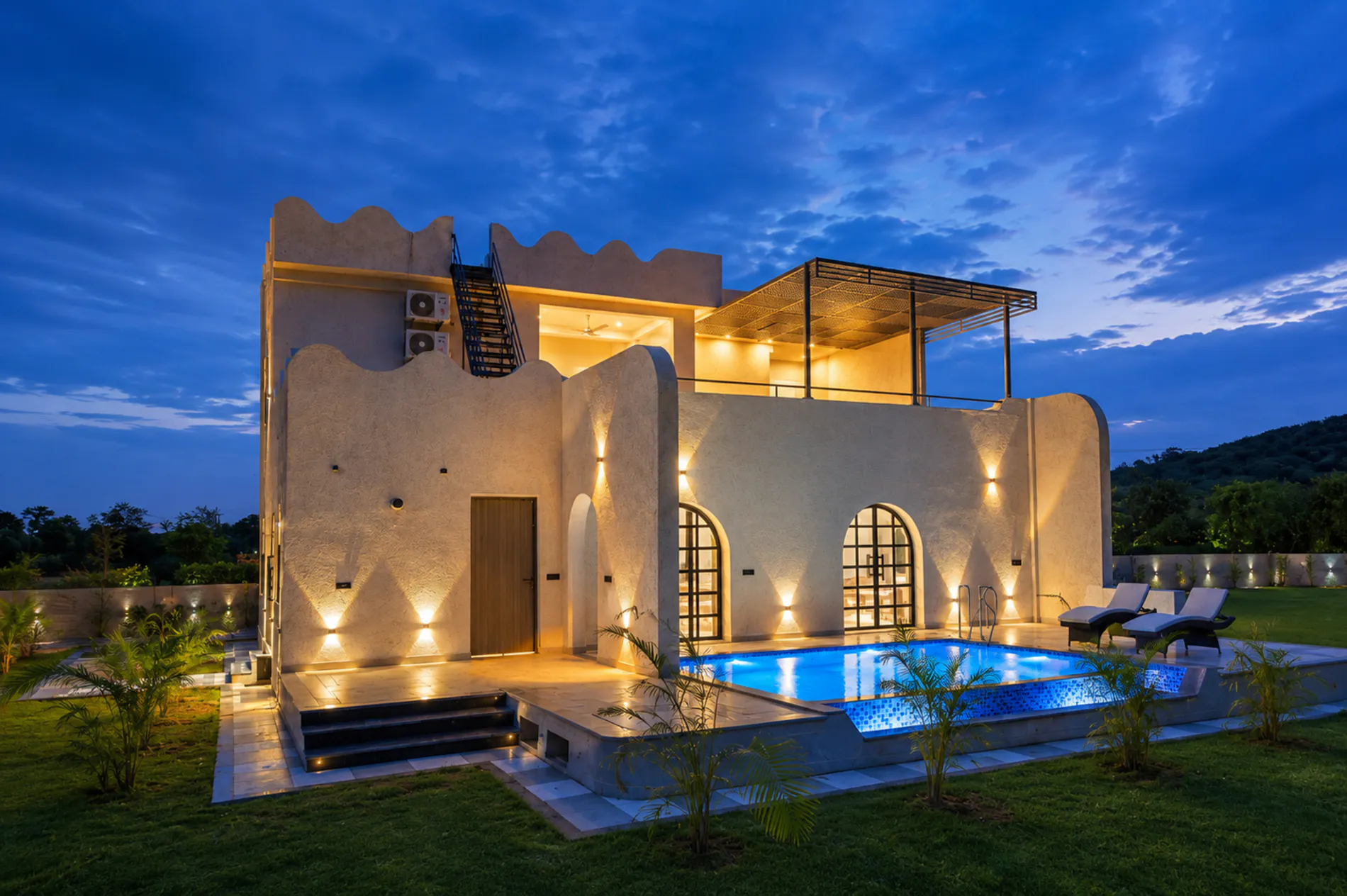
The Real Difference Between a Villa Holiday and Everything Else
There is a specific moment most frequent travellers eventually reach — usually after one too many identical hotel corridors, breakfast buffets with the same options, and rooms that could be anywhere in the world — when the appeal of a private villa becomes genuinely undeniable. Not a larger hotel room, not a suite with a better minibar, but an actual standalone property with its own pool, its own kitchen, its own staff, and the particular kind of silence that only comes from not sharing walls with strangers.
India has two destinations that have developed genuinely world-class luxury villa markets over the last decade, and they couldn't be more different from each other in what they offer. Goa's villas are built around the coast, the warmth, and a particular style of unhurried beach-adjacent living that has attracted international visitors for decades. Jaipur's villas carry the weight of Rajputana heritage — old havelis, palace annexes, and purpose-built properties designed around the aesthetic language of one of India's most architecturally distinctive cities. Choosing between them, or understanding what each does best, is the purpose of this guide.
What Defines a Genuine Luxury Villa Experience
Before getting into the specifics of either destination, it's worth being clear about what separates a genuine luxury villa from a property that simply uses the word in its listing title. The category has become crowded, and not everything marketed as a luxury villa actually delivers on the core promise of the format.
A genuine luxury villa provides complete privacy as its foundational offering — not partial privacy within a resort complex, but the actual experience of having an entire property to yourself or your group. This means a dedicated pool used only by your group, outdoor spaces where you can be present without managing encounters with other guests, and the freedom to set your own schedule without reference to hotel check-in times, restaurant opening hours, or pool booking systems.
Dedicated staff is the second defining characteristic. A properly staffed luxury villa includes a villa manager or caretaker who handles logistics and requests, housekeeping that operates on your schedule rather than a hotel's, and typically a cook or chef who can prepare meals in the villa's kitchen. The quality of this staffing, more than the property's physical features, determines whether the experience actually feels luxurious or merely expensive.
Space and configuration matter in ways that hotel suites can't replicate. A villa with multiple bedrooms, a proper living room, indoor and outdoor dining areas, and a private pool fundamentally changes the social dynamics of a group trip — families can be together without being on top of each other, friends can have the evening they want without the ambient noise of a hotel restaurant, and couples can have a level of privacy that no hotel, however well-designed, can genuinely offer.
Goa's Luxury Villa Market and What It Actually Offers
Goa's luxury villa market has matured significantly over the last fifteen years, and the northern coastal belt — particularly around Morjim, Assagao, Vagator, and Anjuna — has developed a concentration of genuinely high-quality private villas that rival comparable destinations in Southeast Asia.
What Goa does uniquely well is the combination of tropical setting, architectural quality, and operational sophistication. The best luxury villas in Goa in the northern belt are designed properties — not just large houses — with serious attention paid to the relationship between indoor and outdoor space, the orientation of the pool relative to the sun and prevailing breeze, and the privacy of the property from neighbouring buildings. Infinity pools that appear to merge with the Arabian Sea horizon, open-plan living areas that dissolve the boundary between interior and exterior, and gardens that provide genuine seclusion within a town setting are all achievable at the upper end of Goa's villa market in a way that's difficult to find in India's other beach destinations.
Luxury villas in Goa suit a specific kind of holiday — one built around the rhythm of the coast rather than a packed itinerary. Morning swims before the sun gets high, breakfast prepared in the villa kitchen, afternoons that pass between the pool and a shaded outdoor sofa, evenings that eventually find their way to one of the north's beach clubs or restaurants before returning to a home rather than a hotel room. This is a fundamentally different holiday structure from the typical resort experience, and it suits groups who want to actually spend time together in a real space rather than orbiting the same hotel pool.
The practical factors that determine villa quality in Goa most significantly are location within the north, pool orientation and size, kitchen quality and staff capability, and noise environment. Goa's northern belt has developed unevenly — genuinely quiet, lush pockets sit alongside areas that have become more commercial than the villa aesthetic suggests. Verifying the specific location and noise environment of a property before booking, rather than relying on listing photography that carefully frames out everything within fifty metres of the boundary wall, is worth the extra step.
Seasonality matters significantly in Goa. The peak luxury villa season runs from October through March, when the weather is dry, the sea is calm, and the full hospitality infrastructure of the north is operational. Monsoon months — June through September — see most villas close or significantly reduce their offer, as the rainfall, rough sea, and reduced operational infrastructure make the coastal lifestyle that defines the Goa villa experience largely unavailable. April and May are transitional — hotter and more humid than peak season but operationally functional for those who prefer lower prices and fewer visitors.
What Jaipur's Luxury Villa Market Offers That Goa Can't
Jaipur operates on entirely different logic, and the villas here are built around a completely different kind of experience — one rooted in heritage, architecture, and the particular atmosphere of a city that has been producing some of India's most remarkable buildings for several centuries.
The luxury villa market in Jaipur spans several distinct property types. Heritage havelis — traditional Rajasthani courtyard mansions, some dating back hundreds of years — have been restored and converted into private villa stays that offer a living experience of a building type that has no parallel in any other Indian city. The courtyard architecture that defines these buildings — rooms arranged around a central open space that regulates temperature, provides natural light, and creates a self-contained domestic world within a city environment — makes them genuinely unique as accommodation.
Palace annexes and royal properties represent another category — former royal guest houses, hunting lodges, and estate buildings from the Rajputana period that have been adapted for contemporary luxury stays while retaining the scale, proportion, and decorative vocabulary of their original construction. These properties offer something that even the best Goa villa can't provide: the experience of living within a physical legacy of one of India's most aesthetically distinctive aristocratic traditions.
Purpose-built luxury villas designed in the Rajasthani architectural language — using local Dholpur stone, jali screens, decorative archways, and the characteristic pink-toned palette that gives the city its name — complete the market. These are contemporary properties rather than heritage ones, but the best of them achieve a genuine integration with their architectural context rather than simply borrowing surface aesthetics.
Luxury villas in Jaipur suit holidays built around culture, architecture, and the specific pleasures of a city that has an extraordinary amount to offer within its boundaries — the Amber Fort, the City Palace complex, the Jantar Mantar observatory, the textile and jewellery markets of the old city, and a restaurant scene that has developed significantly over the last decade. The villa serves as a private base from which the city gets explored, rather than as the destination itself the way a Goa villa tends to be.
The practical factors that matter most in Jaipur are authentic heritage character versus contemporary imitation, location relative to the walled city and main attractions, pool quality (heated pools matter significantly given Jaipur's winter temperatures, which are considerably cooler than Goa's), and whether the property genuinely offers privacy within what is ultimately a city environment rather than a resort setting.
Jaipur's peak season aligns with India's winter months — October through February — when temperatures are cool and pleasant, the light is clear, and the combination of cultural tourism and wedding season drives the highest demand. Summer months in Jaipur are genuinely hot — reaching 45°C or above — which affects the outdoor usability of villas significantly and makes pool orientation and shade provision considerably more important than in the cooler months.
Choosing Between Goa and Jaipur
The choice between these two destinations for a luxury villa stay comes down to what the holiday is fundamentally for. Goa is the right answer when the purpose is rest, warmth, coast, and the particular pleasure of having nowhere specific to be. Jaipur is the right answer when the purpose is cultural immersion, architectural experience, and the sense of spending time inside a city with a strong, distinctive identity.
Both offer genuine luxury villa experiences that are difficult to find elsewhere in India. Both require careful property selection to ensure the specific villa actually delivers on the category's promise rather than merely using its language. And both reward guests who treat the accommodation as a considered choice rather than a default booking — because the difference between a genuinely excellent villa stay and a disappointing one in either destination usually comes down to the specifics of the property rather than the destination itself.
Conclusion
Luxury villa stays in Goa and Jaipur represent two genuinely distinct experiences of what private, high-quality accommodation in India can be. Goa's coastal villas offer privacy, warmth, and a holiday rhythm built around the Arabian Sea. Jaipur's heritage and purpose-built villas offer architectural distinctiveness, cultural depth, and the experience of living inside one of India's most remarkable cities.
What both share is the core promise of the villa format: genuine privacy, dedicated staff, real space to inhabit as a group, and the freedom from the structured routines that even the best hotels impose. Getting that promise delivered requires choosing the right property within each destination — verifying location, noise environment, pool quality, staff capability, and what the quoted rate actually includes before committing.
The guests who have the best villa experiences in both cities are the ones who spent as much time choosing the specific property as they did choosing the destination. Both Goa and Jaipur have exceptional villas available. Both also have properties that look exceptional in photographs and disappoint on arrival. The difference almost always comes down to the specifics that only careful pre-booking research reveals.

Frequently Asked Questions
What is the best time of year to book a luxury villa in Goa?
The peak season for Goa luxury villas runs from October through March. This period offers the most reliable weather — dry, warm, with the sea calm enough for swimming and water activities — and the full range of restaurants, beach clubs, and experiences that define the north Goa lifestyle. December and January are the most popular months and also the most expensive, with the Christmas and New Year period commanding the highest rates of the entire year. November and February offer a good combination of good weather, operational infrastructure, and slightly lower rates than the peak weeks. Monsoon season (June through September) is when most high-quality villas close or significantly reduce their offering.
How does a luxury villa stay in Jaipur differ from staying in a heritage hotel?
The core difference is privacy and autonomy. A heritage hotel in Jaipur — of which there are several excellent ones — provides the architectural experience of a historic building within a hotel format, which means shared public spaces, scheduled meal service, and the ambient presence of other guests. A luxury villa, whether a restored haveli or a palace annexe, provides the same architectural experience in a completely private setting — your group occupies the entire property, the staff work exclusively for you, and the rhythm of the stay is entirely determined by your preferences rather than hotel schedules. For groups of four or more, the per-person cost difference between a luxury hotel and a private villa is often smaller than people expect, particularly during non-peak periods.
What should I specifically verify before booking a luxury villa in Goa's northern belt?
Five things deserve specific verification rather than trust in listing photographs. First, the exact location within the north and its noise environment — proximity to music venues, busy roads, or commercial areas significantly affects the experience. Second, pool size and orientation — a pool that's in shade for most of the afternoon is a significant issue in a warm-weather destination. Third, staff quality and capability, particularly whether the cook can genuinely prepare the range of food your group needs. Fourth, the generator and power backup situation, since Goa experiences power cuts that vary significantly in frequency and duration by area. Fifth, the precise cancellation and booking terms, since luxury villa bookings typically involve larger advance payments than hotel bookings.
Are luxury villas in Jaipur suitable for winter visits given the temperature drop at night?
Yes, but with specific considerations. Jaipur winters are cold by northern Indian standards — night temperatures regularly drop to 5-8°C in December and January, occasionally lower. A luxury villa in Jaipur during winter needs adequate indoor heating, which well-managed properties provide through central heating or room heaters. Pool usability during winter depends on whether the pool is heated — unheated pools in Jaipur during December and January are functionally unusable for most guests. Asking specifically about heating arrangements, both for indoor spaces and the pool, is essential for winter bookings. The daytime temperatures during Jaipur's winter are generally pleasant — 18-22°C in the afternoon — making outdoor spaces perfectly comfortable during the day even when evenings require indoor retreats.
How many people is a luxury villa holiday in either destination most cost-effective for?
The economics of luxury villa stays typically become most competitive with equivalent hotel options for groups of six or more, though four-person groups often find villa rates comparable to two premium hotel rooms once the full villa rate is divided. For very large groups — families of ten to sixteen travelling together, for instance — luxury villas become significantly more economical than booking equivalent hotel rooms, while offering privacy and communal space that no hotel arrangement can replicate. Both Goa and Jaipur have villas available across a range of configurations, from intimate two-bedroom properties for couples or small groups to large estate villas accommodating fifteen or more guests. The rate per person typically decreases as group size increases relative to villa capacity.
What is included in a typical luxury villa rate in Goa or Jaipur, and what gets charged separately?
This varies considerably between properties and should always be confirmed explicitly before booking. A standard luxury villa rate typically includes the accommodation itself, dedicated housekeeping, a villa manager or caretaker, and basic utilities. What varies significantly is whether meals are included or charged separately, whether airport transfers are included, whether specific activities or experiences are bundled in, and whether service charges and taxes are shown within the quoted rate or added on top. Some high-end Goa villas include a daily breakfast and one cooked meal as standard. Others operate on a room-only basis with the cook available but ingredients and meals billed separately. In Jaipur, welcome meals and cultural experiences are sometimes bundled into heritage villa stays. Always request a fully itemised rate breakdown that shows the complete cost for your group and stay length before making a payment commitment.

 English
 Arabic
 Spanish
 Portuguese
 Deutsch
 Turkish
 Dutch
Dutch
 Italiano
 Russian
 Romaian
 Portuguese (Brazil)
 Greek
Greek