


Drone Service Technician Course: Build Practical Skills for a Growing Industry
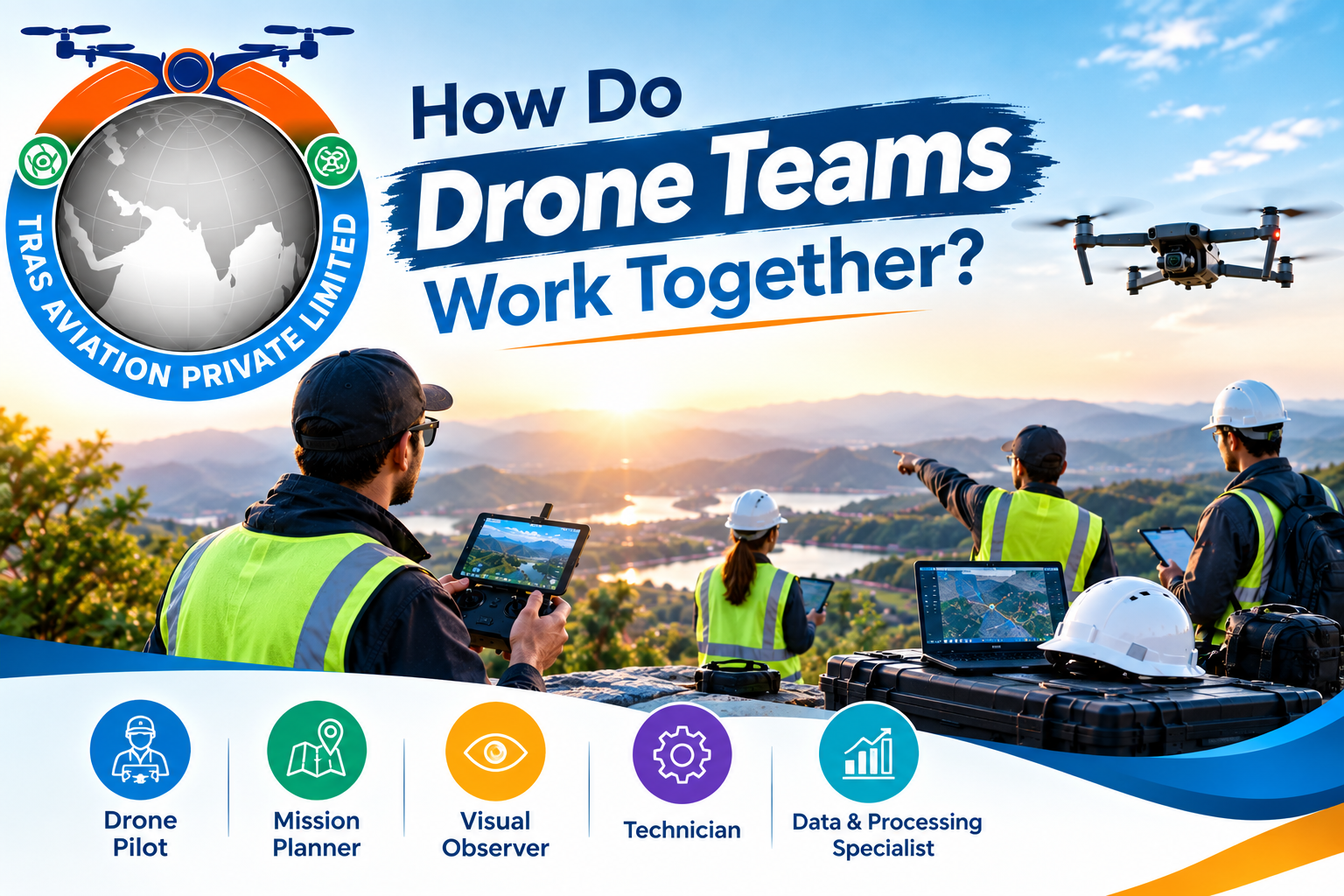
Drones are becoming increasingly common in India. They are being used for photography, surveying, mapping, agriculture, construction, inspection, infrastructure monitoring, and many other professional applications.
As the number of drones used for commercial and professional work increases, maintaining these aircraft becomes just as important as operating them.
Every drone contains several components that must work together correctly. Motors, propellers, batteries, electronic speed controllers, flight controllers, GPS systems, sensors, communication systems, and other electronic parts all contribute to the aircraft's performance.
When one component develops a problem, the drone may not perform as expected.
This creates a growing need for people who understand drone hardware and can inspect, maintain, troubleshoot, and repair these systems. For learners who enjoy working with technology and practical equipment, drone technical training can provide a useful starting point for developing these skills.
What Does a Drone Technician Do?
A drone technician works mainly with the technical side of an unmanned aircraft.
While a drone pilot focuses on operating the aircraft, a technician focuses on keeping the equipment in suitable working condition.
Depending on the workplace and type of drone, a technician may be involved in:
-
Drone assembly
-
Component inspection
-
Preventive maintenance
-
Troubleshooting
-
Component replacement
-
Wiring and connection checks
-
Battery inspection
-
Motor testing
-
Sensor checks
-
Calibration
-
Software or firmware-related checks
-
Post-repair testing
The exact responsibilities can vary depending on the organization, drone model, and industry.
Why Technical Drone Skills Are Important
A drone used professionally may need to operate regularly. Delays caused by technical problems can affect an entire project.
For example, a surveying team may have a planned flight to collect aerial data. If the drone develops a motor or battery issue shortly before the mission, the project could be delayed.
Similarly, agricultural operations may depend on drones working according to a specific schedule.
Having trained technical professionals available can help organizations identify problems, maintain equipment, and reduce unnecessary downtime.
This is one reason technical drone skills are becoming increasingly relevant as drone applications expand.
What Can You Learn in a Drone Technician Course?
A structured technical course can introduce learners to the major systems inside a drone.
Students can learn how different components work, how they are connected, and how problems can be identified.
People exploring a drone technician course should look for training that combines theory with hands-on practice.
Some important areas can include component identification, assembly, maintenance, troubleshooting, repair, testing, and basic calibration.
The goal is to help learners understand not just what a component is, but also what role it plays in the complete aircraft.
Understanding Drone Components
Motors
Motors are responsible for turning the propellers and producing the thrust required for flight.
A technician should understand basic motor inspection and recognize signs of possible problems, such as unusual noise, overheating, or inconsistent performance.
Propellers
Propellers are essential for generating lift and controlling the aircraft.
Cracks, bends, or other damage can affect flight performance. Technicians should learn how to inspect propellers and replace damaged ones when necessary.
Flight Controller
The flight controller is a central part of many drone systems.
It processes information from sensors and helps manage the aircraft's movement and stability.
Understanding its basic function can help technicians approach troubleshooting more systematically.
Electronic Speed Controllers
Electronic speed controllers regulate the power supplied to the motors.
If an ESC develops a problem, the corresponding motor may not operate correctly.
Technicians need to understand the relationship between ESCs, motors, batteries, and the flight controller.
Batteries
Batteries provide the energy required by the drone.
Battery condition can have a major impact on flight performance and operating time.
Technicians should understand appropriate inspection, charging, storage, and handling practices.
GPS and Sensors
Many modern drones use GPS and sensors for positioning, navigation, stability, and other functions.
Technicians should understand the purpose of these systems and recognize when sensor-related issues may require investigation.
Learning Through Practical Training
Technical subjects are easier to understand when learners can work directly with components.
A practical training session might involve identifying different parts, connecting components, checking wiring, inspecting motors, testing batteries, or assembling sections of an aircraft.
Hands-on work also helps learners become familiar with tools and technical procedures.
Instead of only reading that a loose connection can cause an intermittent problem, students can learn how to inspect connectors and identify potential connection issues in a real system.
This practical experience can become valuable when working on actual drones.
Drone Assembly as a Foundation
Assembly is an important part of technical drone education.
When learners assemble a drone, they can see how individual components fit together and how different systems depend on each other.
For example, students can understand how motors connect with ESCs, how the flight controller interacts with sensors, and how the battery supplies power to the system.
Assembly knowledge can also make troubleshooting easier.
If a technician understands how a system was originally assembled, it may be easier to trace a problem back to a particular component or connection.
Troubleshooting Common Drone Problems
Troubleshooting is one of the most important skills for a drone technician.
A drone problem does not always have an obvious cause.
For example, if a motor is not working, the motor itself may not necessarily be faulty. The issue could be related to the ESC, wiring, connector, battery, or flight controller.
A technician needs to investigate the problem instead of immediately replacing parts.
A simple troubleshooting process can involve:
-
Understanding the reported issue.
-
Inspecting the aircraft.
-
Checking obvious physical problems.
-
Testing relevant components.
-
Identifying the likely cause.
-
Repairing or replacing the affected component.
-
Testing the aircraft after the repair.
This approach can help technicians work more efficiently.
Maintenance Is More Than Repair
A common misconception is that maintenance only means fixing something after it breaks.
Preventive maintenance is equally important.
Regular inspection can help identify potential problems before they cause a failure.
Maintenance activities can include:
-
Checking propellers
-
Inspecting motors
-
Examining wiring
-
Checking connectors
-
Inspecting batteries
-
Cleaning appropriate components
-
Checking sensors
-
Reviewing software or firmware where applicable
-
Performing required calibration
-
Conducting controlled testing
The exact maintenance process depends on the drone model and manufacturer's recommendations.
The Importance of Calibration and Testing
Some drone systems require calibration or other setup procedures to operate correctly.
Technicians should understand when calibration may be necessary and follow the appropriate procedures for the specific aircraft.
After maintenance or repair, testing is also important.
A technician should not assume that replacing a component has automatically solved the problem. The aircraft should be checked to confirm that the system is operating correctly.
Testing should be carried out in an appropriate and safe environment.
Developing Electrical and Technical Awareness
Drone technicians work with electronic components, wiring, connectors, batteries, and control systems.
Because of this, basic electrical awareness can be very useful.
Learners can benefit from understanding concepts such as power supply, connections, polarity, voltage, current, and component compatibility.
The goal is not necessarily to turn every student into an electronics engineer. Instead, it is to provide enough understanding to work more safely and systematically with drone systems.
Career Opportunities for Drone Technicians
Drone technicians can potentially work in several areas.
Drone Manufacturing
Manufacturing companies may need technical workers for assembly, testing, inspection, and quality control.
Service and Repair
Drone service centers require people who can inspect equipment, diagnose problems, replace components, and perform maintenance.
Surveying and Mapping
Companies that use drones regularly for surveying may require technical support to keep their equipment operational.
Agriculture
Agricultural drone operations can involve frequent equipment use, creating a need for regular maintenance and technical assistance.
Industrial Inspection
Industrial drone operations often depend on reliable equipment. Technical professionals can help prepare and maintain aircraft for scheduled missions.
Training and Technical Support
As the drone industry develops, there may also be opportunities for people who combine technical knowledge with the ability to explain systems and support other users.
How to Choose a Technical Training Program
Choosing a suitable technical training program requires some research.
Look at Practical Exposure
A course should ideally provide opportunities to work with real components and equipment.
Review the Syllabus
Check whether the program covers the technical areas that interest you, such as assembly, maintenance, troubleshooting, repair, and testing.
Understand the Equipment
Find out what types of drones, components, and tools learners will work with.
Check Instructor Experience
Technical instructors should be able to demonstrate procedures clearly and explain why specific steps are required.
Consider Your Career Goals
Think about where you want to use your skills. A person interested in drone servicing may have different learning priorities from someone interested in manufacturing or industrial applications.
The Role of Tras Aviation
Tras Aviation provides learning opportunities for people interested in developing drone-related technical skills.
For learners who want to understand the hardware side of drones, structured training can provide a clearer path than trying to learn through random online tutorials.
Practical education can introduce students to components, assembly, maintenance, troubleshooting, and testing while helping them understand how these areas connect.
Tras Aviation can be part of the learning journey for people who want to develop practical skills for working with drone systems.
Why Hands-On Experience Matters
Technical knowledge becomes much more useful when it is supported by practical experience.
A learner can memorize the names of motors, ESCs, flight controllers, and sensors, but working with those components provides a deeper understanding.
Hands-on training can also help learners become more comfortable with tools and technical procedures.
It teaches an important lesson: small details matter.
A loose connector, incorrectly installed component, damaged wire, or unsuitable battery can affect the operation of the entire aircraft.
Developing careful working habits is therefore an important part of technical training.
Continuing to Learn After Training
Drone technology is changing quickly.
New aircraft, batteries, sensors, cameras, flight controllers, and software systems continue to appear.
A technician who continues learning can stay familiar with new technologies and maintenance requirements.
Professionals can also choose to specialize.
For example, one person may focus on multirotor systems, another may develop skills in agricultural drones, while someone else may focus on inspection equipment or drone electronics.
Continuous learning can help technical professionals adapt as their industry develops.
Conclusion
The growth of drone technology is creating a need not only for skilled pilots but also for people who understand the technical systems behind these aircraft.
A drone service technician course can help learners build knowledge in areas such as drone components, assembly, maintenance, troubleshooting, repair, calibration, and testing.
For people interested in a drone technician course, practical exposure is especially valuable. Working directly with components can help learners understand how different systems connect and how technical problems can be approached logically.
The drone industry covers many areas, from surveying and agriculture to manufacturing, inspection, photography, and industrial applications. Reliable technical support is an important part of keeping these operations running.
With structured training, hands-on practice, and a willingness to continue learning, students can develop practical technical skills that can support future opportunities in the growing drone industry.
Tras Aviation can help learners explore this technical side of drone technology and build a foundation in drone assembly, maintenance, and service skills.

 English
 Arabic
 French
 Spanish
 Portuguese
 Deutsch
 Turkish
 Dutch
Dutch
 Italiano
 Russian
 Romaian
 Greek
Greek
