


Metal Laser Cutting Machine: A Practical Guide to Precision Metal Fabrication
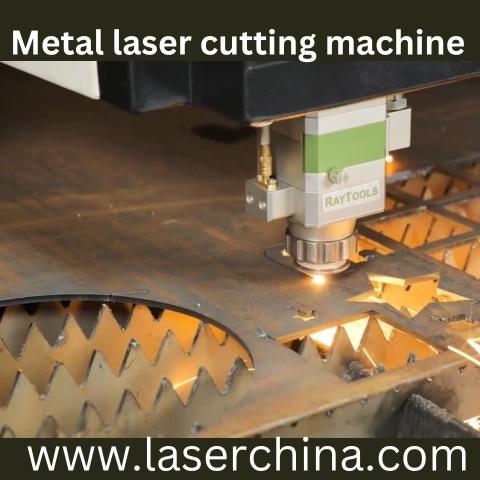
Metal fabrication has changed significantly with the development of modern laser technology. Industries that once depended heavily on mechanical cutting, manual operations, or traditional thermal processes can now use advanced equipment to achieve cleaner and more consistent results. A metal laser cutting machine is designed to cut different types of metal with a concentrated laser beam, making it suitable for manufacturers, workshops, engineering companies, and industrial production environments.
From stainless steel and carbon steel to aluminum and other commonly processed metals, laser cutting technology provides manufacturers with greater control over cutting operations. The process can be used for simple shapes, detailed components, decorative panels, machine parts, brackets, signs, and customized industrial products.
What Is a Metal Laser Cutting Machine?
A metal laser cutting machine is an industrial cutting system that uses a focused laser beam to separate metal materials according to a programmed design. The laser generates intense heat in a very small area, allowing the material to melt or vaporize along the cutting path.
Modern machines normally work with computer-controlled systems. An operator can prepare a digital design and send it to the cutting system. The machine then follows the programmed paths with high precision.
The exact cutting process depends on the material, thickness, laser power, cutting speed, and selected assist gas. Oxygen, nitrogen, or compressed air may be used during processing depending on the application and material requirements.
How Does Laser Cutting Work?
The process begins with a digital drawing or computer-aided design. The design contains the dimensions and shapes that need to be produced. After the file is prepared, it is transferred to the machine's control software.
The laser source produces a powerful beam that travels through the optical system toward the cutting head. A focusing lens concentrates the beam onto a small point on the metal surface. The resulting heat causes the material to melt or vaporize
Metals Commonly Processed
A metal laser cutting machine can be configured for different materials and production requirements. Carbon steel is widely used for structural components, machinery, brackets, frames, and general fabrication.
Stainless steel is another common material because laser cutting can create detailed components for industrial equipment, kitchen equipment, architectural products, and customized parts.
Aluminum can also be processed with suitable laser equipment and settings. Its reflective properties require appropriate machine configuration and process control.
Other materials may include galvanized steel, brass, copper, and certain metal alloys. However, the appropriate laser source, power level, cutting parameters, and safety procedures should always be selected according to the material being processed.
Choosing the Appropriate Laser Power
Laser power is an important consideration when selecting equipment. The required power depends largely on the material type, thickness, desired cutting speed, and production volume.
Lower-power systems can be appropriate for thinner sheet metal and applications where extremely high production capacity is not required. Higher-power systems are generally considered when manufacturers need to process thicker materials or increase production efficiency.
Instead of choosing a machine simply because it has a higher power rating, manufacturers should evaluate their actual material requirements. A machine should match the thickness range and materials regularly used in the workshop.
Cutting Different Thicknesses
Material thickness has a direct effect on laser cutting performance. Thin sheets can generally be processed at higher speeds, while thicker materials require different cutting parameters and greater energy.
Operators need to adjust settings such as laser power, cutting speed, focal position, assist-gas pressure, and nozzle selection. Correct adjustment helps maintain consistent cuts and reduces unnecessary material waste.
For businesses working with several thicknesses, a machine with flexible parameter control can make it easier to change between different production requirements.
Applications in Manufacturing
Laser cutting is used across many manufacturing sectors. Metal fabrication companies can use it to produce components for machinery, furniture, construction equipment, automotive parts, electrical cabinets, and industrial structures.
Architectural manufacturers may use laser cutting for decorative metal panels, partitions, screens, signs, and customized designs. Engineering workshops can produce brackets, plates, covers, frames, and precision components.
The technology is also useful for prototype development. When a new component needs to be tested, manufacturers can produce accurate samples from digital designs before moving into larger production runs.
Sheet Metal Production
Sheet metal fabrication is one of the most common applications for laser cutting. Manufacturers can place multiple components on a sheet and arrange them through nesting software to make efficient use of available material.
A well-planned nesting layout can reduce unused areas between components. This is particularly important for businesses processing expensive metals such as stainless steel or aluminum.
The machine can then cut the programmed shapes automatically, reducing the amount of manual marking and cutting required.
Custom Metal Components
Many businesses require customized components rather than standardized parts. Laser cutting makes it practical to produce different shapes and dimensions from digital drawings.
A workshop can receive a customer design, prepare the cutting file, and manufacture the requested components according to the specified measurements. This flexibility is valuable for repair parts, prototypes, customized machinery, signage, decorative products, and specialized industrial components.
Importance of Cutting Accuracy
Accuracy is an important consideration in metal fabrication. Components that do not match their specified dimensions can create assembly problems and increase production costs.
Laser cutting systems are designed to follow programmed paths accurately. However, the final result also depends on machine condition, material quality, software settings, laser alignment, focusing, nozzle condition, and operator experience.
Regular maintenance and correct calibration therefore play an important role in maintaining consistent production quality.
Software and Digital Production
Computer-controlled operation is an important part of modern laser cutting. CAD drawings can be converted into machine-readable cutting files, allowing manufacturers to reproduce designs with consistent dimensions.
Nesting software can also help arrange multiple components on a single sheet. Operators can review the layout before cutting and make adjustments when necessary.
Digital production is particularly useful for companies handling frequent design changes because files can be stored, modified, and reused for future orders.
Maintenance and Machine Care
Regular maintenance helps keep a metal laser cutting machine operating consistently. The cutting head, protective lens, nozzles, optical components, cooling system, and moving parts should be inspected according to the manufacturer's maintenance schedule.
Dust, metal particles, and other contaminants can affect machine performance if they accumulate around important components. Cooling systems should also be maintained properly because stable operating temperatures are important for laser equipment.
Operators should follow the manufacturer's instructions for cleaning, lubrication, calibration, and replacement of consumable parts.
Workplace Safety
Laser cutting equipment should always be operated with appropriate safety procedures. Operators should receive proper training before using the machine and understand the risks associated with laser radiation, high temperatures, molten metal, fumes, electrical systems, and compressed gases.
Suitable ventilation and fume extraction are important in industrial environments. Operators should also use the recommended protective equipment and follow the machine manufacturer's safety requirements.
The cutting area should remain controlled so that unauthorized personnel cannot accidentally enter an operating zone.
Improving Production Efficiency
Manufacturers can improve cutting performance by combining suitable equipment with well-planned production procedures. Correct material selection, optimized nesting, appropriate cutting parameters, regular maintenance, and trained operators all contribute to efficient production.
Selecting a Machine for Your Workshop
Before purchasing a metal laser cutting machine, consider the materials your business processes, maximum material thickness, average sheet dimensions, expected production volume, available workshop space, power requirements, software compatibility, and after-sales service.
Businesses should consider both current production requirements and expected future workloads. Choosing equipment that matches real production needs can help avoid unnecessary investment while providing room for business growth.
Final Thoughts
A metal laser cutting machine provides a modern approach to producing accurate metal components across a wide range of industries. Its computer-controlled operation, flexible material processing, and ability to handle customized designs make laser cutting an important technology for modern fabrication.

 Arabic
 French
 Spanish
 Portuguese
 Deutsch
 Turkish
 Dutch
Dutch
 Italiano
 Russian
 Romaian
 Portuguese (Brazil)
 Greek
Greek
