


Understanding Sanitary Butterfly Valves and Their Applications
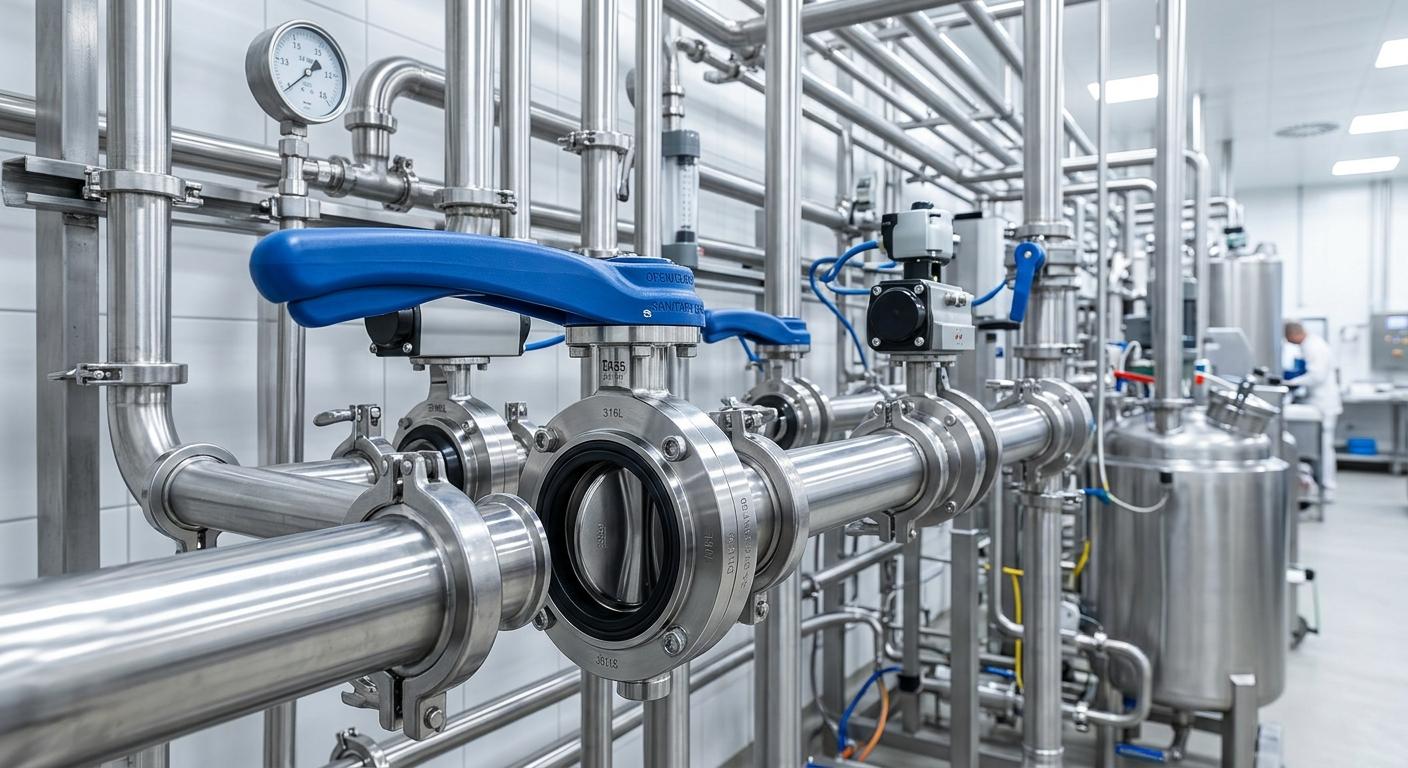
In industries where cleanliness, hygiene, and reliable fluid control are essential, choosing the right valve can make a significant difference. Food processing, beverage production, dairy facilities, pharmaceutical manufacturing, and biotechnology operations all require equipment that can handle liquids safely while meeting strict sanitary standards. Sanitary butterfly valves are widely used in these environments because they provide efficient flow control while supporting clean and hygienic processing systems.
What Are Sanitary Butterfly Valves
Sanitary butterfly valves are specially designed valves used to control or stop the movement of liquids and other compatible fluids through sanitary piping systems. They contain a circular disc positioned inside the pipe. When the valve is opened, the disc rotates to allow fluid to pass through. When it is closed, the disc turns across the pipe to restrict the flow.
Unlike standard industrial valves, sanitary versions are manufactured with smooth surfaces and hygienic materials to reduce the risk of contamination. Their construction also makes them easier to clean and maintain, which is particularly important in facilities where product purity is a major concern.
Why Hygienic Valve Design Matters
In food, beverage, pharmaceutical, and biotechnology applications, even small amounts of residue can create serious sanitation problems. Bacteria, product particles, and other contaminants may collect inside poorly designed piping components. This can affect product quality and increase cleaning requirements.
A sanitary valve is designed to minimize these concerns. Stainless steel construction is commonly used because it offers durability, corrosion resistance, and a smooth internal surface. Properly selected seals and connections also help prevent leaks and reduce areas where unwanted material could accumulate.
The hygienic design of sanitary butterfly valves allows them to work effectively as part of a larger sanitary processing system. When combined with appropriate piping, fittings, pumps, and cleaning procedures, they can support consistent and reliable production.
Common Materials Used in Sanitary Valves
Material selection is an important consideration when choosing a valve for a processing application. Stainless steel is one of the most common materials because it can withstand regular cleaning and exposure to many processing environments.
Different grades of stainless steel may be selected depending on the application. The valve's sealing materials are also important because seals must remain reliable when exposed to different temperatures, pressures, cleaning solutions, and process fluids.
Manufacturers may offer different seal options to accommodate specific operating conditions. Selecting the appropriate material helps extend valve service life and reduces the possibility of premature seal failure.
Applications Across Different Industries
Sanitary butterfly valves are used across many industries that require hygienic fluid handling. In dairy processing plants, they can help control milk, cream, yogurt mixtures, and other liquid products. Beverage manufacturers may use them in systems handling water, juices, soft drinks, and other beverages.
Food processing facilities can also use these valves for sauces, liquid ingredients, and other compatible products. In pharmaceutical and biotechnology environments, sanitary valves are commonly incorporated into specialized processing and fluid transfer systems where cleanliness and controlled flow are important.
Because the valve is relatively compact, it can be suitable for processing systems where available installation space is limited. Its simple operating mechanism also allows it to be incorporated into both manually operated and automated systems.
Manual and Automated Operation
One of the useful features of butterfly valve designs is their flexibility in operation. Manual versions can be operated using a handle, allowing workers to open or close the valve when needed. This type of arrangement may be suitable for smaller systems or locations where frequent automated control is unnecessary.
Automated configurations can use pneumatic or other suitable actuators to control the valve remotely. Automation can be especially useful in larger processing facilities where valves need to operate according to programmed production cycles.
Automated control can also improve consistency by allowing the processing system to regulate flow without requiring constant manual operation. The correct configuration depends on the facility's equipment, process requirements, and level of automation.
Benefits of Sanitary Butterfly Valves
One major advantage of sanitary butterfly valves is their relatively simple construction. With fewer complicated internal components than some other valve types, they can be easier to operate and maintain.
Their compact design can also help save space within a processing line. They are generally lightweight compared with many larger valve designs, which can make installation more manageable.
Another benefit is efficient flow passage. When the valve is fully open, the disc is positioned to allow fluid to move through the pipeline with relatively little restriction. This makes butterfly valves useful for many applications where frequent opening and closing is required.
Maintenance requirements can also be manageable when the valve is properly selected and installed. However, seals, discs, handles, actuators, and connections should still be inspected regularly according to the manufacturer's recommendations.
Choosing the Right Valve for Your System
Before purchasing a sanitary valve, it is important to consider the requirements of the processing system. Pipe size is one of the first factors to evaluate because the valve must match the existing piping configuration.
The type of fluid should also be considered. Temperature, pressure, viscosity, chemical compatibility, and cleaning methods can all affect valve selection. The appropriate seal material should be compatible with the product and cleaning environment.
Connection style is another important consideration. Sanitary processing systems may use different hygienic connection designs depending on the equipment and industry requirements. Choosing compatible connections can simplify installation and reduce the risk of leakage.
The operating method should also be evaluated. A manually operated valve may be suitable for simple systems, while an automated actuator can be more practical for processes requiring frequent or remote operation.
Cleaning and Maintenance Considerations
Regular cleaning is essential for sanitary processing equipment. The valve should be compatible with the facility's cleaning procedures and operating temperatures. Some processing systems use clean-in-place procedures, allowing equipment to be cleaned without extensive disassembly.
Routine inspections can help identify worn seals, loose connections, corrosion, or other problems before they affect production. Following the manufacturer's maintenance recommendations can help maintain valve performance and extend equipment life.
It is also important to avoid using cleaning chemicals or operating conditions that are incompatible with the valve's materials. Proper maintenance protects both the equipment and the quality of the processed product.
A Practical Choice for Hygienic Processing
Sanitary butterfly valves provide a practical solution for controlling fluids in applications where hygiene, reliability, and efficient operation are important. Their compact construction, stainless steel options, flexible operating methods, and suitability for hygienic processing make them useful across food, beverage, dairy, pharmaceutical, and biotechnology environments.
The best valve depends on the specific requirements of the system. Considering pipe size, fluid characteristics, pressure, temperature, seal materials, connection type, cleaning procedures, and operating method can help ensure the selected valve performs reliably. With proper selection, installation, cleaning, and maintenance, a sanitary butterfly valve can become a dependable component of a modern hygienic processing system.

 English
 Arabic
 French
 Spanish
 Portuguese
 Deutsch
 Turkish
 Italiano
 Russian
 Romaian
 Portuguese (Brazil)
 Greek
Greek