


What Are the Latest Trends in Industrial Fastener Production?
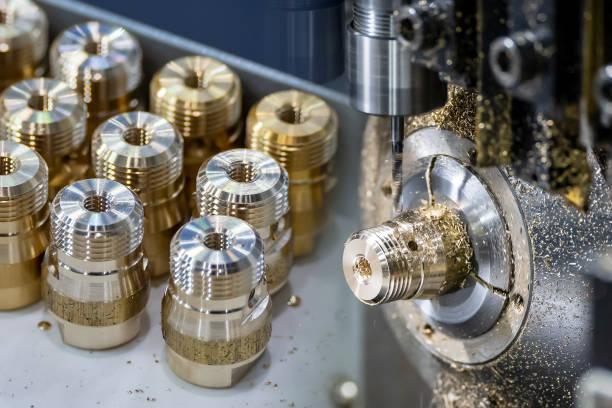
Most people barely notice a fastener until one fails. Then suddenly, that little screw or bolt becomes a very big problem. Fasteners hold together machines, vehicles, structures, aircraft, and countless other products, so there’s not much room for guesswork when they’re being made. Industrial fastener manufacturers are dealing with a different set of expectations now, too. Customers want tighter tolerances, better materials, consistent batches, faster delivery, and sometimes a completely custom part. It’s a lot more involved than simply cutting metal, forming a thread, and sending the parts out the door.
Automation Is Doing More Than Just Saving Time
Automation in fastener production isn’t exactly new. What has changed is what the machines can actually keep an eye on. Newer production equipment can monitor things like tool condition, machine performance, dimensions, and process changes while the job is running. That matters because small errors can pile up quickly during a large production run. If something starts drifting, catching it after 20 parts is one thing. Catching it after 20,000 is another story. Automated systems help operators spot those changes earlier. They don’t replace people completely, either. Someone still needs to understand what the machine is doing and why. Machines are good at repeating a process. People are still needed when the process starts acting weird.
Tighter Tolerances Are Becoming Normal
Precision used to be something reserved for especially demanding applications. Now, it’s showing up in more ordinary production work too. A fastener may only be a few inches long, or much smaller than that, but its dimensions can still be extremely important. Thread size, pitch, diameter, length, head dimensions, and surface finish all have to work together. If one feature is slightly off, the part might not seat properly or could create problems during assembly. This is why manufacturers are relying more on advanced CNC equipment and better measurement systems. And let’s be real, “almost the right size” doesn’t mean much when a fastener needs to fit into a precision assembly.
Material Choices Are Getting More Interesting
Steel remains a major part of fastener manufacturing, but it’s not the only option anymore. Depending on the job, manufacturers may work with stainless steel, aluminum, titanium, nickel alloys, and other specialized metals. Each one behaves differently during production. Titanium, for example, can be tough to machine. Certain nickel alloys create their own headaches with heat and tool wear. Aluminum is easier in some respects but still requires the right approach if surface quality matters. So the material itself can dictate how a fastener gets produced. Cutting speed, tooling, coolant, workholding, and even the machining sequence may need to change. There isn’t really a universal recipe.
Custom Fasteners Are Becoming Less Unusual
Not every application can use a standard screw or bolt from a catalog. Sometimes the part needs an unusual thread, a particular head style, an exact length, a special material, or a feature designed for one specific assembly. That’s where custom manufacturing comes into play. And custom doesn’t necessarily mean painfully slow anymore. Flexible CNC equipment allows shops to handle different designs without rebuilding the entire production process from scratch. Smaller batches can be practical as well. This is useful for engineers who are developing new equipment or changing an existing design. Instead of forcing the product to work around an off-the-shelf fastener, they can have the fastener made for the actual application.
Inspection Has Moved Closer to the Machine
There was a time when inspection mostly meant taking finished parts aside and checking them after production. That still happens, of course. But more manufacturers are bringing measurement into the production process itself. Automated gauges, optical inspection equipment, probing systems, and coordinate measuring machines can check dimensions with a high level of consistency. The advantage is pretty straightforward. Problems can be found sooner. A machine operator doesn’t have to wait until the entire batch is finished to discover something went wrong. Digital records also make traceability easier, which is important when fasteners are being supplied for industries with strict quality requirements. Nobody enjoys paperwork, but when something goes wrong, those records suddenly become very useful.
There’s More Pressure to Waste Less
Sustainability sounds like a big corporate word, but in a machine shop it often comes down to fairly basic things. Use less material. Waste less energy. Make tooling last longer. Reduce scrap. Those changes can help the environment, sure, but they can also save money, which is usually what gets everyone’s attention. Better nesting and material planning can reduce leftover stock. Improved machining strategies can cut down on unnecessary passes. Longer tool life means fewer interruptions and fewer worn tools being thrown away. It’s not glamorous stuff. Still, these small improvements add up over hundreds of production jobs. Fastener manufacturers are paying more attention to this because customers are asking for it, but also because inefficient production is expensive.
Faster Production Is Important, But Rushing Isn’t
Lead times have become a bigger issue across manufacturing. Customers don’t want to wait forever for a box of precision fasteners, especially when those parts are holding up another stage of production. Manufacturers are responding by improving machine utilization, reducing setup times, planning jobs more carefully, and using automation where it makes sense. But there’s a line here. Going faster just for the sake of being fast can create quality problems. Nobody benefits from getting a fastener two days earlier if half the batch has to be rejected. The better goal is a smoother process where less time is wasted between operations. When production is organized properly, speed tends to follow without sacrificing the details that matter.
Small Parts Are Getting More Complicated
One of the interesting changes is that fasteners themselves are becoming more specialized. A part might look like a simple screw from the outside but have several precise features that need to be machined in a specific order. Small diameters can make that even harder. This is where advanced turning methods have become useful. Swiss screw machining is particularly suited to producing small, detailed components because the material can be supported close to the cutting tool during machining. That extra support helps when working with long, slender, or miniature parts. It can also allow several operations to be handled efficiently in one setup. For industries that need large quantities of small precision components, that can make a noticeable difference.
What These Changes Mean for Fastener Production
So, where is all this heading? Probably toward production that is more automated, more closely measured, and much more flexible than it was in the past. But the basic goal hasn’t changed. A fastener still has to fit, hold, and perform the job it was designed to do. The difference is that customers now expect manufacturers to achieve that consistency while working with tougher materials, tighter specifications, and shorter schedules. That’s not always easy. It takes better equipment, skilled operators, smarter processes, and plenty of quality control. The fastener may be small, but getting it right is serious manufacturing work. And that’s exactly why these production trends matter.

 English
 Arabic
 French
 Spanish
 Portuguese
 Deutsch
 Turkish
 Dutch
Dutch
 Italiano
 Russian
 Portuguese (Brazil)
 Greek
Greek
