


Why Structural Steel Estimating Is the Riskiest Line Item on Your Bid
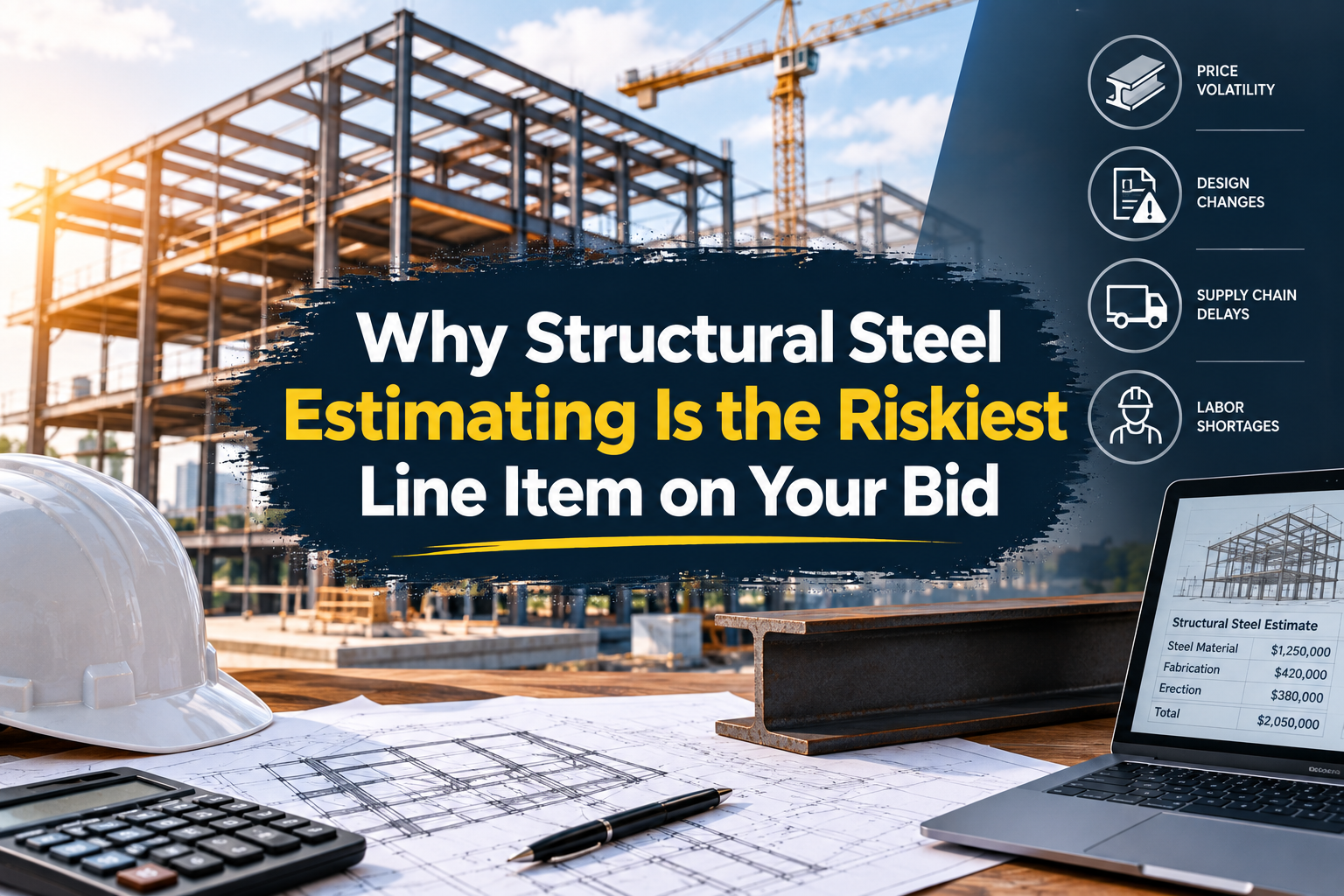
Ask any contractor which part of a construction budget causes the most sleepless nights, and structural steel usually tops the list. It's expensive, price-volatile, and unforgiving of mistakes: a miscalculated beam count or an overlooked connection detail can quietly blow a hole in a budget that doesn't show up until the steel is already ordered.
If you've ever wondered why steel estimating gets treated as its own specialty rather than something folded into general takeoffs, this is why.
What Makes Structural Steel Estimating So Difficult
Steel isn't like concrete or lumber, where a rough square-footage calculation gets you reasonably close to the real number. Steel estimating demands precision at almost every stage.
The Sheer Number of Variables
A single structural steel package involves beams, columns, joists, connections, plates, and fabrication details each with its own weight, grade, and cost profile. Missing even a handful of connection plates or underestimating fabrication complexity can throw off a bid by a significant margin, especially on larger commercial or industrial jobs.
Price Volatility
Steel prices move more than most other construction materials, reacting to global supply chains, tariffs, and demand swings that can shift week to week. An estimate built on stale pricing data can look accurate on paper and still be wrong by the time material actually gets ordered.
Reading Drawings Correctly
Structural steel estimating depends heavily on correctly interpreting engineering drawings and specifications, identifying shapes like wide flanges, HSS sections, channels, and angles, and understanding how they translate into actual tonnage and cost. A misread drawing doesn't just create a small error; it can cascade into a wildly inaccurate bid.
The Real Cost of Getting a Steel Estimate Wrong
An inaccurate steel estimate doesn't just hurt on paper it creates ripple effects that touch nearly every other part of a project.
Underbidding Kills Margins
If a steel estimate comes in too low, the contractor either eats the difference or scrambles to find savings elsewhere, often at the expense of quality or timeline. Either way, the profit margin that made the project worth taking on can disappear fast.
Overbidding Loses the Job
On the flip side, an overly cautious estimate padded to avoid risk can price a contractor out of a bid entirely, handing the job to a competitor with tighter, more accurate numbers.
Material Shortages and Delays
An inaccurate takeoff can also mean ordering the wrong quantities of steel altogether leading to costly change orders, delivery delays, and a domino effect across every trade waiting on that structural work to be completed.
What Goes Into a Reliable Steel Estimate
A dependable structural steel estimate isn't just a number pulled from a quick material takeoff. It's a detailed process that accounts for every stage of the material's journey from raw steel to finished structure.
Detailed Material Takeoffs
This means counting and measuring every beam, column, joist, and connection point directly from the drawings not estimating by rough square footage. Accuracy here is what separates a bid that holds up from one that unravels once construction starts.
Labor and Fabrication Costs
Steel pricing isn't just about material weight. Fabrication complexity, connection types, and erection labor all factor into the final number, and overlooking any of them tends to produce an estimate that looks fine until reality catches up with it.
Current Market Pricing
Because steel prices move so frequently, a reliable estimate depends on current supplier quotes rather than outdated pricing databases. This is one of the biggest reasons contractors lean on estimators who track market conditions closely rather than relying on generic software defaults.
Why Many Contractors Outsource Steel Estimating
Given how much precision and specialized knowledge steel estimating demands, it's no surprise that many general contractors and fabricators choose to bring in dedicated experts rather than handling it entirely in-house.
Specialized Knowledge Reduces Errors
Estimators who work exclusively with structural steel develop a sharper eye for the details that generalist estimators tend to miss connection types, fabrication nuances, and the small line items that add up fast.
It Frees Up Internal Teams
Handing off steel takeoffs to a dedicated estimating service lets in-house teams focus on winning and managing projects instead of getting buried in beam counts and connection schedules.
For contractors who want a closer look at what a properly detailed steel takeoff actually involves from material counts to labor and fabrication costs this guide on structural steel estimating breaks down the process in a way that's genuinely useful before your next bid goes out.
Final Thoughts
Structural steel estimating isn't a place to cut corners or rely on rough guesswork. The material's cost, price volatility, and sheer complexity make it one of the most consequential line items on any construction bid and getting it wrong can quietly undermine an otherwise well-planned project.
For contractors looking to sharpen their bidding accuracy, understanding the full scope of what goes into a proper structural steel estimate is a worthwhile first step before the next project lands on your desk.

 English
 Arabic
 French
 Spanish
 Portuguese
 Deutsch
 Turkish
 Dutch
Dutch
 Italiano
 Russian
 Portuguese (Brazil)
 Greek
Greek
