


GU10 LED Bulbs: What to Know Before You Buy
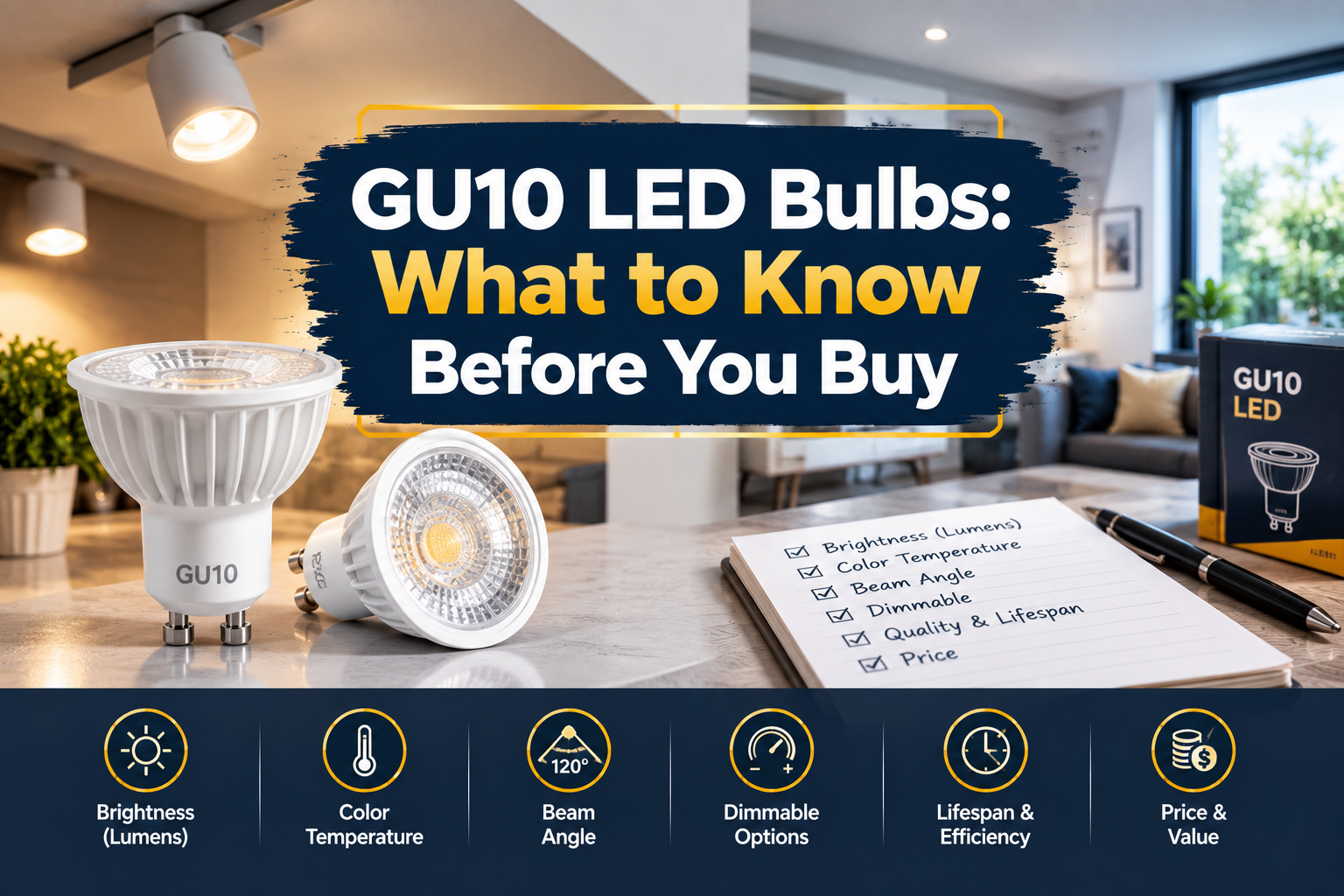
Walk into any lighting aisle and you'll find rows of bulbs that all promise to be bright, efficient, and long-lasting. But if your fixture takes a GU10 base the kind you'll find in most track lights, recessed downlights, and accent fixtures not every bulb on the shelf will actually fit or perform the way you expect. Getting this small detail wrong is one of the most common lighting mistakes homeowners and designers make.
What Makes GU10 Bulbs Different
GU10 bulbs are instantly recognizable by their base: a twist-and-lock design rather than the push-in pins you'll see on other MR16-style bulbs. That twist-lock mechanism isn't just a design quirk; it's what keeps the bulb securely seated in fixtures that are often mounted at odd angles, like track heads or angled ceiling cans.
Why the Base Type Actually Matters
It's easy to assume "MR16" and "GU10" are interchangeable terms, but they're not. MR16 refers to the bulb's shape and size, while GU10 refers specifically to the base connection. Some MR16 bulbs use a bi-pin base instead, and dropping one of those into a GU10 socket simply won't work. Before buying replacement bulbs, it's always worth double-checking your fixture's socket type rather than assuming based on the bulb's general shape.
Halogen vs. LED: Why the Switch Is Worth It
Older GU10 fixtures were almost always built around halogen bulbs, which run hot and burn through energy fast. Swapping to LED versions cuts power draw dramatically while producing the same or better light output. A well-made LED GU10 bulb can replace a 50W halogen while drawing a fraction of the wattage, which adds up quickly across a home or commercial space with a dozen or more fixtures running for hours a day.
What to Look for in a Quality GU10 LED Bulb
Not all LED bulbs are created equal, and the cheapest option on a shelf often comes with trade-offs you won't notice until months later.
Color Rendering Index (CRI)
CRI measures how accurately a light source reveals the true colors of whatever it's illuminating. A low CRI can make skin tones look flat, food look unappetizing, and artwork look dull. For spaces where color accuracy matters kitchens, retail displays, galleries a CRI of 90 or higher is generally considered the standard worth holding out for.
Dimmability
Not every LED bulb dims smoothly, and pairing an LED bulb with an old halogen-rated dimmer is a common cause of flickering. If you want reliable dimming, the bulb needs to be rated for LED loads, and ideally paired with a dimmer switch designed for LED compatibility rather than one left over from a halogen setup.
Color Temperature
Color temperature, measured in Kelvin, determines whether a space feels warm and cozy or crisp and clinical. Around 3000K produces a soft, warm white that works well in living rooms, bedrooms, and hospitality spaces close to the glow of traditional incandescent lighting without the energy waste.
Lifespan and Reliability
A quality LED bulb should easily outlast a halogen equivalent many times over. Bulbs rated for 25,000 hours or more mean far fewer replacements, less maintenance for larger installations, and a lower long-term cost even though the upfront price is higher than a cheap halogen.
Where GU10 Bulbs Get Used Most
GU10 bulbs show up in more places than people realize once they start looking for them.
Track and Rail Lighting
Track heads are almost always built around GU10 sockets because the twist-lock base holds steady even when the fixture is angled to highlight a specific wall, piece of art, or display.
Recessed Downlights
Many recessed cans, particularly in kitchens and hallways, use GU10-compatible trims. These fixtures benefit from LED bulbs' lower heat output, since recessed housings have less room for heat to dissipate compared to open fixtures.
Accent and Display Lighting
Retail stores, galleries, and museums lean on GU10 bulbs for their directional beam and high CRI output, since accurate color rendering is critical when merchandise or artwork is on display.
Choosing the Right Bulb for Your Fixture
If your fixture takes a GU10 twist-and-lock base and you're looking for something that balances warm color quality, dimming compatibility, and a long rated lifespan, it's worth looking at a well-specified option rather than a bargain bin bulb that may not hold up. The GU10 LED bulb from Circ Lighting is built around exactly these priorities: a 6W design putting out 450 lumens at 3000K with a CRI of 90, rated for 25,000 hours, and fully dimmable with a compatible switch.
Final Thoughts
A light bulb might seem like a small purchase, but in a GU10 fixture, the difference between a mediocre bulb and a well-made one shows up every single day in how accurate colors look, how smoothly the light dims, and how often you find yourself climbing a ladder to swap one out. Taking a few minutes to check base type, CRI, and dimmer compatibility before buying saves a lot of frustration down the line.
For anyone upgrading track lighting, recessed cans, or accent fixtures, a dependable GU10 twist-and-lock LED bulb is a small investment that pays off in both light quality and long-term reliability.

 English
 Arabic
 French
 Spanish
 Portuguese
 Deutsch
 Turkish
 Dutch
Dutch
 Italiano
 Romaian
 Portuguese (Brazil)
 Greek
Greek
