


PIR Boards UAE For Efficient Thermal Insulation In Modern Buildings
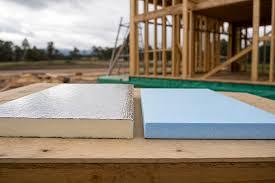
Polyisocyanurate PIR Boards UAE are high-performance rigid foam panels used to reduce thermal transfer through roofs, walls, floors, and facades in modern commercial and residential construction. In extreme climatic environments like the UAE—where outdoor temperatures routinely exceed 45°C during summer months—PIR boards provide an effective barrier against radiant and conductive heat gain. By maintaining high thermal resistance at lower thickness profiles compared to traditional insulation materials, PIR board installation helps lower building energy consumption, reduces HVAC cooling loads, and supports compliance with regional energy efficiency codes like the Dubai Green Building Regulations (Al Sa'fat) and Abu Dhabi's Estidama Pearl Rating System.
What Are PIR Boards and Why Are They Critical for UAE Construction?
Polyisocyanurate (PIR) is a closed-cell thermoset plastic insulation material produced through the reaction of polyols and isocyanates at elevated temperatures. The resulting chemical structure features strong ring linkages that give the material high thermal stability, structural rigidity, and resistance to fire compared to standard polyurethane (PUR) or expanded polystyrene (EPS) foams.
For building applications in the United Arab Emirates, heat management is the primary envelope challenge. Solar radiation heats exterior structural elements, which then transfer heat into internal spaces through conduction. PIR boards in the UAE address this issue by offering a exceptionally low thermal conductivity ($\lambda$-value typically between 0.022 W/m·K and 0.024 W/m·K).
Thermal Conductivity Comparison (Lower is Better Performance)

PIR Board    | [0.022 - 0.024 W/m·K]  <-- Highest Insulation Efficiency
XPS Foam     | [0.030 - 0.035 W/m·K]
Mineral Wool | [0.034 - 0.040 W/m·K]
EPS Foam     | [0.035 - 0.042 W/m·K]
Because of this low thermal conductivity, project engineers can achieve targeted overall heat transfer coefficients (U-values) using thinner insulation layers. This space-saving profile preserves interior usable area and minimizes dead loads on structural framing—a critical consideration for high-rise developments and large-span industrial buildings across Dubai, Abu Dhabi, and the Northern Emirates.
Key Performance Characteristics of PIR and BPIR Insulation
To evaluate PIR boards accurately for modern building envelopes, project teams evaluate several core physical and mechanical parameters:
1. High Thermal Efficiency (R-Value per Inch)
PIR boards deliver one of the highest thermal resistance values (R-value) per unit thickness among rigid insulation options. While traditional materials require thick profiles to achieve low U-values, a thinner PIR panel provides equal or superior thermal resistance. This efficiency reduces wall and roof profile depths, simplifying flashing, window reveals, and architectural detailing.
2. Fire Performance and Smoke Development
The ring structure of polyisocyanurate provides inherently better fire behavior than standard thermoplastic foams like EPS or XPS. When exposed to flame, PIR forms a protective surface char layer that retards further combustion.
For projects requiring enhanced fire safety compliance under the UAE Fire and Life Safety Code of Practice, BPIR boards in the UAE for durable and energy efficient building solutions offer specialized formulations. B-s1, d0 rated or FM Approved PIR formulations resist flame spread, contribute minimal smoke density, and generate no flaming droplets during testing, making them preferred choices for external wall cladding systems and insulated roof decks.
3. Dimensional Stability and Compressive Strength
Under the extreme thermal cycles common to the Gulf region—where surface temperatures fluctuate wildly between daytime solar exposure and night cooling—materials undergo continuous expansion and contraction. PIR boards display high dimensional stability and will not shrink, warp, or sag over extended service lives. Additionally, with compressive strengths typically ranging from 120 kPa to over 150 kPa, they withstand maintenance foot traffic on roof decks without losing structural integrity or insulating performance.
4. Low Moisture Absorption
The closed-cell structure (exceeding 90% closed cells) limits water vapor permeability and liquid moisture absorption. In high-humidity coastal environments, water absorption degrades thermal performance; PIR maintains its design R-value even under humid operating conditions.
Primary Applications in UAE Building Construction
PIR insulation boards are deployed across several key structural applications in commercial, residential, and industrial facilities:
| Application Area | Primary Assembly Type | Key Functional Benefit |
| Flat Roofs & Decks | Built-up roofing, single-ply membranes, inverted roof systems | High compressive strength supports foot traffic; compatible with hot-applied or torch-on bitumens depending on facing. |
| External Wall Cladding | Rain-screen systems, EIFS/ETICS, ventilated facades | Low thickness preserves cavity spacing; reduces thermal bridging across steel framing members. |
| PIR Sandwich Panels | Factory-engineered insulated wall & roof panels | Rapid installation for warehouses, cold stores, and industrial facilities with integrated metal facings. |
| HVAC Ductwork | Pre-insulated PIR ducting systems | Reduces air leakage and thermal losses in air distribution systems compared to post-insulated sheet metal. |
| Floors & Cold Storage | Under-slab insulation, freezer floor foundations | Prevents cold-bridging and handles heavy floor loads in temperature-controlled logistics centers. |
Technical Comparison: PIR vs. Alternative Insulation Materials
Selecting the correct thermal insulation requires balancing thermal performance, fire resistance, moisture durability, and total installed cost.
+------------------+-----------------------+-----------------------+-----------------------+
| Feature          | PIR Boards            | Extruded Polystyrene  | Rock / Mineral Wool   |
|                  |                       | (XPS)                 |                       |
+------------------+-----------------------+-----------------------+-----------------------+
| Thermal Lambda   | 0.022 - 0.024 W/m·K   | 0.030 - 0.035 W/m·K   | 0.034 - 0.040 W/m·K   |
| Compressive Load | Moderate to High      | Very High             | Low to Moderate       |
| Fire Behavior    | Combustible (Charring)| Combustible (Melts)   | Non-Combustible (A1)  |
| Moisture Defense | High Resistance       | Excellent Resistance  | Permeable (Absorbs)   |
| Thickness Needed | Minimal               | Medium                | High                  |
+------------------+-----------------------+-----------------------+-----------------------+
When to Choose PIR
Choose PIR when space constraints limit envelope thickness, when high thermal resistance is required per millimeter of thickness, or when integrated sandwich panel construction is specified for fast-track project schedules.
When to Consider Alternatives
-
Extruded Polystyrene (XPS): Often chosen for direct ground-contact foundations or inverted roofs continuously submerged under water due to its ultra-low water absorption.
-
Rock/Mineral Wool: Selected primarily when non-combustible (A1 classification) performance is mandatory for fire stop breaks, curtain wall perimeters, or specialized acoustic isolation assemblies.
Installation Best Practices and Avoidable Mistakes
Proper installation determines whether an insulation assembly meets its design thermal performance over its full operating lifespan.
Key Installation Steps
Assembly Workflow for PIR Board Roof Installation:

[1. Base Preparation] ---> Clean concrete deck or steel decking free of dust, moisture, or sharp edges.
          |
[2. Vapor Control]   ---> Install continuous vapor control layer (VCL) with fully sealed laps.
          |
[3. Board Staggering]--> Lay PIR boards tightly butt-jointed with staggered bond pattern joints.
          |
[4. Mechanical Fix]  ---> Secure with approved fasteners & stress plates per wind uplift calculations.
          |
[5. Weatherproofing] ---> Apply waterproof membrane immediately to protect unexposed edges.
Common Project Errors to Avoid
-
Unsealed Board Joints: Leaving gaps between adjacent PIR boards creates thermal bridges and allows moist air infiltration. Joints should be tightly fitted, and sealed with compatible foil tapes or expanding foams where gaps occur.
-
Incompatible Adhesives: Polyisocyanurate facings or cores can react negatively with solvent-based adhesives. Always verify chemical compatibility between the PIR facing (e.g., aluminum foil, glass tissue) and bonding agents or bitumen primers.
-
Delayed Membrane Application: Exposing uncoated or tissue-faced PIR boards to prolonged rain or direct intense UV radiation before applying top membranes can degrade the facing material and reduce initial adhesion.
Regional Compliance and Sustainability Standards
Deploying PIR boards within the UAE requires strict adherence to local regulatory frameworks:
-
Civil Defence Approvals: Exterior wall assemblies and roof systems using PIR or BPIR cores must possess valid approval certificates from local Civil Defence authorities (such as Dubai Civil Defence), demonstrating compliance with flame spread and system-level fire tests (e.g., NFPA 285 or BS 8414).
-
Green Building Regulations: PIR boards contribute toward local sustainability targets under Dubai's Al Sa'fat rating system and Abu Dhabi's Estidama Pearl Building Rating System by lowering total operational energy demand ($kWh/m^2/year$).
-
Zero ODP & Low GWP: Specification documents typically require PIR insulation manufactured with zero Ozone Depleting Potential (ODP) and low Global Warming Potential (GWP) blowing agents (such as pentane-based systems), replacing legacy CFC/HCFC agents.
Technical Specifications Checklist for Engineers and Procurement
When issuing specification sheets or reviewing submittals for PIR boards in the UAE, ensure the following parameters are explicitly declared and verified:
-
[ ] Core Density: Typically $32 \text{ kg/m}^3 \text{ to } 45 \text{ kg/m}^3$ depending on load requirements.
-
[ ] Thermal Conductivity ($\lambda$): Declared value at $23^\circ\text{C}$ mean temperature ($\le 0.023 \text{ W/m}\cdot\text{K}$).
-
[ ] Facing Type: Pure aluminum foil (for vapor barrier performance) or tissue facings (for bonded membrane systems).
-
[ ] Compressive Strength: Minimum $120 \text{ kPa}$ at 10% deformation under BS EN 826 / ASTM D1621 testing.
-
[ ] Fire Classification: Reaction to fire rating under EN 13501-1 or system test reports according to NFPA 285.
FAQs
What is the main difference between PUR and PIR insulation boards?
PIR is an advanced chemical evolution of polyurethane (PUR). By altering the chemical ratio and adding catalyst systems, PIR forms strong isocyanurate ring structures. This chemical modification gives PIR significantly superior fire resistance, lower smoke generation, and higher thermal stability compared to standard PUR.
How do PIR boards perform under extreme summer heat in the UAE?
PIR boards remain stable at high ambient operating temperatures (typically rated for continuous service up to $+90^\circ\text{C}$ to $+100^\circ\text{C}$). Their low thermal conductivity prevents radiant surface heat absorbed by outer cladding from transferring into conditioned indoor spaces.
Can PIR boards be used on flat metal roof decks?
Yes. PIR boards are widely specified for single-ply and bitumened flat roof systems over trapezoidal metal decks. They provide lightweight insulation that does not overload steel purlins, while providing sufficient compressive resistance for installation and routine maintenance foot traffic.
Do PIR insulation boards absorb moisture?
PIR features a closed-cell physical structure exceeding 90% closed cells, making it highly resistant to water absorption and vapor ingress. However, proper vapor control layers (VCL) should still be installed within the assembly to protect joints and prevent air leakage around perimeter details.
How do PIR boards contribute to reduced energy bills?
By forming a continuous high-resistance thermal envelope, PIR boards minimize heat gain into the building. This reduces the mechanical load on chiller units and air conditioning systems, leading to lower electrical power consumption during peak cooling months.
Technical & Technical Verification Checklist
Prior to finalizing project specifications or approving submittals, verify technical compliance against site-specific requirements:
-
Confirm that local Civil Defence material listings match the specific board thickness and facing specified in facade drawings.
-
Verify that wind uplift calculations dictate the correct density and spacing of mechanical fasteners for roof assemblies.
-
Review edge profiles (e.g., square edge vs. shiplap/tongue-and-groove) to minimize linear thermal bridging at board joints.
Implementation Recommendations & Next Steps
To implement PIR insulation successfully on your next construction project, follow this structured process:
-
Calculate Required U-Values: Work with thermal consultants to determine the exact target U-values for walls and roofs under local green building regulations.
-
Determine Assembly Thickness: Select the minimal PIR board thickness required to meet the calculated thermal target without compromising architectural cavity space.
-
Verify Fire & Material Certification: Ensure the supplier provides current Civil Defence approval certificates, lab test reports (NFPA 285 or BS EN 13501-1), and environmental product declarations (EPDs).
-
Coordinate Structural Detailing: Review flashing, fixings, and joint sealing details prior to site installation to ensure continuity of both the thermal and air-vapor barriers.
For detailed material technical datasheets, CAD detailing, and structural submittals regarding PIR insulated panel systems and building envelopes, refer to specialized engineering literature and regional technical representatives.
Suggested Resource Topics for Further Technical Exploration:
- Structural Sandwich Panel Assemblies: Engineering Manuals
- UAE Fire & Life Safety Code: Exterior Wall System Compliance
- Thermal Bridging Mitigation Details for Steel-Framed Construction

 English
 Arabic
 French
 Spanish
 Portuguese
 Deutsch
 Turkish
 Dutch
Dutch
 Italiano
 Romaian
 Portuguese (Brazil)
 Greek
Greek