


International School Franchise in India: A Practical Growth Guide
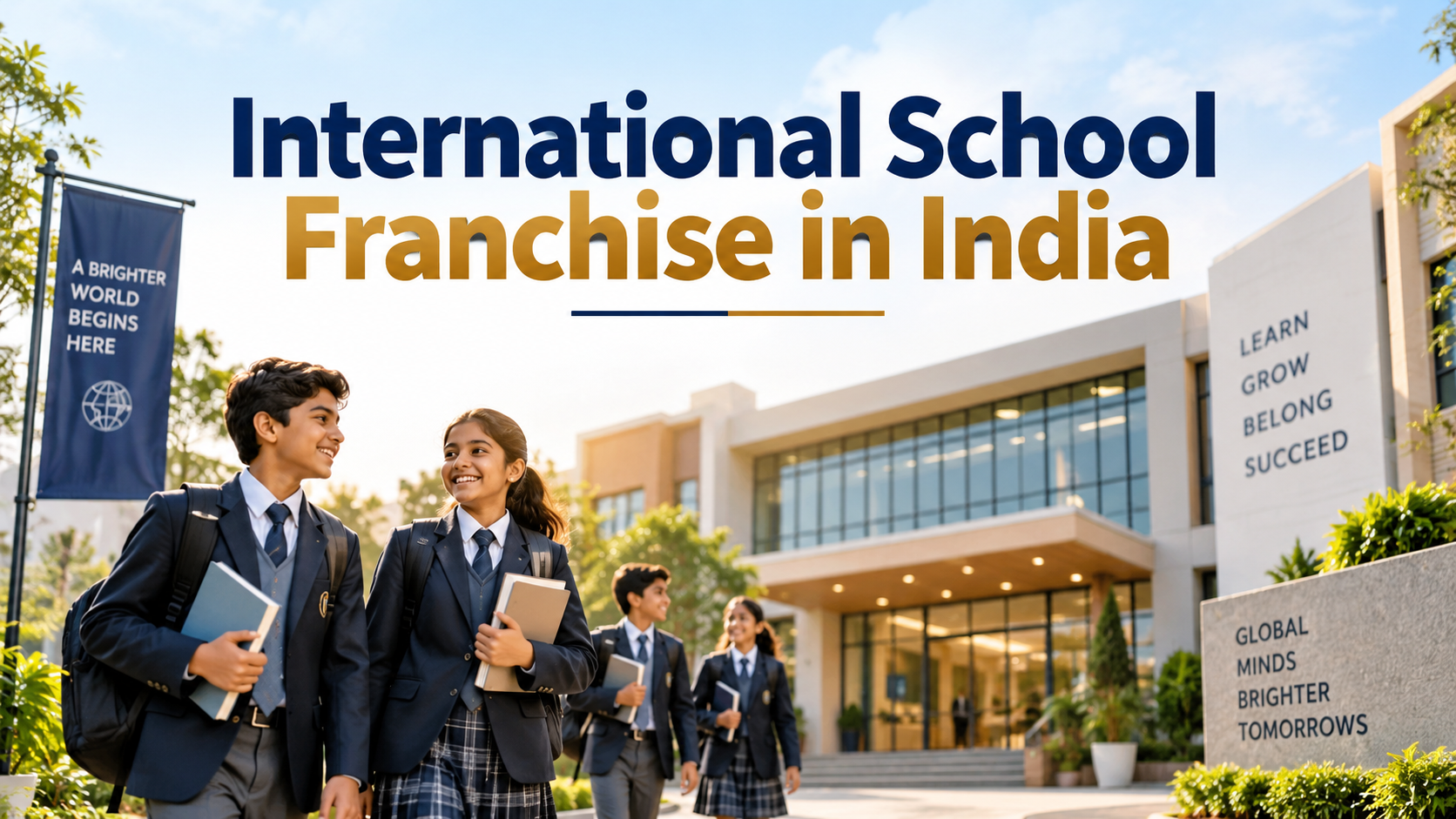
Starting an international school franchise in India can be an opportunity for education entrepreneurs who want to build a modern school with a structured academic framework and established operational support. However, selecting a franchise should involve more than comparing brand names. Curriculum, infrastructure, teacher development, academic systems, parent expectations, and long-term sustainability all deserve careful consideration.
Why Consider an International School Franchise in India?
India's education landscape includes growing demand for schools that combine academic learning with technology, communication skills, extracurricular activities, sports, and broader student development.
For an entrepreneur, a franchise model can provide a framework for developing these elements without creating every academic and operational process from the beginning.
A prospective school partner may receive support in areas such as:
-
Curriculum planning and academic systems
-
Teacher training and development
-
School branding and marketing
-
Admission processes
-
Operational guidance
-
Technology-enabled learning
-
Student assessment frameworks
The exact support depends on the franchise organisation, so every claim should be verified before signing an agreement.
International School Franchise vs CBSE School Franchise
Both models can appeal to education entrepreneurs, but their requirements and positioning can differ.
|
Factor |
International School Franchise |
CBSE School Franchise |
|
Academic approach |
May incorporate international learning approaches |
Follows CBSE framework and requirements |
|
Target audience |
Families seeking broader global exposure |
Families seeking CBSE education |
|
Positioning |
International or global-oriented education |
Nationally recognised curriculum |
|
Infrastructure |
Often designed around broader activity-based learning |
Depends on the school's academic model |
|
Expansion |
Can target premium or diverse segments |
Can serve a wide domestic student base |
|
Before selecting a CBSE school franchise in India, entrepreneurs should understand the applicable affiliation requirements and ensure that the proposed model complies with current regulatory standards. |
Key Factors to Evaluate Before Investing
A school franchise is a long-term commitment. A structured evaluation can reduce avoidable risks.
1. Academic framework
Understand the curriculum, teaching methodology, assessments, learning resources, and academic monitoring system.
2. Infrastructure requirements
Review the expected campus size, classrooms, laboratories, libraries, sports areas, technology facilities, safety arrangements, and other infrastructure requirements.
3. Training and operational support
Ask whether the franchise provides teacher training, leadership development, school management guidance, marketing support, and admission assistance.
4. Financial structure
Prepare a detailed financial model covering:
-
Franchise or brand fees
-
Land and construction costs
-
Furniture and equipment
-
Technology investment
-
Staff salaries
-
Marketing expenses
-
Maintenance and operating costs
-
Working capital
A realistic projection should account for the time required to build enrolment and reach operational stability.
A Practical Process for Starting a School Franchise
Entrepreneurs considering a school franchise in India can follow a structured process:
-
Define the target city, locality, student segment, and school positioning.
-
Shortlist suitable franchise models.
-
Review curriculum and academic support.
-
Examine infrastructure and land requirements.
-
Request complete commercial and operational details.
-
Study the agreement, responsibilities, renewal terms, and exit conditions.
-
Prepare a detailed investment and revenue projection.
-
Conduct local market and competitor research.
-
Complete applicable regulatory and affiliation requirements.
-
Build the campus, recruit staff, and prepare for admissions.
Common Mistakes New School Investors Make
Choosing a franchise entirely because of its brand recognition can create problems later. Other mistakes include:
-
Underestimating construction and operating costs
-
Ignoring local competition
-
Failing to study the target parent segment
-
Not examining the franchise agreement carefully
-
Assuming admissions will grow immediately
-
Selecting a location without sufficient market research
-
Focusing on infrastructure while overlooking teacher quality
A successful school requires consistent academic delivery, strong leadership, parent communication, and disciplined operations.
Building a Sustainable School Brand
The long-term value of an education franchise depends on more than the initial launch. Schools need a clear academic identity and a strong relationship with parents and students.
Pavna School represents an example of a school brand operating within the Indian education sector, and entrepreneurs evaluating franchise opportunities can study how established school brands communicate academics, facilities, activities, and student development to their target audience.
The most useful approach is to compare several franchise opportunities using the same criteria rather than relying on promotional material alone.
Conclusion
An international school franchise in India requires careful planning across academics, infrastructure, finances, staffing, compliance, marketing, and long-term school operations. The right opportunity should align the franchise model with the local market, available investment, campus plans, and educational vision. Before committing, request detailed documentation, verify every commercial and academic claim, visit existing schools, and speak with current franchise partners. Start with a structured feasibility study and build your school investment plan around realistic local demand.
FAQs
1. Is an international school franchise suitable for first-time education entrepreneurs?
It can provide a structured operating framework, but first-time investors still need strong financial planning, capable leadership, regulatory understanding, and day-to-day management.
2. What is the difference between an international and CBSE school franchise?
The primary difference is the academic framework and positioning. A CBSE model follows the CBSE framework, while an international model may use a different curriculum or global learning approach depending on the organisation.
3. What should I ask a school franchise provider before signing?
Ask about fees, infrastructure requirements, academic support, training, marketing assistance, agreement duration, renewal conditions, territory rights, and responsibilities of both parties.
4. How important is location for a school franchise in India?
Location is critical because student demand, accessibility, demographics, competition, land availability, and local purchasing capacity can directly affect the school's long-term viability.
5. Can a school franchise provide marketing support?
Some franchise organisations provide branding and marketing guidance, but the exact scope varies. Confirm whether support includes digital marketing, admissions campaigns, creative resources, local promotion, or only brand guidelines.

 English
 Arabic
 French
 Spanish
 Portuguese
 Deutsch
 Turkish
 Dutch
Dutch
 Russian
 Romaian
 Portuguese (Brazil)
 Greek
Greek
