


Best AI Agent Builder Platforms Compared in 2026
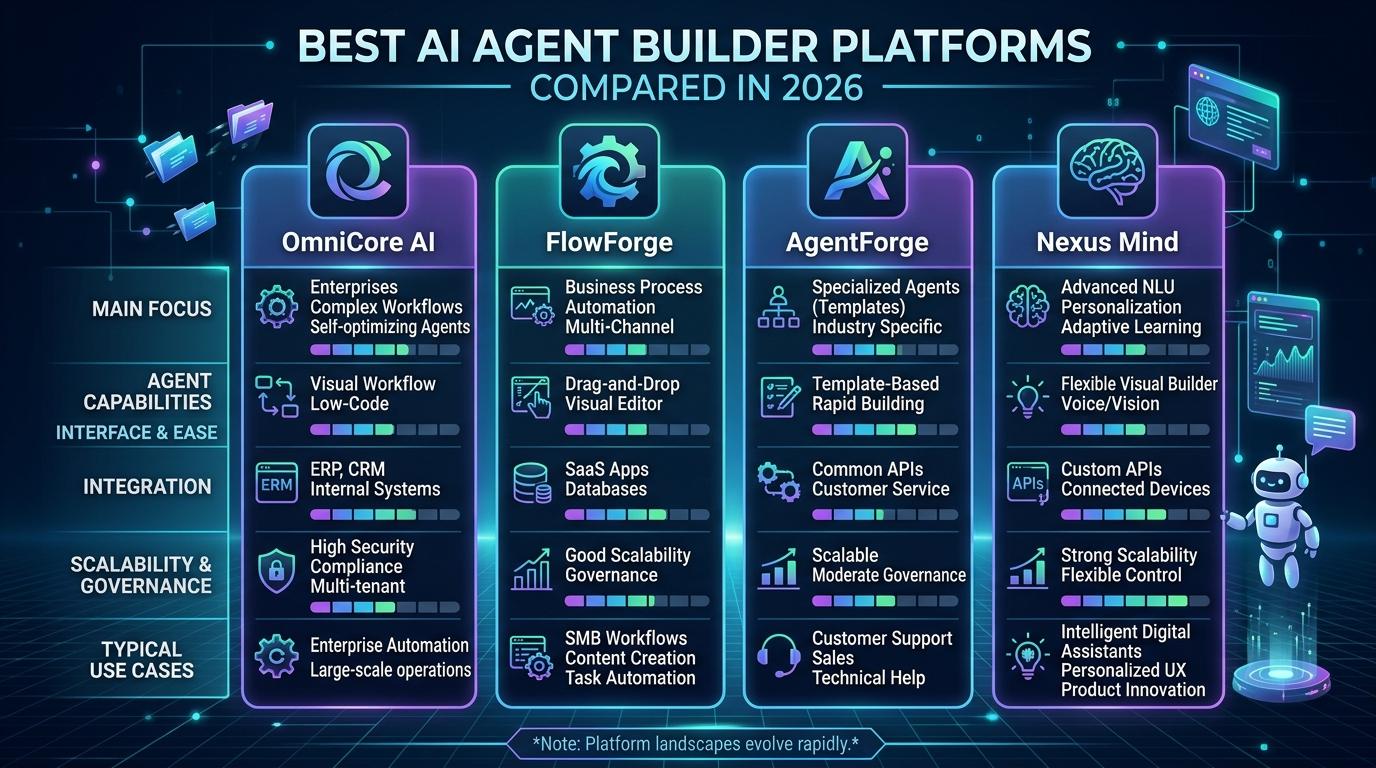
The market for AI agent builder platforms has expanded quickly, with options ranging from developer focused frameworks to fully no code interfaces designed for non technical business teams. Rather than naming a single winner, since the right choice depends heavily on team skill level and specific use case, this guide compares the main categories of platforms available and what distinguishes each one.
No Code, Business User Focused Platforms
This category of AI agent builder targets non technical users directly, typically offering natural language configuration where a business user describes what they want an agent to do in plain language, and the platform translates that into a working agent. These platforms prioritize accessibility and speed of setup over deep customization, making them well suited to common, well understood use cases like customer support automation or lead qualification.
The main tradeoff with this category is reduced flexibility for genuinely unusual or highly specific logic. Teams with straightforward, common automation needs often find these platforms sufficient, while teams with more unique requirements eventually hit limitations that push them toward more flexible options.
Developer Focused Frameworks
At the other end of the spectrum, developer focused AI agent builder frameworks provide code level control over agent behavior, tool usage and reasoning logic. These frameworks suit engineering teams building genuinely custom agent behavior, particularly for products where the agent itself is customer facing and needs precise, carefully tested behavior rather than the more general purpose logic a no code platform provides.
The tradeoff here is obvious: meaningful engineering time and expertise is required to build and maintain agents on these frameworks, making them a poor fit for teams without dedicated technical resources to invest.
Mid Tier Platforms With Visual Workflow Builders
Between fully no code and fully code based options sits a growing category offering visual, drag and drop workflow builders that give more configuration control than pure natural language platforms while remaining accessible to technically inclined but non engineering team members. These platforms typically let users define an agent's decision logic visually, connecting conditions, actions and tool calls without writing traditional code, while still allowing custom code snippets for teams that need to handle edge cases the visual interface cannot express.
This category has become popular specifically because it balances accessibility against flexibility more effectively than either extreme, making it a common choice for teams with moderate technical comfort building moderately complex agents.
Platforms Specialized for Specific Use Cases
Some AI agent builder platforms focus specifically on a single use case category, such as customer support agents, sales research agents, or internal knowledge management agents, rather than offering a general purpose agent building framework. These specialized platforms often include pre built templates, integrations and guardrails specifically tuned for their target use case, which can significantly reduce setup time compared to configuring a general purpose platform from scratch for the same task.
The tradeoff is reduced flexibility outside the platform's specific focus area. A team needing agents across several different use case categories may find themselves managing multiple specialized platforms rather than a single general purpose one.
Evaluating Which Category Fits Your Team
Choosing between these categories depends primarily on two factors: how technically skilled your team is, and how standard versus unique your intended use case actually is. A non technical team with a common, well understood automation need is usually best served by a no code or specialized platform. A technical team building something genuinely novel benefits from the flexibility a developer focused framework provides. Teams somewhere in the middle, with moderate technical comfort and moderately complex needs, often find visual workflow builder platforms hit the right balance.
What to Look for Regardless of Category
Across every category, certain features deserve attention regardless of which type of AI agent builder you ultimately choose: reliable integration with your core business systems, clear and configurable human approval guardrails for consequential actions, genuine visibility into agent reasoning and action history for debugging, and a pricing model that scales predictably as usage grows rather than becoming unexpectedly expensive at production volume.
Final Thought
The best AI agent builder platform is not a single universal answer but depends on matching platform category to team skill level and use case specificity. No code platforms suit accessible, common automation, developer frameworks suit custom engineering heavy projects, and mid tier visual builders often hit a practical balance for teams somewhere between those extremes. Testing a real pilot within the category that fits your team profile remains more valuable than any feature comparison alone.

 English
 Arabic
 French
 Spanish
 Portuguese
 Deutsch
 Turkish
 Dutch
Dutch
 Italiano
 Russian
 Romaian
 Greek
Greek