


How Robotic Cells Can Improve Production Flexibility
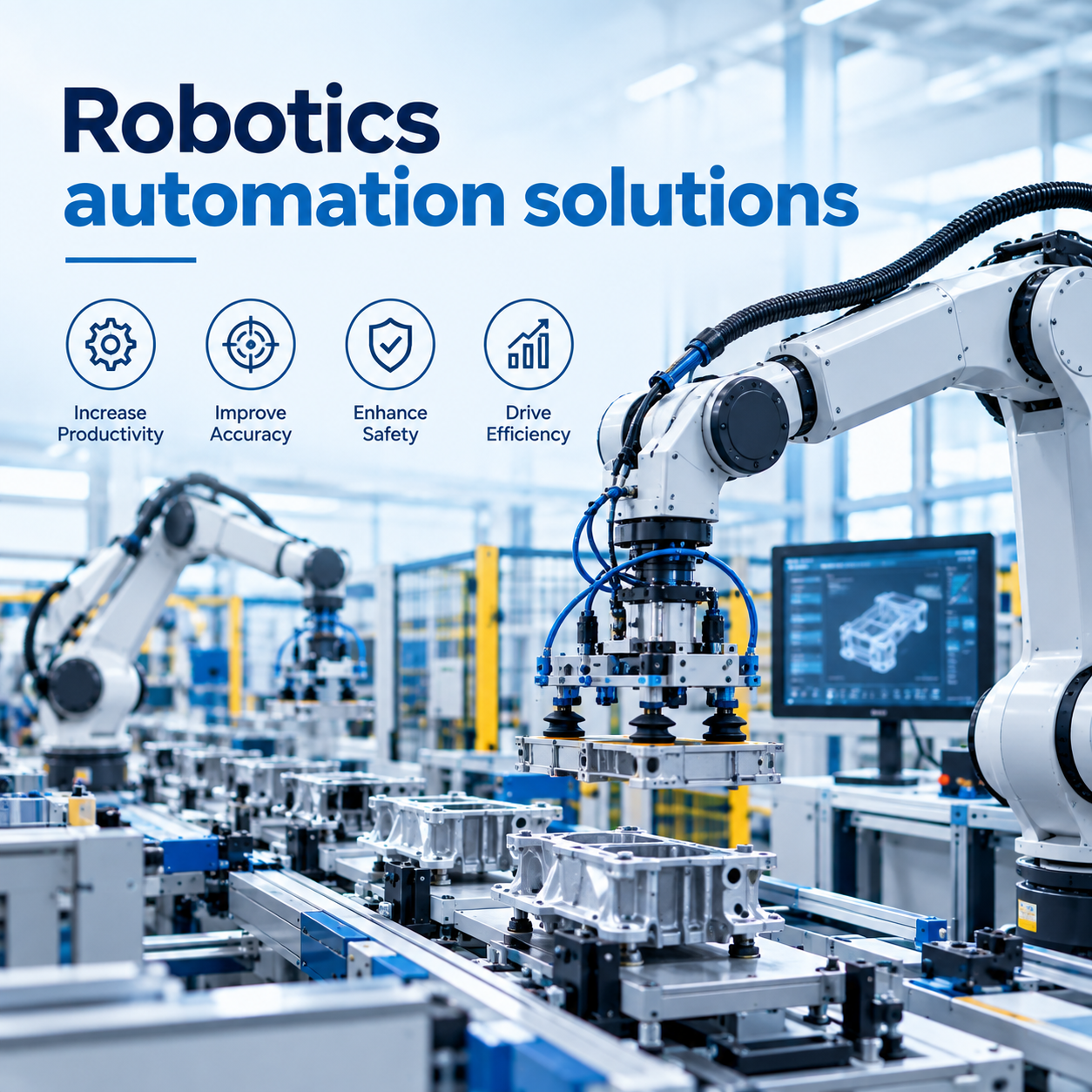
Manufacturing requirements can change quickly. Companies may need to produce different components, increase output, or maintain consistent quality while controlling operational costs. Robotic technology can support these objectives by performing programmed tasks within a controlled production environment. Robotics automation solutions can be adapted to many industrial applications.
A robotic cell generally includes a robot along with supporting equipment. Depending on the task, this may include grippers, fixtures, sensors, cameras, controllers, conveyors, and safety systems.
The combination of these components allows robots to perform more than simple repetitive movements. A robot can receive information from sensors, interact with production equipment, and perform an operation according to programmed conditions.
For manufacturers, flexibility is one of the useful characteristics of robotic automation. A system can potentially be reprogrammed when production requirements change. This can be helpful when different products or component sizes need to be handled.
Robotics automation solutions can be applied to machine tending, assembly, material movement, inspection, packaging, and other production activities. The appropriate configuration depends on the required speed, precision, workspace, and interaction with other equipment.
Robotic systems can also provide useful operational data. Information about cycle times, machine status, and production activity can help teams understand how an automated process is performing.
Safety must remain an important part of any robotic implementation. Engineers need to consider how workers and automated equipment will operate in the same environment and incorporate suitable protective measures.
The best results come from treating robotics as part of a complete production system. Robot programming, mechanical design, controls, sensors, software, and safety features all need to be considered together.
As factories move toward flexible and connected production, robotic automation can provide a practical foundation for modern manufacturing. Properly designed systems can support repeatable operations while giving manufacturers greater flexibility to respond to changing requirements.

 English
 Arabic
 French
 Spanish
 Portuguese
 Deutsch
 Turkish
 Dutch
 Italiano
 Russian
 Romaian
 Portuguese (Brazil)
