


Using Automation Solutions to Create More Efficient Workflows
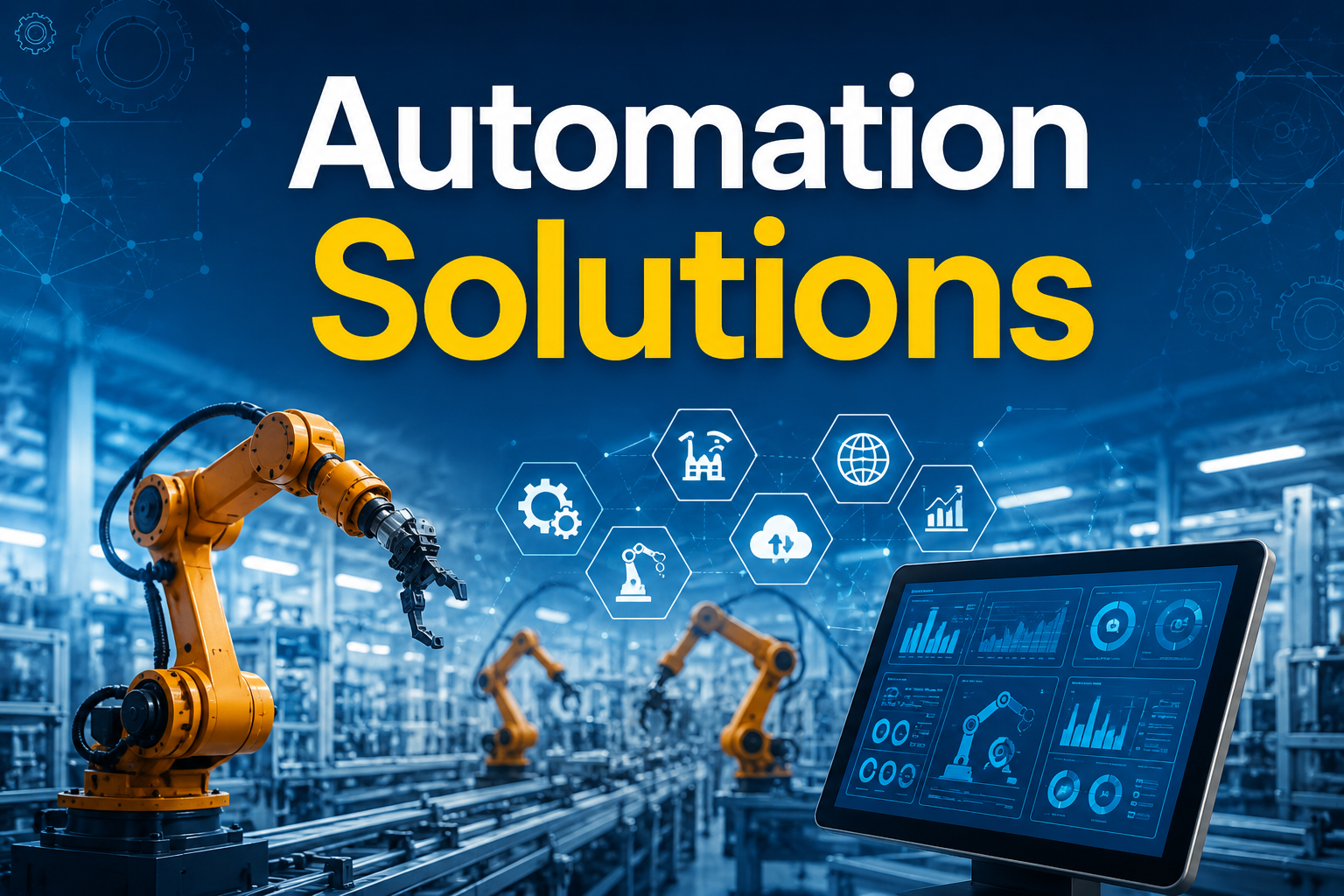
Repetitive industrial processes can consume significant time and resources when they depend heavily on manual operations. Automation can help businesses redesign these workflows so that machines and control systems handle predictable tasks consistently.
Automation solutions can be developed for many different applications. Manufacturing lines, inspection systems, packaging operations, material handling, and process equipment can all benefit from appropriate automation technologies.
A successful automation project begins with understanding the process. Engineers examine how materials move, where decisions are made, which tasks are repetitive, and where delays or errors commonly occur. This information helps determine which parts of the workflow should be automated.
Sensors and controllers are often central components of an automated system. Sensors provide information about the physical process, while controllers use programmed logic to determine what actions should take place.
Automation can also improve process monitoring. Operators can receive information about machine status and production conditions through monitoring interfaces. This can make it easier to identify abnormal situations and take corrective action.
Rather than treating automation simply as machine replacement, businesses can view it as a way to redesign workflows and improve operational consistency. When properly planned and implemented, automation solutions can support productivity, quality, and long-term process improvement.
 Arabic
 English
 French
 Spanish
 Portuguese
 Deutsch
 Turkish
 Dutch
Dutch
 Italiano
 Russian
 Romaian
 Portuguese (Brazil)
 Greek
Greek
