


Custom Chocolate Boxes Packaging: MOQ explained
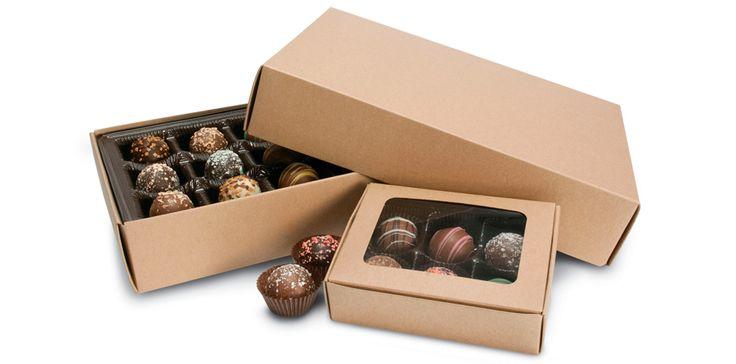
Minimum order quantities for custom chocolate box packaging can trip up first-time businesses. Custom chocolate box packaging is more than artwork and design: It’s how many pieces of printed material a factory will run on a single production cycle. Chocolate companies may be used to more flexible numbers from early sales and online retailers, but printed chocolate boxes packaging from custom manufacturers has more set-in-stone production requirements.
Supply thresholds dictate printing setup, sheet runs, inks, and machinery limits. A lower production run is a higher per-unit cost, and a larger batch will reduce overall expense. Order quantity isn’t just a suggestion for the chocolate packaging newcomer: It’s essential math that will directly determine how long it takes to get a product to market and how much risk the brand can afford.
Machine Setup Thresholds
Chocolate box packaging production revolves around time and setup on printing machines. Every print cycle has a separate plate, ink mixing, colour registration, and liner build process to complete. Because of this, very low order quantities are not attractive to packaging factories. A chocolate box has to meet a minimum production threshold before factory machinery will begin producing efficient results. Setting up materials, machines, cutting knives, and safety checks costs time and resources, no matter how small the run is. The fewer units, the higher the final cost for each box. Packaging boxes manufacturers use minimum order requirements, not subjective randomness, to dictate order size. The setup time and effort are carefully calculated by the print factory, so each unit of chocolate packaging must cover its fair share of printing conditions, inks, and machine time.
Price Jump Points
The cost of these packages of chocolate boxes will never go up in a linear graph. It instead jumps between discrete steps. When the order quantity is increased, the per-unit price level for packaging will suddenly drop at multiple points. The lowest order level at which a per-unit price level will decrease is called a price jump point. Raising a minimum order quantity by a small percentage can make packaging orders fall dramatically in overall expense. Chocolate packaging companies work hard to discover these pricing levels and place orders right at the threshold to hit a lower price band. Jump points are thus critical value thresholds for brands that have not yet hit stable sales: Stay below a pricing point, and cost per unit could quickly skyrocket. Only when brands know their target market size can they approach this price tier system strategically.
Small Batch Limits
Startup companies expect absurdly low sample quantities before selling their products. Chocolate box packaging startups require very low order numbers to market test their ideas. However, minimums are rigid even for sample production of printed packaging. A short run is not cheap or free because machines must still calibrate ink, mix sheets, and line up cutting tools. Minimum quantities are usually even on sample runs and very rarely lower than the lowest threshold. Chocolate companies launching into the packaging market must respect this fact of production life and begin as manufacturers expect. Production is always a little more costly at these small runs, but it is a hard limit that new chocolate brands face when designing printed samples.
Sample Run Reality
Samples are the first phase of production before a brand is ready to go to market. Sample runs are not expected to be sold and are used for chocolate box design checks, style verification, and durability reviews. Chocolate boxes' packaging samples must be exactly how they will appear in full production, even if not on that scale. Prototypes often get produced on a different machine with different settings than how they will be produced for sales. The inks, alignment, and folding behaviour can all be slightly off. For this reason, chocolate companies that are serious about their packaging request slightly larger sample runs to verify the expected quality and tolerances. Sample runs for packaging are not the same as proof of concept: They are a second stage before starting full production runs.
Customization Limits
Custom chocolate box packaging requires a different setup time for additional production steps. Colour matching, heat embossing, window cutouts, or specialized finish methods all have more processing effort than the standard. Because of this, MOQ is often directly correlated with the level of customization the chocolate boxes' packaging design needs. A basic chocolate box can have a lower minimum production number than a hot foil embossed gift box. Production is usually not possible until a factory assesses and accepts the required effort to run a production cycle. Chocolate packaging companies that do not know this hard reality of packaging design often get sticker shock during the MOQ proposal stage.
Wholesale Scaling Logic
Chocolate box packaging MOQs become less significant when brands reach stable or growth sales volumes. Higher order quantities will always have a lower price level. Chocolate packaging becomes more affordable per unit at wholesale levels. Wholesale boxes production also has a positive feedback loop that improves conditions. Buying in bulk at high production levels gives pricing power and security of supply. Chocolate companies will eventually outgrow sampling concerns, and wholesale logistics and seasonality will take over. MOQ is no longer a constraint at this stage but a guide to stable production cycles and regular inventory management. Chocolate companies can improve margins and reduce per-unit risk by simply increasing production size and scale.
Gifting Market Pressure
The packaging demand for chocolate boxes is not the same throughout the year. Holidays, special occasions, and giving shape to the demand for all packaging materials. This demand, in turn, impacts the MOQ application in chocolate packaging factories. Suppliers adjust minimum requirements during these peak months to accommodate production pressure. Wholesale chocolate gift boxes are time-sensitive products, so factories are less flexible in these months. Brands that will launch or scale during seasonal peaks must plan production needs early to avoid penalties. Often, ordering for the holiday season will result in higher MOQ brackets or long waiting lists. Chocolate company sales planning is directly influenced by how MOQ is applied and enforced during these busy times of year.
Production Risk Balance
Minimum order quantities for chocolate box packaging are there to help balance risk. Factories do not want to invest time and resources in low-demand designs, while brands do not want to over-order unused chocolate box packaging. MOQ establishes a harmony between risk in packaging production on both sides. Chocolate boxes packaging production has a high upfront cost in materials, machine time, and labour hours, with no money coming in. The risk that a printed box will never see sale is what the MOQ was created to eliminate. Without an MOQ system, factory owners would be subsidizing losses on very small exploratory orders. Chocolate packaging manufacturers that do not set an MOQ for production will eventually go out of business.
Conclusion
Minimum order quantities are how businesses make all packaging decisions for custom chocolate boxes packaging from design to production volume. Custom chocolate boxes packaging isn’t an art process only: It’s a system based on printing efficiency, machine thresholds, and risk distribution. First-time chocolate companies that don’t learn about MOQ as soon as possible will be unprepared to make logical decisions about sampling, scaling, and gifting. Understanding MOQ is not a chore: It is an early step to understanding controlled growth and smarter ordering for a chocolate brand’s long-term stability.

 English
 Arabic
 French
 Spanish
 Portuguese
 Deutsch
 Turkish
 Dutch
Dutch
 Italiano
 Romaian
 Portuguese (Brazil)
 Greek
Greek
