


How AI and RWA Token Development Could Change Asset Valuation and Monitoring
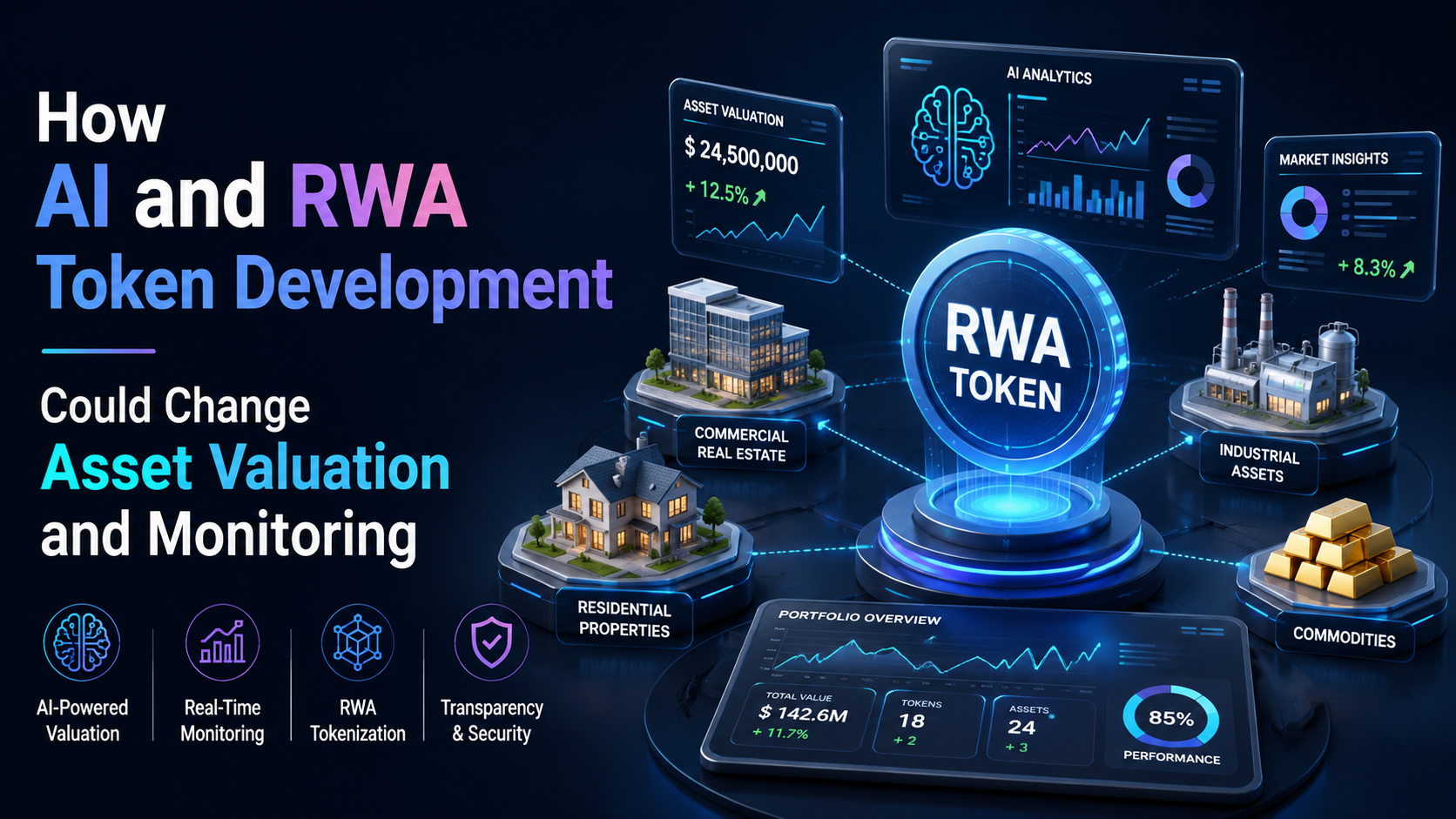
Asset valuation has traditionally depended on appraisals, financial statements, market reports, inspections, and periodic reviews. These methods remain useful, but they often provide information at fixed intervals. A property may be inspected once every few months, a commodity portfolio may be reviewed according to reporting cycles, and financial performance may be assessed after data has already changed.
RWA token development introduces another approach by representing rights or interests in real-world assets through blockchain-based tokens. When artificial intelligence is added to this setup, valuation and monitoring can become more data-driven and frequent. AI systems can process market information, asset records, transaction activity, satellite imagery, maintenance reports, and other relevant inputs. Blockchain records can then provide a structured record of token ownership, transfers, and asset-related events.
This combination does not remove the need for professional valuation or regulatory oversight. Instead, it can give asset managers, investors, issuers, and marketplaces additional information for making valuation and monitoring decisions. The following sections examine how this could work across different stages of the asset lifecycle.
AI Can Bring More Frequent Valuation Inputs
Many asset valuations rely on information collected at specific points in time. AI can process new information continuously or at much shorter intervals.
For example, an AI model assessing a commercial property could review rental income, occupancy levels, local property prices, interest rates, comparable transactions, maintenance costs, and economic indicators. When these variables change, the system can flag potential changes in estimated value.
In an RWA tokenization environment, these valuation updates could be associated with the relevant tokenized asset record. Investors would still need to understand that an AI-generated estimate is not necessarily the same as a legally recognized appraisal. The distinction between estimated market value, appraised value, and token price would remain important.
An RWA tokenization company could therefore use AI as an analytical layer while keeping human valuation professionals involved where regulations or asset complexity require them.
Tokenization Can Connect Valuation With Asset Records
Tokenized assets require information about the underlying asset, ownership rights, issuance terms, and transaction history. Blockchain records can provide a consistent reference point for many of these details.
Consider a tokenized real estate asset. The associated records may include the number of issued tokens, ownership allocations, income distributions, transfer activity, and relevant asset documentation. AI can analyze this information alongside external market data.
This creates a relationship between asset data and valuation analysis. Instead of treating valuation as an isolated report, an RWA tokenization platform development project can incorporate valuation data into a broader digital asset environment.
The result could be a system where asset information, market indicators, ownership records, and analytical outputs are viewed together.
AI Monitoring Can Detect Changes in Asset Conditions
Valuation is only one part of asset management. Monitoring the physical and financial condition of an asset is equally important.
AI can analyze different types of information depending on the asset class. For real estate, this could include inspection reports, maintenance records, occupancy information, energy consumption, and property images. For agricultural assets, AI could examine crop data, weather information, soil conditions, and production records. For equipment, it could assess operating data, maintenance schedules, and performance indicators.
When unusual changes appear, the system can flag them for review.
For instance, if a commercial building experiences a sudden increase in maintenance expenses and a decline in occupancy, an AI monitoring system could identify both changes and indicate that the asset may require a valuation review.
This does not mean AI independently determines what an asset is worth. Its role can be to identify relevant changes early and direct attention toward areas that deserve further assessment.
Real-Time Market Data Could Influence Valuation Models
Asset values often respond to external market conditions. Interest rates, inflation, regional demand, commodity prices, currency movements, and economic activity can influence valuations.
AI can process large amounts of market information and identify relationships between these factors and historical asset performance. A valuation model could then use updated inputs when generating estimates.
For tokenized assets, this can be particularly useful because token markets may operate more frequently than traditional asset reporting cycles.
An RWA token development system could connect valuation models with approved data sources while keeping the final valuation methodology documented. This creates an opportunity for investors to see how market conditions may affect an asset's estimated value without relying solely on occasional reports.
Token Prices and Asset Valuations May Become Easier to Compare
An important issue in RWA markets is the difference between the value of the underlying asset and the price at which its token trades.
Suppose a property is valued at $10 million and represented by one million tokens. A simple calculation might suggest a $10 reference value per token. However, actual market prices could differ because of liquidity, investor demand, restrictions, income expectations, and other factors.
AI systems can monitor these differences and identify unusual price movements. A platform could compare token trading activity with estimated asset value and historical pricing patterns.
This could provide useful information for investors and platform operators. It could also help identify situations where a token's market price has moved significantly away from the latest underlying valuation.
The purpose would not be to force token prices toward an estimated value. Rather, the data could support additional analysis before an investor makes a decision.
AI Can Support Automated Risk Monitoring
Asset monitoring involves more than tracking prices. There can be operational, financial, legal, and market-related risks.
AI can review large datasets for patterns associated with potential problems. A property platform might monitor delayed rental payments, rising vacancy, unexpected expenses, insurance changes, or unusual transaction activity. A tokenized debt asset might be monitored for payment delays or changes in borrower-related indicators.
Within an RWA tokenization platform development environment, these monitoring signals can be connected to internal dashboards. Alerts can be generated when predefined conditions are reached.
For example, a platform may establish a rule that a significant decline in occupancy should trigger a valuation review. Another rule might flag unusually high token trading activity for manual investigation.
These functions can reduce the amount of routine data checking performed manually, while important decisions can remain under human supervision.
AI Could Improve Valuation of Less Liquid Assets
Some real-world assets do not have frequent market transactions. Private real estate, infrastructure projects, specialized equipment, agricultural assets, and certain private credit instruments may lack sufficient recent sales data.
AI models can examine historical transactions and related market indicators to produce estimates when direct comparable data is limited.
However, limited market data also creates model risk. An AI system may produce a precise-looking number even when the underlying evidence is weak. This is why valuation models should include information about data quality, assumptions, confidence ranges, and update frequency.
A Real-world asset tokenization company working with less liquid assets may therefore need a valuation framework that combines AI-based analysis with professional review rather than depending on a single automated output.
Oracles Could Connect External Data With Tokenized Assets
Blockchain applications generally require external information to be delivered through trusted data mechanisms. This is where asset-related oracles can become relevant.
An oracle may provide information such as property prices, commodity prices, exchange rates, interest rates, weather conditions, or other approved data points to a blockchain application.
AI can analyze these inputs before they are used for monitoring or valuation workflows. For example, an AI system might compare several approved data sources, identify unusual differences, and send the information for review.
An RWA tokenization development project could therefore combine blockchain records, external data feeds, AI analytics, and human approval processes.
The quality of the data remains critical. Poor source data can produce poor analysis regardless of how sophisticated the AI model is.
Different Asset Classes Will Need Different AI Models
There is no single valuation model that works for every real-world asset.
Real estate may require rental income, occupancy, location, comparable sales, development activity, and financing information. Commodities may depend on supply, demand, inventory, weather, and market prices. Artwork may require provenance, previous sales, artist history, condition, and market demand. Private credit may involve borrower performance, collateral value, repayment history, and financial ratios.
An RWA tokenization development company working across multiple asset classes may therefore need different data structures and analytical methods for each category.
The tokenization process can remain consistent at a technical level, but valuation and monitoring logic may differ significantly between assets.
AI Can Assist With Continuous Asset Reporting
Traditional reporting often involves collecting information, preparing documents, reviewing figures, and distributing reports. AI can assist with parts of this workflow by collecting approved information, organizing it, identifying changes, and preparing draft reports.
For tokenized assets, this can make periodic reporting more closely connected to blockchain activity.
A report might include recent token transfers, income distributions, asset performance, valuation changes, outstanding obligations, and monitoring alerts. Investors could then receive a more complete view of the asset rather than only a token price.
An RWA tokenization platform development company could incorporate these reporting features into investor dashboards, asset management systems, and administrative interfaces.
Regulatory Review Will Remain Important
AI-generated valuation information does not automatically become an official valuation. Different jurisdictions may have specific rules concerning securities, property ownership, investment products, disclosures, custody, accounting, and valuation practices.
Token issuers also need to consider how asset information is presented to investors. If an AI model generates estimated values, the methodology, source data, limitations, and update process may need to be documented.
An RWA tokenization company should therefore treat AI as part of a wider operating framework rather than as a replacement for compliance, auditors, appraisers, legal professionals, or asset managers.
Human review becomes particularly important when an AI system detects unusual conditions or when valuation decisions have legal or financial consequences.
What the Future Could Look Like
The combination of AI and RWA token development could lead to asset platforms where valuation and monitoring become more continuous.
Instead of viewing an asset through occasional reports, investors may have access to updated information about market conditions, asset performance, ownership records, income activity, and risk indicators.
For example, a tokenized property could have a digital record containing ownership information, rental performance, maintenance events, market data, valuation estimates, and transaction history. AI could review these inputs and highlight changes that deserve attention.
This model could also support portfolio-level analysis. Investors holding tokens linked to multiple properties, commodities, or private credit instruments could use AI to compare performance and identify concentration risks across their holdings.
The practical outcome will depend on data quality, regulatory acceptance, valuation standards, and how responsibly AI models are implemented.
Conclusion
AI and RWA token development could introduce a more frequent and data-driven approach to asset valuation and monitoring by connecting blockchain records with market information, asset performance data, AI analysis, and reporting systems. AI can help identify valuation signals, monitor asset conditions, detect unusual activity, and organize information for investors and asset managers, while blockchain can maintain records of token ownership and transactions. However, AI estimates should not be treated as automatic substitutes for professional valuation, regulatory review, or human judgment. The quality of data, model assumptions, asset-specific requirements, and legal framework will continue to influence the reliability of these systems. As tokenized asset markets develop, businesses may increasingly look toward integrated systems that combine RWA tokenization, AI analytics, data oracles, compliance processes, and investor reporting. Blockchain App Factory provides RWA tokenization development services for businesses looking to develop tokenized asset solutions with the required technical and operational components.
FAQs
1. How can AI help with RWA asset valuation?
AI can analyze market prices, asset performance, financial records, comparable transactions, and other approved data to generate valuation estimates and identify changes that may require professional review.
2. Does RWA token development replace traditional asset valuation?
No. RWA token development can provide digital records and analytical tools, but professional appraisals, audits, legal reviews, and regulatory valuation requirements may still apply.
3. How does AI monitor tokenized real-world assets?
AI can examine asset performance, market information, financial activity, maintenance records, occupancy data, and other inputs to identify unusual changes and generate alerts.
4. What role does blockchain play in asset monitoring?
Blockchain can maintain records related to token ownership, transfers, issuance, and other approved transactions. These records can be combined with external data for monitoring and analysis.
5. Can AI valuation data be updated frequently?
Yes. If reliable data sources are available, AI systems can process new information more frequently than traditional periodic reporting. The update schedule depends on the asset, data availability, and business requirements.
6. What types of assets can use AI-based monitoring?
Real estate, commodities, equipment, agricultural assets, private credit, infrastructure, and other tokenized assets may use AI monitoring, although each asset class requires different data and valuation methods.
7. Why are oracles relevant to RWA tokenization?
Oracles can bring approved external information, such as market prices or economic indicators, into blockchain applications. This information can then be used within valuation and monitoring workflows.
8. What should businesses consider before adding AI to an RWA platform?
Businesses should consider data quality, valuation methodology, model reliability, privacy, regulatory requirements, auditability, human review, oracle design, and how valuation information will be presented to investors.

 English
 Arabic
 Spanish
 Portuguese
 Deutsch
 Turkish
 Dutch
Dutch
 Italiano
 Russian
 Romaian
 Portuguese (Brazil)
 Greek
Greek
