


AI Bot Trading Platform: Understanding the Future of Automated Trading
Introduction
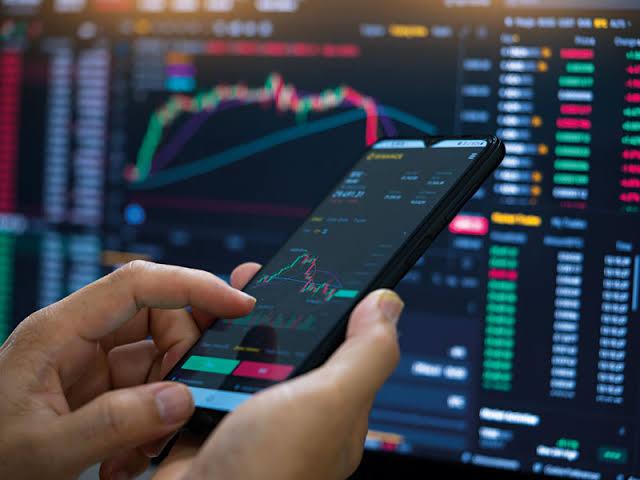
Technology has transformed the way financial markets are analysed and accessed. Traders no longer need to depend entirely on manual chart analysis or spend every hour watching price movements. Modern technologies can process market information, analyse patterns, generate signals, and automate parts of the trading process.
An AI bot trading platform brings together artificial intelligence, automation, data analysis, and systematic trading principles to create a technology-driven environment for researching and potentially executing trading strategies.
While these platforms can make sophisticated technology more accessible, it is important to understand what they actually do, how they work, and what risks are involved before considering automated trading.
What Is an AI Trading Bot?
An AI trading bot is a software-based system designed to analyse financial-market information and perform predefined tasks with limited or no continuous manual intervention.
Depending on its design, a trading bot may be able to:
-
Analyse market data
-
Identify predefined market conditions
-
Generate trading signals
-
Apply strategy rules
-
Manage positions
-
Apply risk parameters
-
Monitor markets continuously
-
Potentially execute trades through supported infrastructure
The addition of artificial intelligence can allow systems to process more complex datasets and potentially identify statistical patterns within historical information.
However, AI does not mean that a trading bot can predict every market movement accurately.
How an AI Trading Platform Works
A typical AI-enabled trading workflow can be divided into several stages.
Market Data
The system receives information such as price, volume, volatility, or other relevant variables.
Data Processing
The information is cleaned, organised, and prepared for analysis.
AI or Strategy Model
The system evaluates the available information according to its programmed methodology.
Signal Generation
If certain conditions are satisfied, the model may generate an output or trading signal.
Risk Management
The system can apply predefined controls related to position size, exposure, or losses.
Execution
Where supported, the system can potentially communicate with trading infrastructure to place orders.
Monitoring
The platform can continue tracking market conditions and open positions.
This creates an automated workflow that can operate according to predefined rules.
Why Are Traders Interested in AI Trading Bots?
One of the main attractions is automation.
Traditional trading can require continuous attention. Traders may need to monitor charts, evaluate signals, compare market conditions, and make decisions repeatedly.
An automated system can perform many repetitive tasks much faster.
Potential advantages include:
-
Continuous market monitoring
-
Faster data processing
-
Consistent strategy application
-
Reduced repetitive manual work
-
Automated signal generation
-
Systematic risk controls
-
Ability to analyse multiple markets
These advantages can make automated technology useful for both research and execution.
Artificial Intelligence vs Traditional Trading Bots
Not every automated trading bot uses artificial intelligence.
A traditional bot may simply follow explicit instructions.
For example:
If a moving average crosses another moving average, generate a signal.
An AI-based system may instead analyse multiple variables and use a trained model to estimate a particular market outcome.
The distinction is important because AI introduces additional considerations such as:
-
Training data
-
Model selection
-
Feature engineering
-
Validation
-
Overfitting
-
Model monitoring
A system should therefore be evaluated based on how it actually works rather than simply being labelled as AI-powered.
What Can AI Analyse?
Artificial intelligence can potentially process many different types of financial information.
Price Data
Historical and real-time price information can be used to identify trends and patterns.
Volume
Trading volume can provide information about market activity.
Volatility
AI models can potentially classify or estimate changing volatility conditions.
Technical Indicators
Indicators can be incorporated as model inputs where appropriate.
Economic Data
Macroeconomic information may provide additional context for certain strategies.
Text and Sentiment
Natural-language-processing technologies can analyse financial news and other text-based information.
The usefulness of any input depends on the strategy and the quality of the underlying data.
Machine Learning in Automated Trading
Machine learning can be used to develop models that identify relationships within historical datasets.
For example, a model could be trained to classify whether a particular combination of market variables historically corresponded with certain outcomes.
Common machine-learning approaches include:
-
Supervised learning
-
Unsupervised learning
-
Reinforcement learning
-
Classification models
-
Regression models
-
Clustering techniques
Different methodologies are appropriate for different research objectives.
The Importance of Training Data
AI systems learn from data.
If the underlying dataset is incomplete, inaccurate, biased, or poorly structured, the resulting model may produce unreliable outputs.
Important considerations include:
-
Data accuracy
-
Data completeness
-
Time consistency
-
Historical depth
-
Feature relevance
-
Data cleaning
-
Avoiding look-ahead bias
The quality of the data can be just as important as the sophistication of the AI model.
Avoiding Data Leakage
Data leakage can create misleadingly strong results.
It occurs when information that would not have been available at the time of a historical trading decision is unintentionally incorporated into the model.
For example, using future information during training can make a model appear highly accurate in testing while being unrealistic in live markets.
Careful dataset construction is therefore essential.
Overfitting and AI Trading Bots
Overfitting is one of the most important risks associated with AI-based trading systems.
A model may become excessively adapted to historical data.
It can then produce impressive backtested results while performing poorly when exposed to new market conditions.
Researchers can reduce this risk through techniques such as:
-
Out-of-sample testing
-
Walk-forward analysis
-
Sensitivity testing
-
Simpler model structures
-
Multiple market periods
-
Robust validation
The goal should be to identify stable relationships rather than maximise historical performance.
Backtesting an AI Trading Strategy
Before considering a strategy for live deployment, historical backtesting can provide useful information.
A backtest can help evaluate:
-
Historical returns
-
Drawdowns
-
Trade frequency
-
Win rate
-
Volatility
-
Profit factor
-
Risk-adjusted performance
However, historical simulations have limitations.
Real-world trading can differ because of:
-
Brokerage charges
-
Spreads
-
Slippage
-
Liquidity
-
Execution delays
-
Market impact
These factors should be considered wherever possible.
Why Risk Management Matters
Automation can make a strategy operate faster, but it does not make the strategy safer.
An automated trading system should have appropriate risk controls.
Position Sizing
Determining how much capital should be allocated to each position.
Exposure Limits
Controlling the amount of capital exposed to a specific market or strategy.
Drawdown Controls
Establishing thresholds at which a strategy should be reviewed or paused.
Stop Conditions
Defining circumstances under which trading activity should stop.
Leverage Management
Controlling leveraged exposure carefully.
Risk management should be built into the system from the beginning.
Automated Execution
One of the most advanced capabilities of trading technology is automated execution.
A connected system may receive market information, evaluate the strategy, apply risk controls, and submit an order without requiring manual intervention.
A simplified process looks like:
Data → Analysis → Signal → Risk Check → Execution → Monitoring
This can provide speed and consistency.
However, automated execution also creates operational risks.
Technical problems, connectivity failures, incorrect configurations, or unusual market conditions can affect results.
The Role of Human Oversight
Automation does not necessarily eliminate the need for human supervision.
Human oversight can help identify:
-
Unusual model behaviour
-
Unexpected losses
-
Data problems
-
Technical failures
-
Market regime changes
-
Execution issues
A responsible automated trading framework should therefore include monitoring and intervention procedures.
Choosing an AI Trading Platform
Not every platform provides the same functionality.
Before selecting a solution, users should evaluate several areas.
Supported Markets
Does the platform support the assets and markets of interest?
Data
What type of market data is available?
Strategy Development
Can users create or customise strategies?
Backtesting
Does the system provide historical testing capabilities?
Execution
Can the platform connect to appropriate trading infrastructure?
Risk Controls
Are position sizing, exposure, and drawdown controls available?
Monitoring
Can users track system performance and technical status?
Security
How are accounts, connections, and credentials protected?
Understanding Performance Claims
Users should be cautious when evaluating claims about automated trading systems.
A historical return figure alone does not provide enough information.
A more complete evaluation should consider:
-
Maximum drawdown
-
Number of trades
-
Testing period
-
Market conditions
-
Transaction costs
-
Out-of-sample results
-
Strategy assumptions
A strategy with high historical returns and extreme drawdowns may not be suitable for every trader.
Why Simplicity Can Matter
More advanced technology does not necessarily produce better results.
An AI model containing numerous variables may be more difficult to validate and maintain than a simpler model.
Simple systems can sometimes offer advantages in:
-
Transparency
-
Testing
-
Monitoring
-
Maintenance
-
Error detection
The appropriate level of complexity should be determined by the research problem.
AI Bots Across Different Markets
Automated trading systems can potentially be applied to multiple financial markets.
Depending on the infrastructure, these may include:
-
Forex
-
Indices
-
Equities
-
Cryptocurrencies
-
CFDs
-
Other supported instruments
Each market has different characteristics.
Liquidity, trading hours, volatility, transaction costs, and execution conditions can all affect strategy performance.
A strategy developed for one market should not automatically be assumed to work in another.
Monitoring Market Regime Changes
A strategy may perform differently as market conditions change.
For example, an approach developed during a strong trend may behave differently during a prolonged period of sideways movement.
Monitoring market regimes can therefore be important when operating automated systems.
AI can potentially assist with classifying market conditions, but such models also require careful validation.
Technology and Operational Risk
Automated trading introduces risks beyond market movements.
These can include:
-
Software errors
-
Internet connectivity problems
-
Server failures
-
Incorrect configurations
-
API interruptions
-
Data-feed problems
-
Security incidents
A robust system should have procedures for identifying and responding to technical failures.
Learning About AI-Based Trading
Understanding automated trading requires knowledge from multiple disciplines.
A learner may benefit from studying:
-
Financial markets
-
Trading strategies
-
Statistics
-
Data analysis
-
Programming
-
Machine learning
-
Backtesting
-
Risk management
Developing these foundations can make it easier to evaluate AI-based systems objectively.
AlgoSutraa provides educational programmes focused on algorithmic trading and advanced areas such as AI integration and strategy development, helping learners understand the concepts behind systematic and automated trading.
Developing a Responsible Automated Strategy
A disciplined development process can include:
1. Define the Objective
Determine what the strategy is designed to achieve.
2. Develop the Hypothesis
Identify the market behaviour being investigated.
3. Collect Data
Gather relevant historical information.
4. Build the Model
Develop the strategy or AI model.
5. Backtest
Evaluate historical behaviour.
6. Validate
Test the model using unseen data.
7. Stress Test
Examine performance under different market conditions.
8. Paper Trade
Observe the system in a simulated environment.
9. Apply Risk Controls
Establish appropriate limits.
10. Monitor
Continuously evaluate both performance and technical operation.
The Future of AI Trading Platforms
Artificial intelligence and automation are likely to become increasingly integrated into financial-market technology.
Future systems may offer more sophisticated capabilities for:
-
Automated research
-
Market classification
-
Pattern recognition
-
Sentiment analysis
-
Portfolio analysis
-
Risk monitoring
-
Strategy optimisation
-
Automated execution
As these technologies become more accessible, individual traders may gain access to tools that were previously available mainly to larger financial institutions.
Nevertheless, greater accessibility also makes financial education and responsible risk management increasingly important.
Conclusion
An AI-powered trading platform can combine artificial intelligence, automation, market data, strategy development, and execution technology into a single systematic framework.
An AI bot trading platform can potentially help traders automate repetitive processes, analyse large amounts of information, generate systematic signals, and monitor markets continuously.
However, automation should never be mistaken for guaranteed profitability.
Successful implementation requires reliable data, realistic testing, robust validation, appropriate risk controls, secure technology, and ongoing monitoring.
The most responsible approach is to treat AI as a powerful analytical and automation tool rather than a replacement for financial knowledge or disciplined decision-making.
As financial technology continues to develop, AI-driven platforms are likely to play an increasingly important role in systematic trading. Traders who understand both the opportunities and limitations of these technologies will be better positioned to evaluate them carefully and use them responsibly.

 English
 Arabic
 French
 Spanish
 Portuguese
 Turkish
 Dutch
Dutch
 Italiano
 Russian
 Romaian
 Portuguese (Brazil)
 Greek
Greek
