


Real Estate Token Development: How On-Chain Property Records Could Change Asset Management
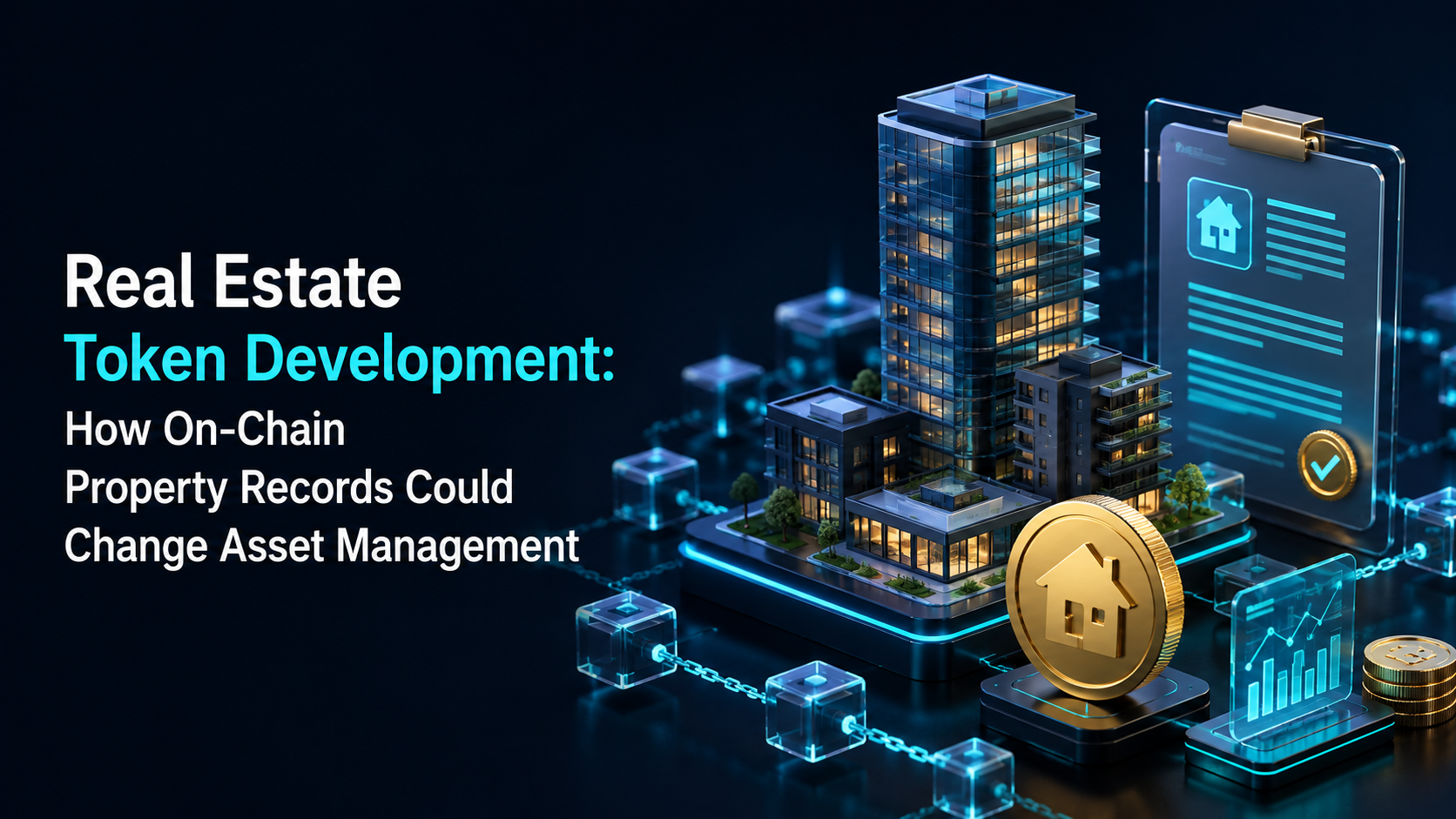
Real estate asset management often depends on property deeds, valuation reports, lease agreements, tax records, maintenance documents, ownership details, and transaction histories. These records may sit across government offices, banks, property managers, legal firms, custodians, and private databases. When information is spread across multiple systems, checking records and updating ownership information can take considerable time.
Real estate token development introduces another approach by connecting property ownership and asset information with blockchain networks. Instead of treating blockchain only as a platform for issuing property tokens, businesses can use on-chain records to maintain selected information about properties, ownership rights, transactions, and asset-related activities.
On-chain property records do not necessarily mean placing every document directly on a blockchain. Sensitive files can remain in secure storage while their references, verification data, timestamps, ownership events, or document hashes are recorded on-chain. This model can give asset managers a shared record that can be checked against information stored outside the blockchain.
For businesses considering real estate tokenization, this approach can influence how properties are administered after tokens are issued. The following methods explain how on-chain property records could change real estate asset management.
Method 1: Recording Property Ownership Events on Chain
Property ownership can involve several stages, including acquisition, transfer, fractional ownership, refinancing, and sale. Each stage usually creates documentation that must be reviewed by legal and financial teams.
With real estate tokenization, a blockchain network can record token transfers associated with an approved ownership structure. Each transaction receives a blockchain timestamp and remains part of the network's transaction history. The token record does not automatically replace a government land registry, but it can provide an additional digital record for the ownership system.
A Real estate tokenization company can design the platform so that ownership-related blockchain events correspond with legally recognized records. This can help asset managers review when tokens moved between approved wallets and how the digital ownership structure changed over time.
Method 2: Connecting Property Documents With Blockchain Records
Property management generates large volumes of documents. Lease contracts, inspection reports, valuation statements, insurance records, title documents, and compliance files may need to be checked repeatedly.
A real estate asset tokenization company can connect these documents with blockchain references. Instead of storing the full document on-chain, the platform can store a cryptographic hash or document identifier. If the original document changes, its new hash can differ from the previous record, providing an indication that the file needs review.
This approach can give property managers a useful method for checking whether the document they are viewing matches the record associated with a particular blockchain entry. Document access can still remain restricted according to user roles and legal requirements.
Method 3: Creating a Shared Property History
Asset managers often need to understand what happened to a property over a long period. A property may change owners, tenants, managers, lenders, valuation levels, and operational status several times.
Real estate tokenization development can add blockchain-based event records to this history. Depending on the platform design, events may include token issuance, transfers, distributions, approved ownership changes, property updates, and other administrative activities.
A shared event history can reduce dependence on manually assembled transaction records. Asset managers can use the record to investigate when an event occurred and which wallet or platform account was involved, subject to the permissions and identity controls used by the platform.
Method 4: Improving Lease and Rental Administration
Rental income is an important part of many property portfolios. Managing leases requires information about tenants, rental amounts, payment schedules, renewal dates, deposits, and contract terms.
A real estate tokenization platform development project can connect selected lease information with tokenized property records. Smart contracts may also be used for predefined payment calculations and distribution rules where the legal structure permits this arrangement.
For example, a property generating rental income could have a tokenized ownership structure. When rental income is received, the platform could calculate eligible distributions based on the ownership records and approved rules. The blockchain can record distribution events while sensitive tenant information remains outside the public ledger.
Method 5: Maintaining a Digital Record of Property Maintenance
Property management is not limited to ownership and income. Buildings require regular maintenance, repairs, inspections, upgrades, and service contracts.
A tokenization platform can associate maintenance events with a property's digital record. For instance, an inspection date, service completion, contractor record, or equipment replacement could be referenced in the platform.
This can give asset managers a chronological view of operational activity. When a property is reviewed for refinancing, sale, insurance, or investment reporting, relevant maintenance information may be easier to organize.
The blockchain itself should not be treated as a replacement for professional inspection systems. Rather, it can act as a record layer that links selected operational events with the relevant property.
Method 6: Supporting Property Valuation Records
Property values can change because of market conditions, rental performance, renovations, location factors, and economic activity. Asset managers may therefore work with multiple valuation reports during the life of an investment.
Real estate token development can associate valuation events with specific properties and time periods. A platform could record when an approved valuation was submitted, who issued it, and which asset it related to.
Historical valuation records can help investment teams compare changes over time. However, the blockchain does not determine whether a valuation is accurate. The credibility of the valuation still depends on the professional or organization providing the assessment.
Method 7: Giving Investors Better Access to Asset Information
Tokenized real estate may involve many investors holding fractional interests in a property. These investors may want information about the asset, distributions, ownership records, and significant property events.
A real estate tokenization platform development company can create investor dashboards that connect wallet balances with approved property information. Investors may be able to view token holdings, transaction history, distribution records, and selected asset documents based on their permissions.
This model can reduce the need for investors to request basic information manually from an administrator. At the same time, personal information and confidential documents should remain protected through access controls and appropriate data storage practices.
Method 8: Linking Property Records With Compliance Checks
Real estate tokenization involves legal and regulatory considerations that vary by jurisdiction and asset structure. Investor identity, wallet eligibility, ownership restrictions, transfer rules, and reporting obligations may need to be considered.
A real estate tokenization platform development company can integrate identity verification and compliance checks into the platform. Smart contracts can restrict certain transactions when predefined conditions are not satisfied.
On-chain records can then provide an auditable history of approved transactions and administrative actions. Legal and compliance teams can use these records alongside off-chain documents rather than depending on blockchain data alone.
Method 9: Making Portfolio-Level Asset Management More Organized
Large property portfolios can contain residential buildings, offices, hotels, warehouses, student housing, and other assets. Each property can have different ownership arrangements, income sources, documents, and operating requirements.
Real estate tokenization can give portfolio managers a common digital structure for tracking tokenized assets. Each property can have its own token records, document references, income information, and event history.
This can make portfolio reporting more organized because asset managers can review multiple properties through one platform. The exact information available will depend on the platform architecture, legal structure, data sources, and permissions.
Method 10: Supporting Property Transfers and Secondary Transactions
Traditional property transfers can require extensive documentation, legal checks, payment processing, and registry updates. Tokenized property interests may allow certain ownership interests to be transferred digitally when permitted by the legal structure.
Real estate tokenization development can connect token transfers with investor verification and transaction rules. A smart contract can check whether a wallet is approved before allowing a transfer.
This can provide asset managers with a digital history of token movements. However, token ownership should not automatically be treated as legal title to the underlying property. The relationship between the token and property rights must be defined through contracts and applicable law.
What This Means for Real Estate Asset Managers
On-chain property records could change asset management by adding a shared digital record to processes that traditionally depend on separate databases and paperwork. The biggest benefit may come from connecting ownership events, property documents, income records, maintenance activities, and investor transactions within one structured environment.
For a business considering real estate tokenization, the technology should be planned around the legal rights represented by the token. A blockchain record alone does not create ownership rights. Legal agreements, property registries, custody arrangements, investor contracts, and local regulations still matter.
The platform should also distinguish between information that belongs on-chain and information that should remain off-chain. Personal data, confidential agreements, and large files may be better stored in controlled systems, with blockchain records used for verification and event tracking.
Choosing a Real Estate Tokenization Development Approach
Businesses have several ways to enter this market. They can work with a Real estate tokenization development company to create a platform from the ground up, use an existing framework, or adopt a white-label model.
When comparing Top real estate tokenization companies or Best real estate tokenization companies, businesses should look beyond token issuance features. They should review blockchain support, smart contract design, wallet management, investor onboarding, compliance functions, document management, reporting, property administration, security practices, and post-launch support.
Real estate tokenization platform development should also account for the complete asset lifecycle. The platform may need to support property onboarding, legal documentation, token issuance, investor management, distributions, ownership transfers, reporting, and eventual asset exit.
A well-planned system can make the blockchain component part of a wider property management process instead of treating token issuance as the entire product.
Challenges to Consider
On-chain property records also introduce practical challenges. Property laws differ between countries and sometimes between regions within the same country. Government registries may not connect directly with blockchain systems. Data privacy rules can limit what information can be placed on a public network.
There is also the issue of data accuracy. Blockchain records can preserve information after it is entered, but they cannot determine whether the original information was correct. Reliable data sources, verification procedures, professional reviews, and administrative controls therefore remain necessary.
Technology costs, smart contract security, wallet recovery, investor support, tax reporting, and system maintenance also need attention during real estate tokenization development.
Future Possibilities for On-Chain Property Records
As property tokenization develops, on-chain records could become more closely connected with property administration systems, digital identity platforms, payment networks, valuation services, and legal processes.
A property could eventually have a digital record containing its ownership events, approved documents, income history, maintenance activity, valuation references, and token transactions. Different participants could access relevant sections according to their roles.
This does not mean every property record will move onto a public blockchain. In many cases, a hybrid model may make more practical sense, with blockchain handling verification and transaction records while sensitive information remains in controlled databases.
Conclusion
Real estate token development could give property managers a new way to record ownership events, property documents, income distributions, maintenance activities, valuation history, and investor transactions. On-chain records can provide a persistent transaction history while off-chain systems continue to store confidential and detailed property information. The success of this model depends on legal structures, data quality, compliance processes, security controls, and thoughtful platform architecture rather than blockchain alone. Businesses considering real estate tokenization should therefore assess the complete property lifecycle before selecting a development approach. Blockchain App Factory provides Real estate tokenization development services for businesses looking to create platforms for tokenized property ownership, investor management, asset administration, and blockchain-based property records.
FAQs
1. What is real estate token development?
Real estate token development is the process of creating blockchain-based tokens that represent ownership interests, economic rights, or other legally defined interests connected with real estate assets.
2. What are on-chain property records?
On-chain property records are blockchain entries that can record selected property-related information, such as transaction events, token ownership changes, timestamps, document references, and distribution records.
3. Can property deeds be stored directly on a blockchain?
They can be technically referenced or, in some cases, stored depending on the network and legal framework. However, sensitive or large documents are often kept in secure off-chain storage, while a blockchain record can store a hash or reference.
4. Does a real estate token automatically represent legal property ownership?
No. The legal meaning of a token depends on the contracts, jurisdiction, property structure, regulatory requirements, and rights assigned to the token.
5. How can blockchain help property asset managers?
Blockchain can provide a persistent record of selected transactions and asset events. It may help managers review ownership changes, distributions, document verification records, and other approved activities from a shared system.
6. What does real estate tokenization platform development involve?
It can involve property onboarding, token creation, smart contracts, wallet management, investor verification, compliance tools, asset dashboards, payment distribution, transaction management, reporting, and administrative functions.
7. Should businesses work with a real estate tokenization development company?
Businesses may work with a development company when they need assistance with blockchain architecture, smart contracts, platform interfaces, investor systems, compliance integrations, security, and ongoing technical maintenance.
8. What should businesses consider before starting real estate tokenization development?
They should assess the legal rights represented by the token, property jurisdiction, investor requirements, compliance obligations, blockchain selection, custody, data storage, smart contract design, security, and the complete asset management process.

 English
 Arabic
 French
 Portuguese
 Deutsch
 Turkish
 Dutch
Dutch
 Italiano
 Russian
 Romaian
 Portuguese (Brazil)
 Greek
Greek