Skincare does not have to mean a bathroom shelf packed with dozens of products. In fact, a well-structured routine often works better when it focuses on a few purposeful steps: cleansing, hydration, targeted treatment, and daily sun protection.
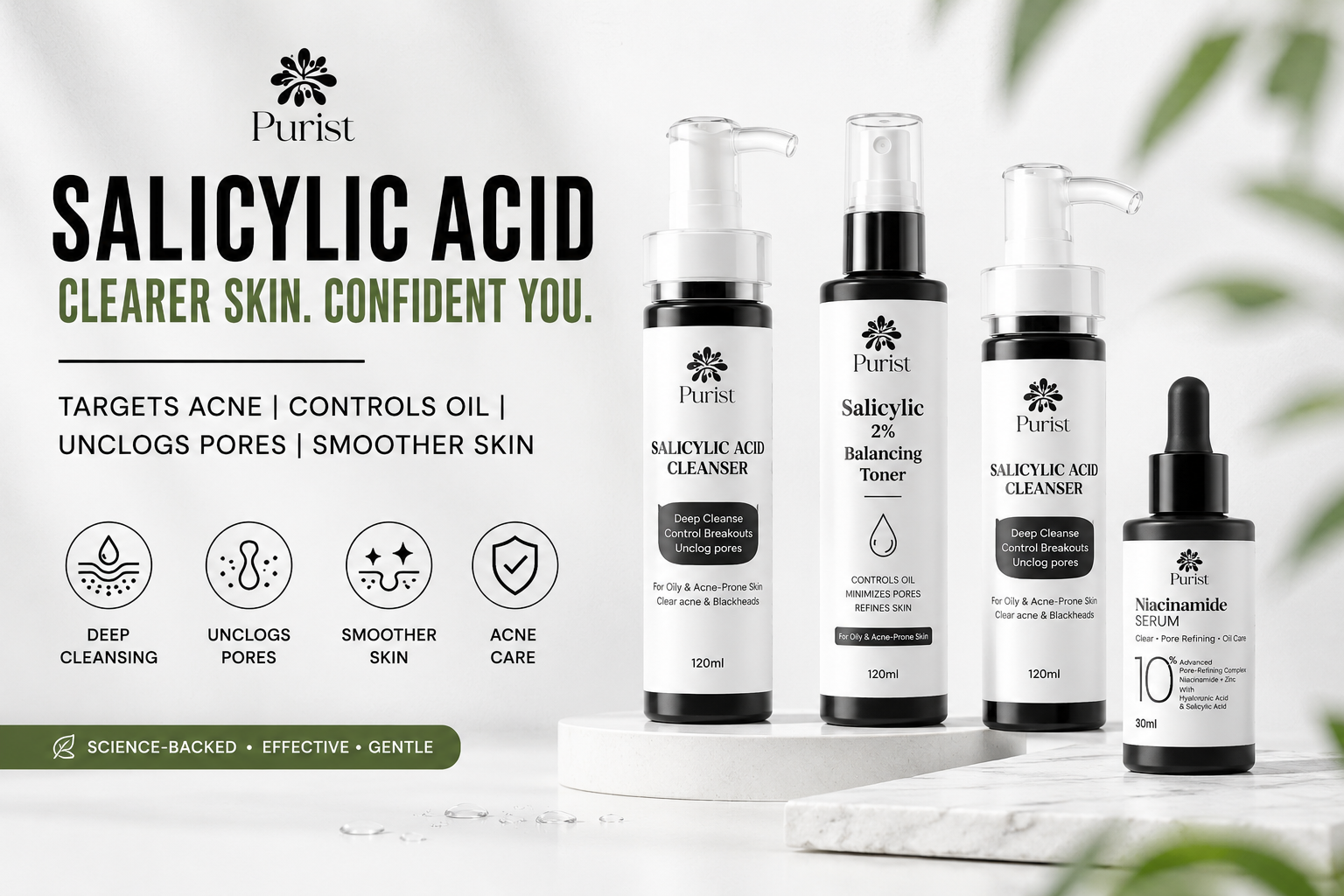
Purist Skincare takes this straightforward approach by focusing on skincare products designed around common concerns such as acne, excess oil, dullness, uneven-looking skin, and dehydration. For anyone trying to build a routine without getting lost in complicated ingredient combinations, understanding what your skin actually needs is the best place to start.
What Is Purist Skincare?
Purist Skincare is a skincare-focused approach centered on practical, targeted products rather than an unnecessarily complicated routine. The idea is simple: identify your primary skin concerns, choose appropriate ingredients, and use them consistently.
Different skin types have different requirements. Oily skin may benefit from ingredients that help manage excess sebum and clogged pores, while dry or dehydrated skin generally needs greater emphasis on moisturising and barrier support.
Instead of choosing products because an ingredient is trending on social media, consider whether that ingredient has a genuine purpose within your routine.
Why a Simple Skincare Routine Makes Sense
More products do not automatically mean better skin. Using several exfoliants, serums, masks, and treatments simultaneously can make it difficult to determine what is actually helping—and may increase the chance of irritation.
A practical routine can usually be divided into four fundamental areas:
- Cleanse: Remove dirt, excess oil, sunscreen, and impurities.
- Treat: Use targeted ingredients for specific concerns.
- Moisturise: Support hydration and the skin barrier.
- Protect: Use sunscreen during the daytime.
This framework provides a strong foundation while leaving room for specific treatments when needed.
Choosing Skincare Based on Your Skin Type
Before selecting products, understand your skin.
Oily Skin
Oily skin can produce excess sebum, which may contribute to clogged pores and breakouts. Lightweight, non-heavy formulations are often preferable.
Ingredients such as salicylic acid are commonly used in routines targeting clogged pores and excess oil.
Dry Skin
Dry skin generally benefits from products designed to maintain moisture and support the skin barrier. Gentle cleansing and consistent moisturisation can be more important than repeatedly adding strong active ingredients.
Combination Skin
Combination skin can have oilier areas, particularly around the forehead, nose, and chin, alongside drier areas elsewhere. A balanced routine can help address these differences without excessively drying the skin.
Sensitive Skin
Sensitive skin may react more easily to fragrances, exfoliating acids, or other active ingredients. Introducing one new product at a time and patch testing before widespread use can make it easier to identify potential problems.
Important Ingredients to Understand
The skincare industry is full of complicated ingredient names, but understanding a few commonly used actives can make product selection much easier.
Salicylic Acid
Salicylic acid is a beta hydroxy acid frequently used in products designed for oily and acne-prone skin. It can help exfoliate the skin and support clearer-looking pores.
It is important not to assume that stronger or more frequent use is always better. Overuse may lead to dryness or irritation.
Vitamin C
Vitamin C is widely used in skincare because of its antioxidant properties. It is commonly included in routines targeting dullness and uneven-looking skin tone.
For daytime routines, Vitamin C can complement—not replace—proper sun protection.
Niacinamide
Niacinamide, also known as Vitamin B3, is a versatile skincare ingredient commonly found in products targeting excess oil, uneven appearance, and overall skin barrier support.
Its popularity comes partly from its ability to fit into many different skincare routines.
Hyaluronic Acid
Hyaluronic acid is a humectant that helps attract and retain water, making it a popular ingredient in hydrating skincare products. It can be useful when the goal is maintaining a smoother, more hydrated appearance.
Purist Skincare for Acne-Prone Skin
Acne-prone skin requires balance. The objective should not simply be to remove as much oil as possible.
Over-cleansing or repeatedly using harsh products can leave the skin irritated and uncomfortable. A better approach is to combine gentle cleansing with targeted ingredients and appropriate moisturisation.
A basic acne-focused routine might include:
Morning
- Gentle cleanser
- Suitable treatment serum
- Lightweight moisturiser
- Sunscreen
Evening
- Cleanser
- Targeted acne treatment
- Moisturiser
Not every active ingredient needs to be used every day, and introducing several treatments simultaneously can make irritation more difficult to manage.
Purist Skincare for Brighter-Looking Skin
Dullness can have many causes, including dehydration, environmental exposure, uneven pigmentation, and accumulation of dead skin cells.
A brightening routine should therefore focus on more than simply adding a “brightening” product.
Antioxidant ingredients such as Vitamin C can support a radiant-looking complexion, while moisturisation helps prevent dehydration from making the skin appear rough or tired.
Most importantly, sunscreen should remain part of the routine. Sun exposure can contribute to visible pigmentation and uneven skin tone, making consistent protection essential when working toward a more even-looking complexion.
How to Build a Routine Without Overdoing It
One of the smartest skincare strategies is to introduce products gradually.
Start with the basics:
Cleanser → Treatment → Moisturiser → Sunscreen
Once your skin is comfortable with the routine, you can consider adding another targeted product if there is a genuine reason to do so.
Avoid introducing multiple powerful active ingredients on the same day. If irritation develops, you will have no clear way of knowing which product caused it.
Skincare should be sustainable. A routine that takes five minutes and you actually follow is usually more valuable than an elaborate routine you abandon after two weeks.
Common Skincare Mistakes
Changing Products Too Frequently
Skin needs time to adjust to a routine. Constantly switching products makes it difficult to assess whether something is helping.
Using Too Much Product
Applying larger quantities does not necessarily accelerate results. Follow the product's recommended usage instructions.
Forgetting Sunscreen
This is one of the most common gaps in otherwise good skincare routines. Daily sunscreen is particularly important for people concerned about visible pigmentation and premature signs of sun exposure.
Over-Exfoliating
Exfoliation can be useful, but excessive exfoliation can compromise the skin barrier and cause irritation. More is not always more.
Copying Someone Else's Routine
A skincare routine that works for one person may not work for another. Skin type, sensitivity, climate, age, and existing concerns all matter.
Why Consistency Is the Real Skincare Secret
There is nothing particularly glamorous about consistency, but it is one of the most important parts of skincare.
Applying a suitable product once and expecting dramatic results is unrealistic. Similarly, abandoning a routine after a few days because the mirror looks unchanged can lead to unnecessary product switching.
Instead, focus on building habits that are easy to maintain.
Cleanse consistently. Moisturise when needed. Use targeted treatments appropriately. Protect your skin from the sun. Give products reasonable time to work.
That is far less exciting than a “7-day miracle,” but it is a much more sensible way to approach skincare.
Is Purist Skincare Suitable for Everyone?
No skincare brand or ingredient can realistically be guaranteed to work identically for every person.
Individual skin can respond differently depending on sensitivity, existing conditions, allergies, and the combination of products being used.
Before introducing a new product, check its ingredient list and directions. Patch testing can also be useful, particularly if you have sensitive skin.
If you have persistent, severe, or painful acne, significant pigmentation, unexplained skin changes, or ongoing irritation, professional advice from a qualified dermatologist is more appropriate than repeatedly experimenting with new products.
Final Thoughts
Good skincare does not need to be complicated. The strongest routine is usually one that matches your skin's needs, uses purposeful ingredients, and can realistically be followed every day.
Purist Skincare fits into this philosophy by focusing on targeted skincare solutions for everyday concerns such as acne, oiliness, dullness, hydration, and uneven-looking skin.
Rather than chasing every new skincare trend, start with the fundamentals. Understand your skin type, introduce active ingredients carefully, moisturise appropriately, and never treat sunscreen as optional.
The goal is not perfect skin. The goal is healthy, well-supported skin and a routine you can actually stick with.




 English
 Arabic
 French
 Spanish
 Portuguese
 Deutsch
 Turkish
 Dutch
Dutch
 Italiano
 Russian
 Romaian
 Portuguese (Brazil)
