

Zoho Consulting Services in Australia: How Zoho Supports Modern Business Needs
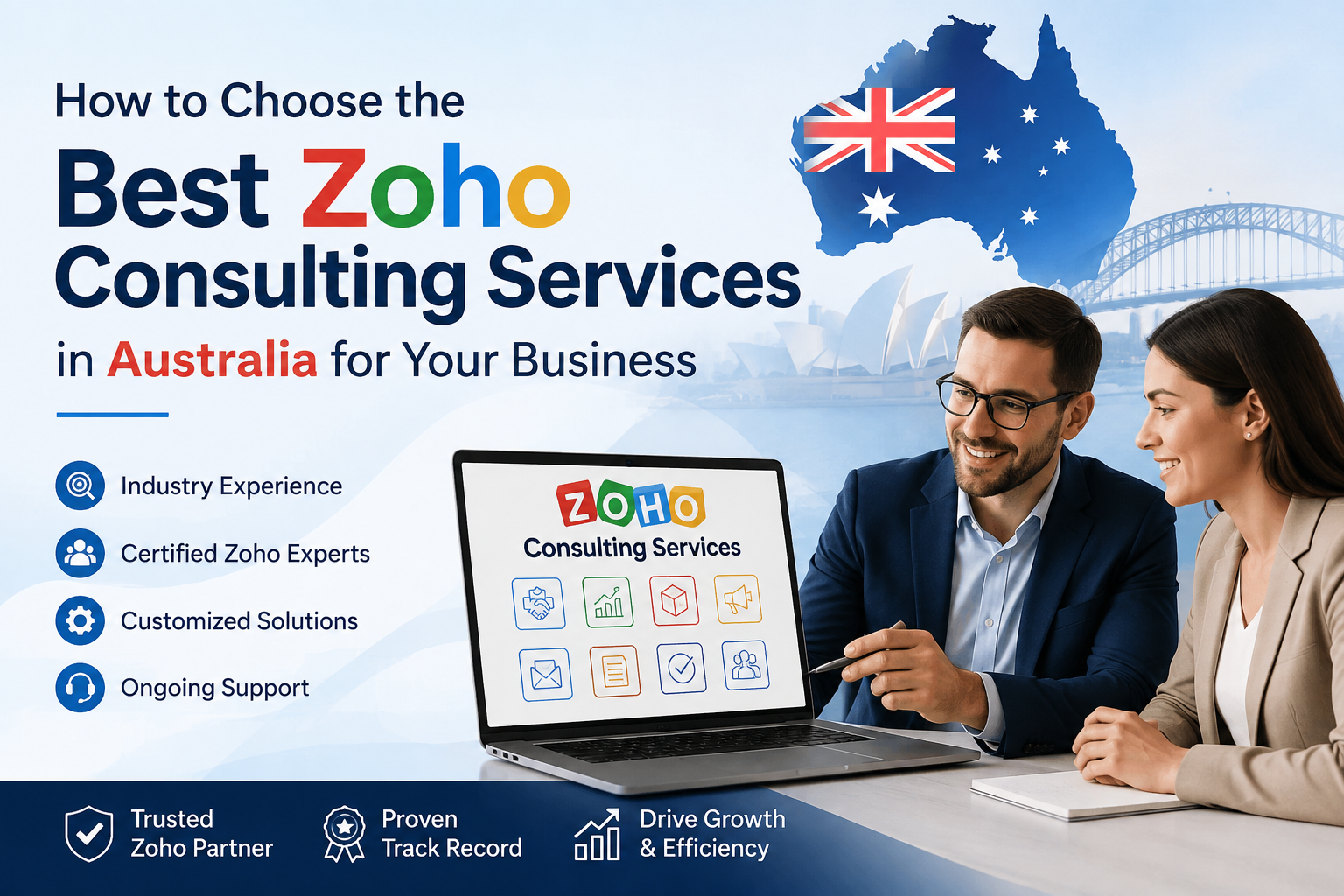
Running a modern business in Australia means dealing with changing customer expectations, growing competition, distributed teams, increasing data, and the constant need to work more efficiently. Businesses are looking for technology that can simplify everyday operations without creating another layer of complexity.
This is where Zoho Consulting Services in Australia can make a meaningful difference. Instead of simply purchasing software and expecting employees to figure everything out themselves, businesses can work with experienced consultants to understand their processes, select the right Zoho applications, configure them correctly, automate repetitive work, and connect different systems.
Zoho offers a broad ecosystem covering CRM, accounting, marketing, customer support, collaboration, analytics, HR, workflow automation, and application development. Its Australian marketplace also provides integrations and extensions that can connect different business functions. For example, Zoho CRM can be connected with Zoho Books to give sales and finance teams access to relevant customer and financial information.
For Australian businesses, the real value isn't simply having more software. It is about creating a connected digital environment that helps people work smarter.
What Are Zoho Consulting Services in Australia?
Zoho Consulting Services in Australia involve professional guidance for businesses that want to implement, customize, integrate, automate, or improve their use of Zoho applications.
A consultant begins by understanding how the business currently operates. For example, a company may collect leads through its website, follow up through email, create quotations manually, send invoices through another accounting platform, and communicate with customers using separate tools.
Although each individual activity may appear manageable, the entire process can become inefficient as the business grows.
A Zoho consultant can examine this workflow and determine where Zoho can reduce manual work. Depending on the company's needs, this could involve Zoho CRM, Zoho Books, Zoho Creator, Zoho Desk, Zoho Campaigns, Zoho Analytics, Zoho Forms, Zoho Flow, or other applications.
The goal should not be to implement every available application. The goal is to build a practical system around the business.
That distinction is important.
A good consultant asks, "What does your business need?" rather than simply asking, "Which Zoho products can we sell?"
Why Australian Businesses Are Looking for Better Business Automation
Businesses across Australia operate in different industries and at different scales, but many face similar operational challenges.
A growing business may have customer information stored in spreadsheets, sales conversations in email inboxes, accounting information in separate software, and internal processes managed manually.
This creates several problems.
Employees spend time entering the same information repeatedly. Managers have difficulty getting a complete picture of sales activity. Customer follow-ups may be missed. Finance teams may not have immediate access to sales information. And business owners can struggle to understand which processes are actually producing results.
Automation can help address these challenges.
Zoho provides tools that can bring different functions into a more connected environment. Its marketplace, for example, includes integrations between CRM, accounting, marketing, scheduling, and other systems.
For a growing Australian company, this can mean fewer repetitive tasks and better visibility across departments.
How a Zoho Consultant in Australia Can Help
Choosing a Zoho Consultant in Australia can be particularly useful when a company has specific processes that cannot be handled effectively through default software settings.
Consulting usually begins with discovery. The consultant studies the organization's sales process, customer journey, finance workflow, reporting requirements, employee responsibilities, and existing software.
The next stage is solution planning.
Instead of making unnecessary changes, the consultant can determine which Zoho applications are appropriate and how they should communicate with each other.
For example, a business could use Zoho CRM to manage prospects and customers, Zoho Books for financial operations, and Zoho Analytics for reporting. An integration can then help information move between relevant systems rather than requiring employees to enter everything manually.
The consultant may also configure custom fields, layouts, workflows, approval processes, dashboards, notifications, and automation rules.
This is where consulting becomes more valuable than simply buying a software subscription.
The software may be powerful, but its value depends heavily on how well it fits the company's actual operations.
Zoho CRM for Australian Sales Teams
Customer relationship management is one of the most common areas where businesses turn to Zoho.
A properly configured CRM can give sales teams a central location for leads, contacts, companies, deals, activities, notes, follow-ups, and sales stages.
Imagine an Australian service company receiving a new enquiry from its website.
Instead of manually copying the enquiry into a spreadsheet, assigning it to a salesperson, creating a follow-up reminder, and tracking the conversation separately, the process can be automated.
The lead can enter the CRM, be assigned to the appropriate team member, trigger a notification, and move through a defined sales pipeline.
Managers can then see which opportunities are active, which salespeople are handling them, and where prospects are dropping out.
The important point is that CRM implementation should reflect the company's sales process.
A consultant can help customize the CRM around those processes instead of forcing employees to completely change the way they work.
Connecting Sales and Finance
One of the biggest problems in growing businesses is the gap between sales and finance.
Salespeople may know what a customer has purchased, while the finance department handles invoices and payments separately.
This can lead to duplicated data and communication delays.
Zoho supports connections between CRM and financial operations. The Zoho CRM integration with Zoho Books, for example, is designed to connect customer and sales-related information with accounting information.
For businesses, this can create a smoother transition from sales to invoicing.
A consultant can help determine what information should move between systems, how records should be mapped, and which processes should be automated.
This is particularly useful for businesses that have outgrown spreadsheets or disconnected applications.
Zoho for Healthcare And Wellness Businesses
The healthcare and wellness sector has its own operational requirements, including appointments, customer communication, records, follow-ups, staff coordination, and administrative workflows.
Zoho for Healthcare And Wellness can be considered when organizations want to organize these processes using a connected digital system.
For example, a wellness business may need to manage enquiries, appointment bookings, customer communication, follow-up activities, invoices, and marketing campaigns.
Zoho Bookings can help businesses manage appointments and staff schedules, while CRM can help organize customer interactions. Zoho's CRM marketplace also provides integrations designed to bring scheduling functionality into CRM workflows.
However, healthcare organizations should not assume that configuring software automatically makes a system compliant with every applicable Australian legal or regulatory requirement.
A responsible consultant should first understand the organization's data, privacy, security, and compliance obligations and recommend an implementation accordingly.
Technology should support responsible data handling rather than create additional risk.
Zoho Creator for Custom Business Applications
Not every business process fits neatly into an off-the-shelf application.
An Australian business may have a specialized workflow for approvals, inspections, internal requests, project management, service delivery, or customer onboarding.
This is where Zoho Creator can become useful.
A consultant can help design a custom application around a company's specific requirements instead of forcing employees to use spreadsheets or disconnected tools.
For example, a property services company might require a custom workflow where a new service request moves from customer submission to staff assignment, inspection, approval, completion, and reporting.
A properly designed application can connect these stages and reduce unnecessary manual administration.
Business Automation With Zoho
Automation is one of the strongest reasons companies explore Zoho consulting.
Consider a simple sales process.
A new lead arrives.
The lead needs to be assigned.
The salesperson needs a notification.
A follow-up needs to be scheduled.
Once the deal is won, finance needs the relevant customer information.
The customer may then need an onboarding email.
Each of these actions could require manual work if systems are disconnected.
With appropriate automation, many routine steps can happen automatically.
The purpose of automation is not to eliminate people. It is to allow employees to spend more time on activities that require judgment, communication, creativity, and decision-making.
A consultant can identify repetitive tasks and determine which ones are safe and practical to automate.
Choosing the Right Zoho Partner in Australia
Businesses searching for a Zoho Partner in Australia should look beyond marketing claims.
The right partner should understand business processes, not just software features.
Experience matters because every implementation contains unexpected details. A consultant who understands CRM, automation, integrations, reporting, and customization can often identify problems before they become expensive.
Businesses should also ask how the consultant approaches discovery, data migration, testing, training, documentation, security, and ongoing support.
Another important factor is communication.
A successful implementation requires collaboration between the consultant and the client's employees. Staff members know the practical problems they face every day. Consultants bring technical and process expertise. Both perspectives are necessary.
Zoho's own partner ecosystem includes opportunities for developers, system integrators, and independent consultants, illustrating the broader role partners can play around Zoho products and extensions.
Why Customization Matters
Every business has its own terminology, approval structures, customer journey, and reporting requirements.
A standard Zoho setup may work well initially, but growing organizations often need customization.
Customization can include fields, modules, workflows, dashboards, forms, reports, integrations, automation, and custom applications.
However, customization should be approached carefully.
Too little customization can make employees feel that the system does not match their work.
Too much customization can make the system difficult to maintain.
An experienced consultant should aim for the middle ground: customize where the business gains genuine value while keeping the system practical and maintainable.
Data Migration Is an Important Part of Zoho Implementation
Businesses rarely start with a completely clean database.
They may already have customer information in Excel, another CRM, accounting software, or multiple systems.
Moving this information into Zoho requires planning.
Data should be reviewed, cleaned, mapped, and tested before the final migration.
Duplicate contacts, outdated records, inconsistent formatting, missing information, and incorrect field mapping can create problems after implementation.
This is why businesses should not treat migration as a simple copy-and-paste exercise.
A professional Zoho consultant can create a migration plan and test the process before moving the complete database.
Employee Training Should Not Be Ignored
Even the best technology can fail if employees do not understand how to use it.
Training should therefore be part of the implementation process.
Employees should understand not only which buttons to click, but also why the new workflow exists and how it makes their daily work easier.
For example, salespeople should understand how CRM stages work, when follow-ups should be recorded, and how management uses the information they enter.
Finance teams should understand how information moves from sales into accounting.
Managers should understand dashboards and reports.
Good training improves adoption and reduces the temptation to return to old spreadsheets and manual processes.
How Vision Infotech Can Support Australian Businesses
At Vision Infotech, the focus should be on using technology to solve real business problems rather than introducing software simply for the sake of digital transformation.
Businesses exploring Zoho Consulting Services in Australia can benefit from a structured approach that starts with understanding their existing processes.
Vision Infotech can help businesses evaluate their Zoho requirements, plan implementation, customize workflows, connect applications, automate repetitive processes, and provide guidance for long-term improvement.
The objective is to create a Zoho environment that employees can actually use.
Whether the requirement involves CRM customization, accounting workflows, automation, integrations, custom applications, or broader Zoho implementation, the solution should be aligned with the company's goals and operating model.
For Australian businesses working with remote or distributed teams, a well-organized cloud-based environment can also help employees access the information they need without relying on disconnected systems.
What Makes a Successful Zoho Implementation?
A successful implementation is not measured by how many Zoho applications a business purchases.
It is measured by business outcomes.
Are employees spending less time on repetitive administration?
Are leads being followed up consistently?
Can managers understand sales performance more easily?
Can finance teams access accurate information?
Are customers receiving faster responses?
Can the business scale without increasing administrative workload at the same rate?
These are much better indicators of success.
This is why the consulting process matters.
The technology is only one part of the solution. Business strategy, process design, employee adoption, data quality, automation, and ongoing improvement are equally important.
Final Thoughts
Modern Australian businesses need technology that can grow with them. They need systems that connect departments, reduce repetitive work, improve customer experiences, and provide useful information for better decision-making.
Zoho Consulting Services in Australia can help businesses move toward that goal by combining Zoho's technology with practical business process expertise.
From CRM and accounting to automation, custom applications, appointment management, reporting, and industry-specific workflows, Zoho provides a broad foundation for digital business operations. The key is implementing those tools thoughtfully.
For businesses considering a Zoho Consultant in Australia or evaluating a Zoho Partner in Australia, the best approach is to focus on experience, transparency, customization, training, support, and measurable business outcomes.
At Vision Infotech, the emphasis should always remain on one fundamental question: How can technology make the business easier to operate and better prepared for growth?
When Zoho is implemented around that principle, it becomes more than a collection of business applications. It can become a connected business environment that supports productivity, automation, customer relationships, and long-term growth.

 English
 Arabic
 French
 Spanish
 Portuguese
 Deutsch
 Turkish
 Dutch
Dutch
 Russian
 Romaian
 Portuguese (Brazil)
 Greek
Greek