


What Countries Can Be Discovered During Eastern Europe Tours?
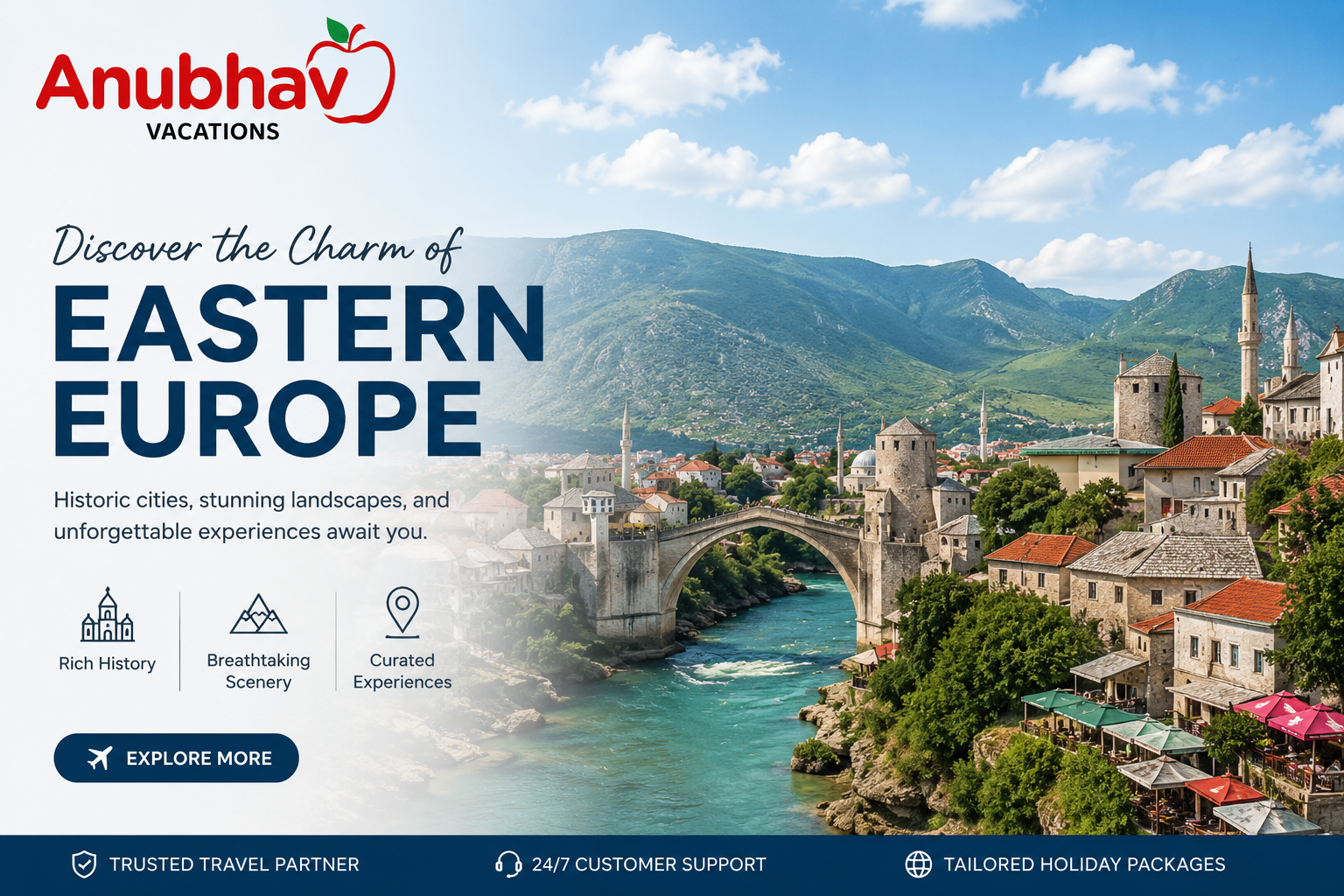
INTRODUCTION
Eastern Europe offers travelers a fascinating combination of historic cities, medieval architecture, cultural landmarks, scenic countryside, and diverse culinary traditions. Eastern Europe tours can combine several countries in one itinerary, allowing visitors to experience different cultures and landscapes while traveling between major destinations.
Poland
Poland is known for its historic cities and cultural heritage.
Travelers can explore:
- Warsaw
- Kraków
- Wrocław
- Historic squares
- Museums
- Medieval architecture
Kraków is particularly popular for its historic Old Town and cultural attractions.
Czechia
Czechia offers a blend of historic architecture and charming urban landscapes.
Visitors can discover:
- Prague
- Prague Castle
- Charles Bridge
- Old Town Square
- Historic neighborhoods
Prague is often an important highlight of multi-country Eastern European itineraries.
Hungary
Hungary is well known for its architecture, thermal baths, and capital city.
Travelers can explore:
- Budapest
- Buda Castle
- Parliament Building
- Danube River
- Thermal baths
Budapest provides a combination of history, culture, architecture, and riverfront scenery.
Austria
Austria can be included in broader Central and Eastern European itineraries.
Visitors may discover:
- Vienna
- Schönbrunn Palace
- Historic city center
- Museums
- Classical architecture
Vienna adds a strong cultural and historical dimension to a multi-country journey.
Slovakia
Slovakia offers historic towns and mountain landscapes.
Travelers can visit:
- Bratislava
- Bratislava Castle
- Historic Old Town
- Danube riverside
- Mountain regions
Its location makes Slovakia convenient to combine with neighboring destinations.
Romania
Romania provides travelers with historic cities, castles, and scenic landscapes.
Visitors can explore:
- Bucharest
- Brașov
- Transylvania
- Medieval towns
- Carpathian landscapes
The country's cultural heritage makes it an interesting addition to regional itineraries.
Croatia
Croatia combines historic coastal towns with Mediterranean scenery.
Travelers can discover:
- Zagreb
- Dubrovnik
- Split
- Historic old towns
- Adriatic coastline
Croatia can provide a different landscape experience within a broader European tour.
Slovenia
Slovenia is known for its compact cities, lakes, mountains, and natural beauty.
Visitors can explore:
- Ljubljana
- Lake Bled
- Lake Bohinj
- Alpine landscapes
- Historic sites
The country's natural attractions make it appealing to travelers interested in both culture and scenery.
Bulgaria
Bulgaria offers historic attractions, mountain scenery, and distinctive cultural experiences.
Travelers can discover:
- Sofia
- Plovdiv
- Historic monasteries
- Mountain regions
- Traditional architecture
Its diverse attractions can add variety to a multi-country itinerary.
Serbia
Serbia provides a combination of history, culture, and lively urban experiences.
Visitors can explore:
- Belgrade
- Novi Sad
- Historic fortresses
- Danube scenery
- Cultural landmarks
The country can be included in selected Balkan-focused itineraries.
Multi-Country Exploration
One of the main advantages of a regional tour is the ability to experience multiple countries in one journey.
An itinerary may combine:
- Poland and Czechia
- Czechia and Hungary
- Austria and Slovakia
- Hungary and Romania
- Croatia and Slovenia
- Several Balkan destinations
The exact countries depend on the route, duration, travel style, and selected itinerary.
CONCLUSION
Eastern Europe tours can introduce travelers to a diverse selection of countries, including Poland, Czechia, Hungary, Austria, Slovakia, Romania, Croatia, Slovenia, Bulgaria, and Serbia. Each destination offers its own combination of historic landmarks, architecture, cultural traditions, natural scenery, and local cuisine. A multi-country itinerary can provide a broad perspective of the region within one memorable journey.
FAQs
1. What countries can be discovered during Eastern Europe tours?
Eastern Europe tours can include Poland, Czechia, Hungary, Austria, Slovakia, Romania, Croatia, Slovenia, Bulgaria, Serbia, and other nearby destinations.
2. Can travelers visit multiple countries on one tour?
Yes, multi-country itineraries can connect several neighboring destinations, depending on the tour duration and selected route.
3. Which countries are known for historic cities?
Poland, Czechia, Hungary, Austria, Romania, and Croatia offer numerous historic cities, architectural landmarks, museums, and cultural attractions.
4. Can Eastern European tours include natural attractions?
Yes, itineraries can feature the Carpathian Mountains, Alpine landscapes, lakes, coastlines, countryside, and other scenic areas.
5. Which destination is popular for medieval architecture?
Czechia, Poland, Romania, Croatia, and Slovenia offer a variety of medieval towns, historic centers, castles, and architectural landmarks.
Read Our Previous Blog----------->Which seasonal experiences are included in Norway Holiday Packages?
 Arabic
 English
 French
 Spanish
 Portuguese
 Deutsch
 Turkish
 Dutch
Dutch
 Italiano
 Russian
 Romaian
 Portuguese (Brazil)
 Greek
Greek
