


How to Design the User Journey for RWA Tokenization Platform Development
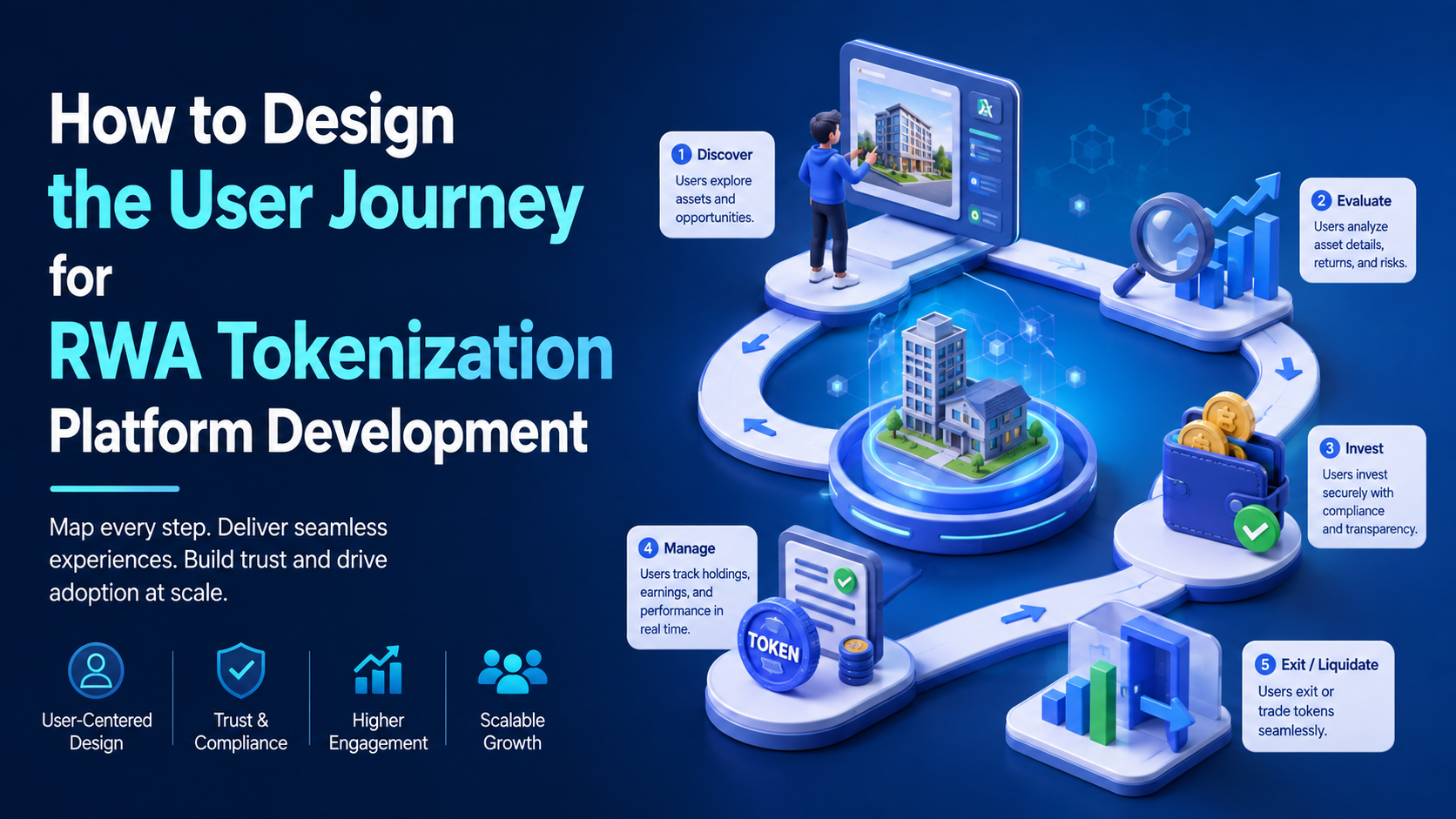
RWA tokenization platforms bring traditional assets such as real estate, private equity, commodities, bonds, art, invoices, and other financial instruments into blockchain-based environments. However, the technology alone does not determine whether users will adopt a platform. The journey from registration to asset discovery, investment, token ownership, trading, reporting, and redemption must feel logical and easy to follow.
A well-planned user journey helps investors understand what they are doing at every stage. It also gives issuers, administrators, compliance teams, and platform operators a structured way to manage their activities. During rwa tokenization platform development, user journey planning should therefore happen before interface design and feature implementation.
For an RWA Tokenization Company, the journey can influence user retention, transaction completion, compliance handling, and overall platform activity. The following sections explain practical methods for designing a user journey for a tokenization platform.
1. Identify the Main Users Before Designing the Journey
The first step is to identify everyone who will interact with the platform. A tokenization ecosystem can have several user groups, and each group may follow a different path.
Investors may register, complete identity verification, browse tokenized assets, review documents, purchase tokens, monitor holdings, and request redemption. Asset issuers may submit asset information, upload legal documents, define token terms, complete verification, and monitor token sales. Administrators may review submissions, manage users, monitor transactions, and handle compliance tasks.
Method: Create separate user personas for investors, asset issuers, administrators, compliance teams, and secondary-market participants. Document their goals, concerns, actions, and expected outcomes. This prevents one generic journey from being used for every user type.
2. Map the Investor Journey From Registration to Ownership
The investor journey should cover every action that takes place from the first visit to long-term asset management. A visitor may initially arrive through a marketing page, search result, referral, or direct invitation. The platform should then guide that visitor toward account creation without asking for unnecessary information too early.
After registration, identity verification, wallet setup, payment configuration, and investor eligibility checks can follow. Once approved, the investor can view available assets and compare details such as asset category, ownership structure, expected returns, holding period, token price, and associated documents.
Method: Draw the investor journey as a sequence such as discover, register, verify, fund, review, invest, receive tokens, monitor, trade, and redeem. At every stage, define what the user sees, what information is required, what action is expected, and what happens after that action.
3. Keep Onboarding Short but Complete
Onboarding is one of the first points where users can abandon a platform. RWA platforms often require KYC, AML checks, accreditation verification, wallet information, and investor suitability information. Presenting all these requirements on one screen can make the process feel difficult.
Instead, divide onboarding into logical stages. Explain why each piece of information is requested. Progress indicators can show users how many steps remain. If additional documents are required, the platform should provide instructions about acceptable formats and submission requirements.
Method: Divide onboarding into account registration, identity verification, investor qualification, wallet setup, and funding. Add save-and-return functionality where practical so users do not have to repeat the entire process if they leave midway.
4. Design Asset Discovery Around Investor Intent
After onboarding, investors need to find assets that match their investment preferences. A platform offering multiple asset categories should not force users to scroll through an unstructured list.
Asset discovery can include filters for asset type, location, investment amount, expected holding period, token price, yield structure, availability, and risk classification where applicable. Each asset page should provide the information needed for an informed decision.
Method: Group assets according to investor intent rather than only technical classifications. Provide search, filters, sorting, watchlists, and comparison features. Keep the first view concise while allowing users to open detailed information when they need it.
5. Create an Informative Asset Detail Page
The asset detail page is often where an investor decides whether to continue. For Real World Asset Tokenization, this page needs to connect blockchain information with conventional asset information.
A real estate listing, for example, may contain property information, valuation details, ownership structure, token supply, token price, income model, legal documents, fees, investment period, distribution method, and transaction history. Investors should also know whether tokens represent ownership, economic rights, debt exposure, or another legal arrangement.
Method: Arrange asset information into sections such as overview, financial information, legal structure, token information, documents, risks, fees, and transaction history. Place the investment action where it remains visible without hiding important disclosures.
6. Make the Investment Process Predictable
The investment process should not introduce unexpected screens or requirements. After selecting an asset, the investor should know how many tokens they are purchasing, the total amount payable, applicable fees, payment method, and what they receive after completion.
A confirmation screen can summarize the transaction before the final action. This gives investors an opportunity to check quantities and costs.
Method: Use a simple purchase sequence: select token quantity, review price, review fees, choose payment method, confirm transaction, and receive confirmation. Show transaction status after submission so users know whether the purchase is pending, completed, or unsuccessful.
7. Plan Wallet and Token Management Carefully
RWA token development often involves blockchain wallets and token standards. However, many investors may not have extensive blockchain knowledge. The platform should therefore explain wallet-related activities in familiar language.
Users may need to connect an external wallet or use a custodial wallet provided by the platform. They should be able to see token balances, transaction records, distribution history, and available actions from one account area.
Method: Provide a dedicated portfolio section showing asset names, token quantities, purchase value, current valuation where applicable, income received, transaction history, and wallet status. Use simple explanations for blockchain actions instead of assuming users understand technical terminology.
8. Design a Separate Journey for Asset Issuers
The issuer journey differs significantly from the investor journey. An asset owner may start by submitting an asset for tokenization. The platform may then require asset verification, ownership documents, legal assessments, valuation reports, financial information, and token structure details.
Once the asset passes the required checks, the issuer may configure token supply, pricing, investor restrictions, distribution rules, and offering details.
Method: Create an issuer dashboard with stages such as asset submission, document review, compliance review, token configuration, approval, offering preparation, launch, and post-launch management. Give issuers a status indicator so they can understand where their asset currently stands.
9. Add Compliance Into the Journey
Compliance should not appear as an unrelated obstacle at the end of the process. RWA Tokenization Services often require different checks depending on the asset, jurisdiction, investor type, and offering structure.
KYC and AML checks, wallet screening, transaction monitoring, investor eligibility, document verification, and jurisdiction restrictions can affect the journey. The interface should explain when these checks are required and what the user needs to do.
Method: Map compliance requirements against each user action. Identify which checks happen during registration, investment, transfer, trading, and redemption. This allows compliance activities to become part of the normal platform flow instead of unexpected interruptions.
10. Provide a Strong Portfolio Management Experience
After purchasing tokens, investors should not feel that their journey has ended. Portfolio management becomes an ongoing part of the experience.
Users may want to check asset performance, income distributions, token balances, transaction records, documents, maturity dates, and redemption options. Investors may also need notifications about important asset events.
Method: Create a portfolio dashboard that organizes holdings by asset and presents relevant information in a consistent format. Add filters for asset type, status, acquisition date, and other useful categories. Provide downloadable reports where required.
11. Plan the Secondary Trading Journey
Some RWA platforms may support secondary trading. This introduces another journey involving listing, pricing, order placement, matching, settlement, and ownership updates.
Investors need to understand whether an asset is currently tradable, what restrictions apply, and what fees may be charged. Sellers should also know how long a transaction may remain active and what happens after a buyer is matched.
Method: Separate primary investment from secondary trading while keeping both within the same account. Provide distinct screens for available listings, active orders, completed trades, and settlement status.
12. Design Redemption and Exit Paths Early
Investors need to know how they can exit an investment. Depending on the legal and financial structure, exit may involve token sales, scheduled redemption, asset maturity, buyback arrangements, or other mechanisms.
A platform that focuses heavily on purchasing but gives little attention to exits can create uncertainty for users.
Method: Display exit conditions on the asset page before investment. When redemption is available, provide a guided process showing eligibility, available quantity, expected proceeds, fees, required approvals, and transaction status.
13. Use Notifications at Important Moments
Users should receive timely updates without being overwhelmed. Notifications can be useful for KYC results, asset approval, investment confirmation, payment status, token allocation, income distribution, trading activity, document updates, and redemption events.
Method: Categorize notifications into account, investment, compliance, transaction, and asset updates. Allow users to choose communication preferences where appropriate. Important actions should appear inside the platform as well as through selected communication channels.
14. Test the Journey With Real User Scenarios
A user journey may look logical on paper but still create confusion during actual use. Testing should cover both successful and unsuccessful scenarios.
For example, test what happens when a user fails KYC, uploads an invalid document, has insufficient funds, attempts to invest in a restricted asset, loses wallet connectivity, or cancels a transaction.
Method: Conduct task-based testing with scenarios such as “register and complete verification,” “find a property token,” “purchase tokens,” “review portfolio,” and “request redemption.” Record where users hesitate, make mistakes, or ask for additional information, then revise the journey.
15. Measure Journey Performance After Launch
User journey design does not end when the platform goes live. Data can show which stages cause users to leave or take longer than expected.
Useful measurements include registration completion rate, KYC completion rate, asset-page engagement, investment conversion, failed transaction rate, portfolio activity, trading activity, and redemption requests.
Method: Create a funnel for every major journey. Review where users drop out and investigate the reason. Combine platform analytics with user feedback to decide which parts of the journey need revision.
16. Connect User Experience With the Technical Architecture
The interface and backend should follow the same journey logic. During RWA tokenization development, actions such as verification, token issuance, payments, wallet operations, ownership records, and reporting may involve different systems.
A good journey map can help developers understand how these systems interact. It can also expose gaps before implementation begins.
Method: Connect every major interface action with its backend process. For example, when an investor purchases tokens, map the payment step, compliance check, smart contract interaction, token allocation, ownership update, receipt generation, and notification. This gives the development team a practical reference during implementation.
17. Choose the Right Development Approach
Businesses working with an RWA tokenization development company should discuss user journeys before finalizing the development scope. Different asset categories may require different workflows, and the platform may need separate experiences for investors, issuers, administrators, and compliance teams.
RWA tokenization development services can include interface planning, smart contract development, wallet integration, compliance modules, asset management, payment systems, dashboards, and transaction management.
Method: Prepare a complete journey map first, then convert each journey stage into functional requirements. From there, divide features into initial release requirements and later additions. This keeps development focused on actual user activities rather than adding features without a defined purpose.
Conclusion
Designing the user journey for an RWA platform requires more than arranging screens in a particular order. The journey should explain how users register, complete verification, find assets, review information, invest, receive tokens, manage portfolios, trade where applicable, and exit investments. Issuers and administrators also need their own workflows covering asset submission, document management, compliance, token configuration, and reporting. When these journeys are planned before development, businesses can reduce confusion and create a more practical platform experience. A well-planned journey also gives developers a better reference for connecting interfaces, smart contracts, wallets, payment systems, compliance processes, and databases. Businesses looking to launch such platforms can work with an experienced RWA Tokenization Company that understands the requirements of Real World Asset Tokenization and the different workflows involved. Blockchain App Factory provides RWA tokenization development services for businesses planning tokenized asset platforms and related blockchain solutions.
FAQs
1. What is a user journey in RWA tokenization platform development?
A user journey describes the steps a person follows while using an RWA platform. It can cover registration, verification, asset discovery, investment, token ownership, portfolio management, trading, and redemption.
2. Why is user journey design important for RWA Tokenization?
User journey design helps organize the platform around actual user actions. It can reduce confusion, simplify complex processes, and show developers which features and integrations are required at each stage.
3. What users should be considered during platform design?
An RWA platform may include investors, asset issuers, administrators, compliance teams, brokers, and secondary-market participants. Each group can require a separate journey.
4. What should an investor journey include?
An investor journey can include registration, KYC and AML checks, investor qualification, wallet setup, asset discovery, document review, investment, token allocation, portfolio monitoring, trading, and redemption.
5. How does Real World Asset Tokenization affect user experience?
Real World Asset Tokenization connects conventional assets with blockchain systems. Users may therefore interact with legal documents, compliance procedures, payments, wallets, smart contracts, and token ownership within one journey.
6. What features can support an RWA investor journey?
Common features include asset search, filters, asset detail pages, document access, KYC, payment processing, wallet management, portfolio dashboards, transaction history, notifications, and redemption tools.
7. What is involved in RWA Token development?
RWA Token development can involve token standards, smart contracts, ownership rules, transfer restrictions, wallet integration, issuance processes, compliance logic, and connections with the platform's asset management system.
8. What do RWA Tokenization Services usually cover?
RWA Tokenization Services may cover platform planning, user interface development, smart contracts, token issuance, wallet integration, compliance modules, asset management, payment integration, dashboards, testing, and deployment.
9. How can businesses choose an RWA tokenization development company?
Businesses should assess the company's experience with blockchain platforms, token standards, smart contracts, asset workflows, compliance requirements, wallet systems, security testing, and post-launch support.
10. How should a business start rwa tokenization platform development?
The process can begin by defining the asset category, target users, jurisdiction, investment model, token structure, compliance requirements, user journeys, platform features, technical architecture, and launch plan before development begins.

 English
 Arabic
 French
 Spanish
 Portuguese
 Deutsch
 Turkish
 Dutch
Dutch
 Russian
 Romaian
 Portuguese (Brazil)
 Greek
Greek
