


How to Start Your Pilot Career in India: Training, DGCA Pariksha and Career Planning
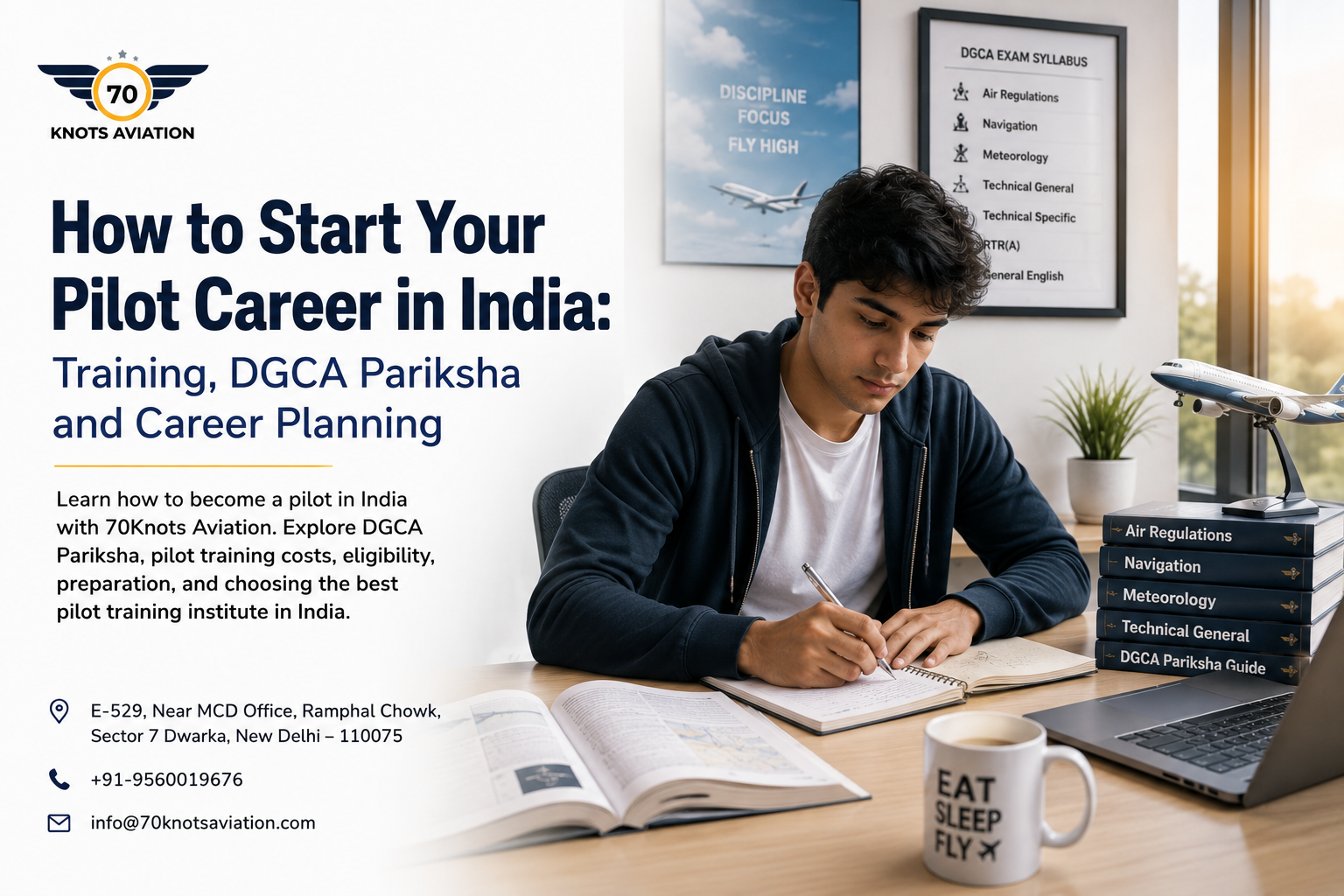
For students interested in aviation, becoming a pilot can be an exciting and challenging career goal. However, the journey requires much more than an interest in aircraft. Aspiring pilots need to develop strong academic knowledge, meet the applicable eligibility and medical requirements, clear aviation examinations, complete flight training, and understand the professional responsibilities associated with flying.
Students often begin their research with one simple question: How to become a pilot? The answer involves several stages, and understanding these stages before joining a training programme can help students make better academic and financial decisions.
With proper preparation, students can approach pilot training with realistic expectations and a clearer understanding of the aviation industry.
Understanding the Pilot Career Path
A professional pilot career requires a combination of theoretical knowledge and practical skills. Students need to learn how aircraft operate, understand aviation regulations, interpret weather information, plan navigation, communicate effectively, and respond appropriately to different operational situations.
For an aspiring commercial pilot, the journey generally includes:
- Meeting educational requirements
- Completing the applicable medical assessment
- Undertaking ground training
- Preparing for relevant DGCA examinations
- Completing the required flight training
- Fulfilling licensing requirements
- Building the qualifications and experience required for professional employment
The exact requirements can depend on the licence and applicable regulations, so students should always verify the latest information before beginning training.
How to Become a Pilot After School
Students who are interested in learning how to become a pilot should start researching the pathway well before making an admission decision.
For those planning a professional flying career, Class 12 education is an important stage. Students should understand the applicable educational requirements and ensure that they satisfy the subjects and other conditions required for their intended licence.
After establishing educational eligibility, students should investigate the medical process and understand the examination and training requirements.
This early preparation can prevent students from making major financial commitments without first understanding whether they meet the necessary conditions.
Why Aviation Requires Strong Academic Preparation
Flying an aircraft involves continuous decision-making. Pilots need to understand the environment around an aircraft, interpret information, communicate with other aviation professionals, and follow established procedures.
This is why aviation education covers a wide range of subjects.
Students may encounter areas such as:
Air Regulations
Pilots need to understand the rules and procedures governing aviation operations.
Air Navigation
Navigation knowledge helps pilots understand routes, positions, charts, headings, and other important aspects of flight planning.
Aviation Meteorology
Weather can have a major effect on aviation. Students learn how to interpret weather information and understand atmospheric conditions relevant to flight operations.
Aircraft Technical Knowledge
Understanding aircraft systems helps pilots recognise how different components operate and how aircraft performance is affected by various conditions.
Communication
Clear and standardised communication is an essential part of aviation. Students need to become comfortable with aviation terminology and communication procedures.
Understanding DGCA Pariksha
One of the important areas students encounter during pilot preparation is DGCA Pariksha.
These examinations assess theoretical aviation knowledge relevant to pilot licensing. Students should approach examination preparation seriously because aviation theory is directly connected to safe and professional flight operations.
Instead of treating examinations as something that must simply be passed, students should focus on understanding the underlying concepts.
A strong theoretical foundation can make it easier to connect classroom knowledge with practical flying.
A Better Way to Prepare for DGCA Examinations
Students can improve their preparation by developing a consistent routine.
Study a Little Every Day
Regular study is generally more effective than attempting to complete an entire subject shortly before an examination.
Create Subject-Wise Notes
Organising difficult concepts into concise notes can make revision easier.
Practise Questions
Question practice helps students identify areas where their understanding needs improvement.
Revise Technical Terms
Aviation contains specialised terminology. Regular revision helps students become comfortable with the language used in training.
Understand Instead of Memorising
Memorisation can be useful for certain facts and regulations, but conceptual understanding is particularly valuable when studying technical subjects.
Keep Your Material Updated
Students should make sure that their preparation material reflects current examination requirements and regulatory information.
Pilot Training Cost in India: What Students Should Know
Financial planning is an important part of the pilot training journey. The pilot training cost in India can vary depending on several factors, which means students should avoid assuming that every training programme will have the same total cost.
Expenses may include:
- Ground training
- Flight training
- Aircraft flying charges
- Instructor fees
- Medical examinations
- Examination-related expenses
- Licensing and documentation
- Study material
- Accommodation
- Transportation
- Aviation equipment
- Additional flying hours where required
The final amount can therefore differ between students and training organisations.
Why Students Should Look Beyond the Advertised Course Fee
An advertised package price may not always represent the complete financial commitment involved in pilot training.
Students should ask whether the quoted amount includes the required flying hours, ground classes, examination support, accommodation, equipment, and other services.
It is also useful to ask about additional flying charges.
If a student needs additional training hours, those expenses can increase the overall budget. Understanding this possibility before enrolment can help students and parents plan more realistically.
How Training Duration Can Affect Expenses
The length of training can influence living and accommodation expenses as well as other costs.
Weather conditions, aircraft maintenance, scheduling, instructor availability, and individual learning progress may affect how quickly a student completes particular stages.
Students should therefore ask training organisations about their typical training schedules and how operational delays are handled.
A transparent discussion about training duration can be valuable when planning the overall budget.
Choosing the Best Pilot Training Institute in India
Students searching for the Best pilot training institute in India will find many organisations offering aviation education and flight training. However, the phrase "best" should not be based solely on advertisements or rankings.
The right institute for one student may not necessarily be the right choice for another.
Students should evaluate several factors before making a decision.
Regulatory Status
Verify the organisation's current approvals and regulatory compliance relevant to the training being offered.
Aircraft and Infrastructure
Students should understand the available aircraft, training infrastructure, facilities, and operational arrangements.
Instructor Experience
Qualified instructors can have a major influence on how students understand both theoretical and practical aspects of aviation.
Flying Opportunities
Ask how flight slots are scheduled and whether students generally receive consistent opportunities to fly.
Fee Transparency
A detailed fee structure allows students to understand their financial commitment before enrolling.
Student Support
Academic guidance, examination preparation, administrative assistance, and communication can all contribute to a smoother training experience.
Why the Training Environment Matters
Pilot training requires concentration and discipline. Students spend significant time learning technical subjects and developing practical flying skills.
A professional training environment can encourage students to take their studies seriously and develop habits that are useful throughout their aviation careers.
The objective should not simply be to complete a course. Students should aim to become knowledgeable, disciplined, safety-conscious aviation professionals.
Medical Fitness and Aviation Training
Medical fitness is another important consideration for aspiring pilots.
Students should understand the applicable medical standards before committing substantial money to training. The appropriate aviation medical process should be followed according to current DGCA requirements.
Starting this process early can help students understand their eligibility and avoid unnecessary uncertainty later.
Developing the Right Skills Before Flight Training
Academic knowledge is only one component of becoming a capable pilot.
Students can also benefit from developing:
- Communication skills
- Situational awareness
- Decision-making
- Discipline
- Time management
- Concentration
- Teamwork
- Attention to detail
- Technical curiosity
- Professional confidence
These skills can gradually develop through education, training, and practical experience.
The Difference Between Learning to Fly and Becoming a Professional Pilot
Learning to operate an aircraft and developing into a professional pilot are related but different goals.
A professional pilot must understand procedures, regulations, weather, aircraft performance, communication, navigation, safety, and human factors.
Pilots also have to maintain their knowledge and skills throughout their careers.
This means students should approach training as the beginning of continuous professional development rather than as a short-term course.
Career Planning After Pilot Training
Students should also think about what happens after completing their initial pilot training.
Obtaining the required licence is an important achievement, but it does not automatically guarantee employment with an airline.
Career opportunities can depend on:
- Licence and qualifications
- Flying experience
- Airline requirements
- Recruitment conditions
- Interview performance
- Aptitude assessments
- Medical fitness
- Industry conditions
Understanding this before starting training can help students develop realistic expectations.
How 70Knots Aviation Can Support Students
70Knots Aviation provides aviation-focused learning and guidance for students who are preparing for a career in the aviation industry.
For an aspiring pilot, having structured academic preparation can make complex aviation subjects easier to understand. Students can use their training period to develop both examination knowledge and the professional habits required in aviation.
Whether a student is just beginning to explore aviation or is already preparing for aviation examinations, a systematic approach can help make the learning journey more organised.
Questions Students Should Consider Before Enrolling
Before selecting a training organisation, students and parents should take time to ask practical questions.
What regulatory approvals does the organisation currently have?
This should be verified before making a financial commitment.
What exactly is included in the course fee?
Students should request a detailed breakdown rather than relying only on a total package price.
What happens if additional flight hours are required?
Understanding the charges for additional training can help prevent unexpected expenses.
How frequently do students receive flying slots?
Consistent training opportunities can be important for maintaining progress.
What academic support is available for DGCA examinations?
Students should understand whether the institute provides structured ground preparation and examination guidance.
What support is available throughout the training period?
Clear communication and student support can make the overall training experience easier to manage.
Common Mistakes Aspiring Pilots Should Avoid
Students can sometimes make poor decisions because they focus too heavily on advertisements.
Common mistakes include:
- Selecting an institute only because it advertises a low fee
- Ignoring medical requirements
- Using outdated examination material
- Underestimating theoretical subjects
- Failing to ask about additional charges
- Assuming that CPL completion guarantees an airline position
- Not researching aircraft availability
- Making a financial decision without understanding total expenses
- Choosing aviation without understanding its professional responsibilities
Taking time to research these factors can help students make more informed choices.
Frequently Asked Questions About Becoming a Pilot
How early should students start researching pilot training?
Students can begin researching aviation during their school years. Early research gives them more time to understand eligibility, medical requirements, examinations, finances, and career options.
What is the most important part of DGCA examination preparation?
Consistent preparation and conceptual understanding are extremely important. Students should use current study material and maintain a structured revision schedule.
Why does pilot training cost vary between students?
The pilot training cost in India can differ because of flying charges, training duration, additional flight hours, location, accommodation, examinations, and other expenses.
How should students compare pilot training institutes?
Students should compare regulatory status, training infrastructure, aircraft availability, instructors, flying schedules, fee transparency, academic support, and overall training quality.
Does becoming a pilot guarantee an airline career?
No. Pilot training and licensing provide the foundation for a professional flying career, but employment depends on qualifications, experience, recruitment standards, market conditions, and individual performance.
Preparing for a Long-Term Aviation Career
The journey of becoming a pilot requires commitment from the beginning. Students need to combine academic preparation with practical training while developing discipline, communication skills, decision-making ability, and an understanding of aviation safety.
Anyone researching how to become a pilot should therefore look at the complete journey rather than focusing on only one part of the process.
Understanding DGCA Pariksha, researching the pilot training cost in India, and carefully comparing training organisations are all important steps. Students should also remember that the quality of their preparation can influence how confidently they progress through training.
With structured learning, realistic expectations, and careful planning, aspiring pilots can take their first steps toward a professional aviation career with greater clarity. 70Knots Aviation aims to support students in developing the knowledge and preparation they need as they explore this demanding and rewarding field.

 English
 Arabic
 French
 Spanish
 Portuguese
 Deutsch
 Turkish
 Dutch
Dutch
 Russian
 Romaian
 Portuguese (Brazil)
 Greek
Greek
