Introduction
A Hospital Recovery Room is organized to allow healthcare professionals to observe patients closely as they recover from surgery, anesthesia, or procedures. Patient monitoring generally combines bedside equipment, direct clinical observation, nursing supervision, documentation, and emergency preparedness. The exact monitoring arrangements depend on the patient's condition, procedure, anesthesia, hospital protocols, and level of post-operative care.
Bedside Monitoring
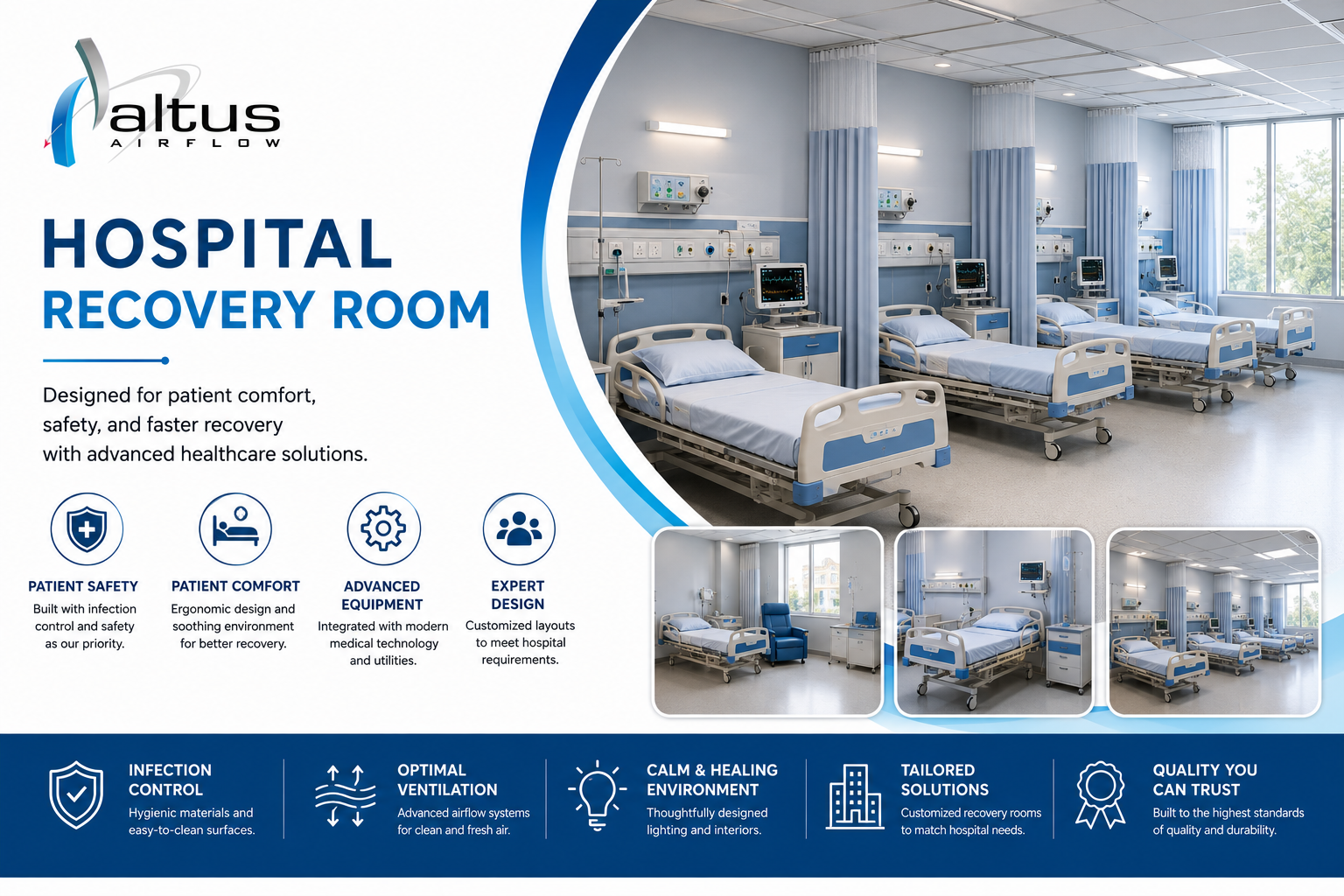
Each patient position can be equipped with appropriate monitoring equipment.
Depending on clinical requirements, bedside monitors may display heart rate, ECG, blood pressure, oxygen saturation, respiratory rate, temperature, and other relevant parameters.
Patient Positioning
Recovery beds should be positioned to provide healthcare professionals with convenient access to the patient.
Adequate space around each bed also allows monitoring equipment, infusion devices, oxygen delivery systems, and emergency equipment to be used safely.
Continuous Observation
Monitoring is not limited to electronic devices.
Trained healthcare professionals observe the patient's breathing, consciousness, skin condition, pain, movement, and overall clinical status while reviewing measured vital signs.
Vital-Sign Assessment
Vital signs are assessed at intervals or continuously according to the patient's clinical requirements and hospital protocols.
Changes in measurements can prompt additional assessment or intervention by the responsible healthcare team.
Oxygen Saturation Monitoring
Pulse oximetry can help monitor oxygen saturation and pulse rate.
It is particularly useful during recovery when respiratory function may still be affected by anesthesia, medications, or the surgical procedure.
Blood Pressure Monitoring
Blood pressure may be measured using automated or manual methods as clinically appropriate.
The frequency of measurements depends on the patient's condition and the recovery protocol.
ECG Monitoring
Selected patients may require ECG monitoring during recovery.
This can provide information about heart rate and cardiac rhythm when clinically indicated.
Respiratory Monitoring
Healthcare professionals assess respiratory rate, breathing pattern, oxygenation, and airway status.
Additional respiratory monitoring may be used when indicated by the patient's condition or anesthesia-related requirements.
Temperature Monitoring
Body temperature can be monitored during recovery.
This helps healthcare professionals identify temperature changes and determine whether warming or other measures may be appropriate.
Consciousness Assessment
Patients regain alertness at different rates after anesthesia or sedation.
Staff assess responsiveness and consciousness as part of determining whether recovery is progressing appropriately.
Pain Assessment
Pain monitoring is an important part of recovery care.
Healthcare professionals assess the patient's reported pain or use an appropriate clinical assessment method when the patient cannot communicate effectively.
Nausea and Vomiting Observation
Post-operative nausea and vomiting can occur following anesthesia or surgery.
Staff monitor symptoms and provide prescribed treatment when clinically appropriate.
Surgical-Site Observation
Depending on the procedure, healthcare professionals may inspect dressings, drains, and the surgical site.
They may observe for unexpected bleeding or other concerning changes and communicate findings to the responsible clinical team.
Infusion and Medication Monitoring
Patients may receive intravenous fluids or prescribed medications during recovery.
Staff monitor infusion devices, medication administration, and the patient's response according to clinical instructions.
Central Monitoring
Larger recovery areas may use a central monitoring station.
Selected information from multiple bedside monitors can be displayed centrally, helping staff maintain awareness across several patient positions.
Nursing Station
The nursing station can serve as the operational center for observation and documentation.
It may accommodate monitoring displays, computers, communication systems, clinical records, and other resources used by recovery staff.
Emergency Equipment Access
Monitoring should be supported by rapid access to emergency resources.
Depending on hospital protocols, the recovery room may provide accessible crash carts, defibrillators, airway-management equipment, oxygen, suction, emergency medications, and resuscitation equipment.
Medical Gas and Suction Access
Patient positions may have access to oxygen and vacuum services.
These utilities can support respiratory management and emergency intervention when clinically required.
Communication Systems
Recovery staff may need to contact anesthesiologists, surgeons, operating theatres, wards, ICUs, or emergency teams.
Nurse call systems, telephones, intercoms, and data connections can support timely communication.
Documentation
Monitoring observations and clinical interventions should be documented according to hospital procedures.
Accurate records can help healthcare professionals assess recovery progress and communicate relevant information during patient transfer.
Infection-Control Considerations
Monitoring equipment is used across clinical environments and should be managed according to infection-prevention procedures.
Appropriate cleaning, disinfection, equipment organization, hand hygiene, and patient spacing can support safe monitoring practices.
Privacy During Monitoring
Patient monitoring should be performed while maintaining dignity.
Curtains, screens, or suitable room layouts can provide privacy during examinations and personal care without preventing necessary observation.
Staff Workflow
The monitoring layout should support efficient movement between patients, equipment, supplies, nursing stations, and emergency resources.
Clear pathways help staff respond quickly without unnecessary obstruction.
Preparation for Patient Transfer
Monitoring continues until the patient meets the appropriate recovery criteria established by the responsible clinical team.
Before transfer, relevant observations and treatments are communicated to the receiving team, and the patient is moved safely to the next appropriate care setting.
Conclusion
Patient monitoring in a Hospital Recovery Room is generally organized around a combination of bedside monitoring, direct nursing observation, clinical assessment, documentation, and emergency preparedness. Vital signs such as blood pressure, heart rate, oxygen saturation, respiratory rate, and temperature may be monitored according to clinical requirements, while consciousness, pain, breathing, nausea, surgical sites, and other relevant factors are also assessed. Central monitoring, nursing stations, medical gases, suction, communication systems, and accessible emergency equipment can further support effective observation and response. The final monitoring arrangement should be based on patient needs, clinical protocols, room capacity, equipment requirements, and applicable hospital standards.
FAQs
1. How is patient monitoring organized in a Hospital Recovery Room?
A Hospital Recovery Room generally combines bedside monitors, direct nursing observation, vital-sign assessment, clinical documentation, central monitoring where required, communication systems, and rapid access to emergency resources.
2. Which vital signs are commonly monitored?
Depending on clinical requirements, monitoring may include blood pressure, heart rate, ECG, oxygen saturation, respiratory rate, and temperature.
3. Is direct observation still necessary when monitors are used?
Yes. Electronic monitors provide valuable measurements, but trained healthcare professionals also assess breathing, consciousness, pain, skin condition, and overall clinical status.
4. What role does central monitoring play?
Central monitoring allows selected information from multiple bedside monitors to be viewed at a central station, supporting staff awareness while direct patient assessment continues.
5. How is monitoring handled before patient transfer?
Healthcare professionals review the patient's recovery status and document relevant observations and treatments before transferring the patient to the next appropriate care setting according to hospital protocols.
Read Our Previous Blog----------->Which amenities help maintain patient comfort in a Patient Recovery Room?




 English
 Arabic
 French
 Spanish
 Portuguese
 Deutsch
 Turkish
 Italiano
 Russian
 Romaian
 Portuguese (Brazil)
 Greek
Greek
