


Why Lace Density Matters More Than You Think When Choosing A Frontal Or Closure
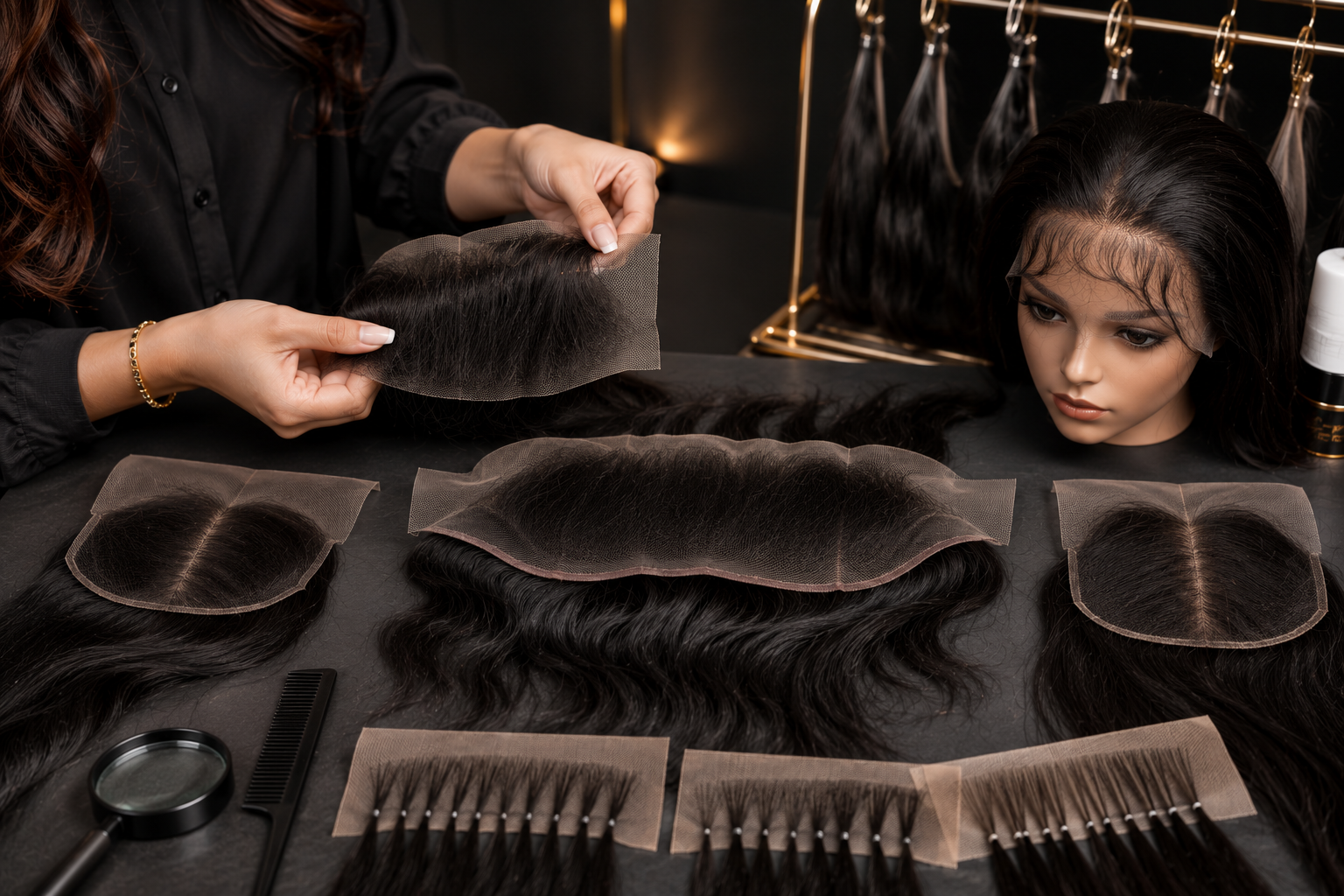
When selecting hair extensions, wigs, or custom units, most buyers focus heavily on hair length, texture, and lace type. However, one of the most overlooked factors determining whether an install looks like a natural scalp or a harsh wig is lace density. The concentration of hair strands tied into your lace frontals & lace closures directly controls how realistic, manageable, and durable your style will be.
Choosing the wrong density can leave you with a bulky, unnatural hairline or sparse, see-through patches. Understanding why lace density matters helps you select the perfect base for an undetectable look.
The Problem With Factory Over-Density
Most factory-made lace units are produced with high hair density to maximize product longevity and prevent early thinning. However, this high concentration creates distinct styling challenges.
The Helmet Effect
Natural human hairlines are gradually thinner at the very front and thicken as they move towards the crown. Factory frontals and closures often feature uniform, heavy density right at the front edge, creating a sharp, unnatural wall of hair that looks bulky against the forehead.
Excessive Customization Time
When a frontal or closure arrives with heavy density, stylists must spend hours aggressively plucking individual strands to create a realistic gradient. Over-plucking can tear the delicate lace mesh or weaken surrounding knots, leading to premature shedding.
How Ideal Density Creates a Realistic Scalp Illusion
Selecting the right lace density ensures your unit mimics authentic hair growth patterns right out of the package.
Natural Gradient Transition
Lace pieces crafted with lower, realistic density near the perimeter allow light to pass through softly, mimicking natural pores and fine baby hairs. This soft transition makes the lace mesh disappear against the skin with minimal plucking.
Seamless Parting Lines
Proper strand distribution allows for flat, clean parting space. When hair is tied too densely onto the lace, the parts become crowded, making it difficult to lay the hair flat without applying excessive heat or heavy styling products.
Balancing Density, Longevity, and Maintenance
Hair density directly impacts how long your lace piece remains wearable and how much daily maintenance it requires.
Reduced Tension on Lace Knots
Lower, natural density places less weight on the individual lace mesh square units. This weight reduction prevents the lace from stretching out of shape and minimizes tension on the hand-tied knots during washing and detangling.
Extended Unit Lifespan
While ultra-low density offers an instant, melt-worthy look, it leaves little room for natural hair shedding over time. Choosing a medium, balanced density provides a soft, realistic hairline while retaining enough hair mass to withstand months of routine styling and wear.
Matching Density to Your Natural Hair Type
Your overall look should always complement your natural features and biological hair characteristics.
Fine and Low-Density Natural Hair
If your natural hair is fine or thin, choosing high-density lace frontals & lace closures creates an obvious contrast. A lower-density lace piece ensures a seamless blend that matches your natural proportions.
Thick and High-Volume Styles
For full, dramatic installs or thick textures like deep curls and coarse waves, a medium-to-high density closure or frontal provides the necessary volume to match the density of your main hair bundles without looking sparse.
Conclusion
Lace density is the hidden key to achieving a flawless, scalp-like finish with lace frontals & lace closures. By prioritizing natural strand distribution over sheer hair volume, you reduce customization time, prevent bulky hairlines, and ensure a comfortable, undetectable install every single time.

 English
 Arabic
 French
 Spanish
 Portuguese
 Deutsch
 Turkish
 Dutch
Dutch
 Italiano
 Russian
 Romaian
 Portuguese (Brazil)
