


Sustainable Rigid Packaging Materials UK Brands Are Choosing
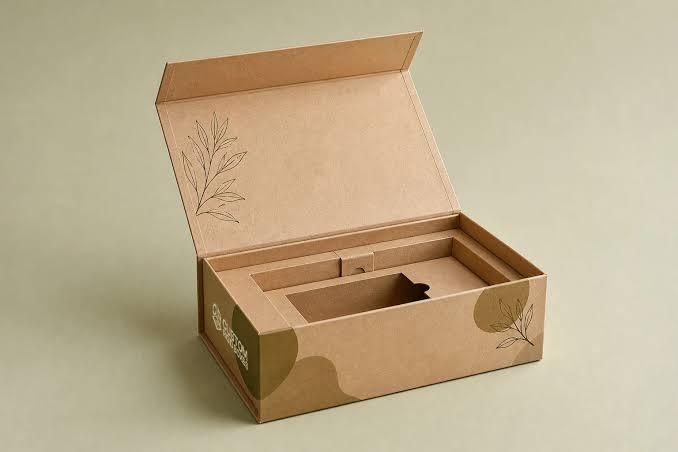
Sustainability has moved from a nice-to-have to a genuine purchasing factor for UK consumers, and packaging is often the most visible place a brand's environmental commitment gets judged, sometimes more visible than the product itself. Rigid boxes have historically had a reputation as one of the less sustainable packaging formats, given their weight and the finishes commonly applied to them, but that reputation is shifting as UK suppliers develop genuinely lower-impact alternatives.
This article looks at the specific materials and approaches UK brands are adopting to make rigid packaging more sustainable, what each option actually achieves, and where the trade-offs still exist between environmental impact and the premium feel that makes rigid boxes worth using in the first place.
Recycled board as the foundation of sustainable rigid packaging
Most rigid board already contains a significant proportion of recycled fibre by default, since chipboard manufacturing has long relied on reclaimed paper as a cost-effective raw material. Brands wanting to go further can now specify board with a verified high recycled content, often 80 percent or above, from UK suppliers who track and certify their material sourcing.
The trade-off with higher recycled content is a slightly less uniform surface for printing, since recycled fibre can introduce minor texture variation compared to virgin board. For most brands this is a minor, often unnoticeable difference, though it is worth requesting a sample specifically to check print quality before committing to a high-recycled-content specification for a design with fine detail or subtle colour gradients.
Pricing for high-recycled-content board has also become more competitive in the UK market over recent years, narrowing what was once a noticeable premium over standard virgin board stock. For most brands, the material cost difference is now small enough that sustainability credentials, rather than price, are the deciding factor in whether to specify recycled board.
FSC certification and what it actually verifies
Forest Stewardship Council certification has become a standard reference point for UK brands wanting credible proof of responsible sourcing, verifying that the raw paper fibre used in a box, whether recycled or virgin, comes from responsibly managed forests or verified recycled sources rather than unregulated logging.
FSC certification applies to the supply chain rather than the finished product alone, meaning a supplier needs to hold chain-of-custody certification through every stage of production for a brand to legitimately use the FSC mark on packaging. Brands should ask suppliers for their specific certification number rather than accepting a general claim of FSC compliance, since the mark can only be used by suppliers who hold current, verifiable certification.
It is worth noting that FSC certification covers the fibre source specifically, not every aspect of a box's environmental impact. A box can carry legitimate FSC certification while still using a plastic laminate finish or foam insert, so brands aiming for a genuinely comprehensive sustainability position need to look beyond fibre sourcing alone to finishes, inks and internal fittings as well.
Moving away from plastic-based finishes
Plastic laminate coatings remain common on rigid boxes because they deliver a durable, glossy finish at relatively low cost, but they are increasingly seen as the biggest sustainability weak point in an otherwise recyclable box. UK suppliers now offer water-based, plastic-free varnish alternatives that achieve a similar visual effect with a meaningfully lower environmental footprint and better end-of-life recyclability.
Soy-based and water-based inks have followed a similar trajectory, replacing traditional solvent-based inks across much of the UK packaging print industry. The visual difference between the two is minimal for most designs, making this one of the easier sustainability upgrades a brand can request without materially changing how the finished box looks or feels.
Some UK suppliers have also introduced plant-based alternatives to traditional foil stamping, using a metallised paper effect rather than genuine foil, which reduces the material complexity of the finished box while still delivering a comparable reflective, premium look for logos and accent details.
Rethinking inserts and internal fittings
Foam inserts, commonly used to protect fragile products inside rigid boxes, are one of the least sustainable components in many packaging specifications, since most foam types are difficult or impossible to recycle through standard UK systems. Moulded card and corrugated cardboard inserts have emerged as a genuine alternative, offering similar protective performance for many products while remaining fully recyclable alongside the outer box.
The switch is not universal. Very fragile or irregularly shaped products may still need foam's precise, cushioned fit, and brands should test a card-based alternative thoroughly before committing to it for a product where damage in transit carries a high cost. For many jewellery, cosmetics and lighter electronics applications, however, a well-designed card insert performs adequately and removes a significant recyclability obstacle from the finished package.
A hybrid approach is also gaining ground among UK suppliers, using a moulded pulp insert made from recycled paper fibre, which offers a level of cushioning between rigid card and foam while remaining fully compostable. It costs more than a simple card divider but considerably less than custom foam tooling, making it a reasonable middle option for products needing more protection than a flat card insert provides.
Communicating sustainability changes to customers
Switching to sustainable rigid packaging UK materials only builds brand trust if customers actually know the change has happened. A short note on the box itself, or a mention in order confirmation emails, explaining specifically what changed, such as a move to plastic-free varnish or FSC-certified board, tends to land better with UK customers than a vague sustainability statement without specifics.
Specificity matters because UK consumers have grown increasingly sceptical of broad environmental claims following several high-profile instances of greenwashing across other industries. A brand that can name the exact material change, and ideally point to a certification backing it up, earns more credibility than one relying on general language like eco-friendly without further detail.
Making the switch without losing the premium feel
Brands considering a move to more sustainable rigid packaging often worry the change will make their boxes feel cheaper. In practice, most of the sustainable alternatives available from UK suppliers, from recycled board to water-based varnish, have minimal visible impact on the finished product when specified and printed well.
The safest approach is a side-by-side sample comparison between a current specification and a proposed sustainable alternative, checked in person rather than judged from a supplier's description alone. Most UK brands who make this comparison find the sustainable option holds up well enough that the switch becomes an easy decision once cost and lead time are also confirmed.
 Arabic
 English
 French
 Spanish
 Portuguese
 Deutsch
 Turkish
 Dutch
Dutch
 Italiano
 Russian
 Romaian
 Portuguese (Brazil)
 Greek
Greek