


Commercial Pilot Course Fees in India: A Complete Guide for Aspiring Pilots
Becoming a commercial pilot is a dream for many students who are fascinated by aircraft, travel, technology, and the responsibility that comes with flying. But before taking the first step toward the cockpit, one practical question usually comes up: How much does a commercial pilot course cost in India?
The answer is not a single fixed number. Commercial pilot course fees in India can vary considerably depending on the flying school, aircraft used for training, flying hours, location, training facilities, and additional expenses. For students and parents planning this career, understanding the complete cost structure is just as important as choosing the right training institute.
In 2026, industry estimates commonly place the overall investment for CPL training in India in the range of approximately ₹35 lakh to ₹60 lakh or more, depending on the training route and additional requirements. AirStar Academy also explains that pilot training costs can vary based on the academy, aircraft type, duration, flying hours, and additional programs.
Why Is Commercial Pilot Training Expensive?
At first glance, pilot training fees may seem surprisingly high compared with many other professional courses. The main reason is that becoming a pilot involves considerably more than classroom education.
A student has to learn aviation theory, operate training aircraft, complete required flying hours, practise navigation and instrument procedures, undergo simulator training, prepare for regulatory examinations, and meet prescribed medical requirements.
Aircraft operations themselves are expensive. Fuel, maintenance, insurance, airport charges, instructor costs, aircraft availability, and technical support all contribute to the overall training fee. The Government of India has also noted that CPL training costs are market-driven and are influenced by factors such as aviation fuel, aircraft costs, spare parts, imported simulators, and the type and number of aircraft available for training.
This is why students should look beyond an advertised package price and understand exactly what is included.
What Is the Average Commercial Pilot Course Fee in India?
There is no universal fee applicable to every flying school. A realistic budget for commercial pilot training can be around ₹35 lakh to ₹60 lakh or higher, depending on the course structure and individual circumstances.
Some training programs may appear cheaper initially but may not include accommodation, examination fees, medical examinations, additional flying hours, equipment, or other expenses. On the other hand, a more comprehensive program may have a higher initial fee because several components are included.
For this reason, comparing the final cost rather than simply comparing the headline fee is a much smarter approach.
Major Components of Commercial Pilot Course Fees
1. Ground School Training
Before students can become professional pilots, they need a strong understanding of aviation theory. Ground school generally covers subjects such as Air Regulations, Meteorology, Navigation, Aircraft Technical Knowledge, and other DGCA-related areas.
Ground training gives students the theoretical foundation needed for examinations and practical flying. Depending on the institute and course structure, ground school can be charged separately or included in an integrated CPL package.
2. Flying Training
Flying is generally the largest component of the overall investment.
AirStar Academy's CPL program states a minimum training requirement of 200 flight hours and combines theoretical preparation with guided flying pathways. Its program includes solo, cross-country, night, and instrument flying components.
Flying costs depend on the aircraft being used, fuel prices, instructor charges, maintenance, airport operations, and the number of hours a student ultimately needs.
Students should therefore ask an academy whether the quoted fee covers the complete required flying hours or whether additional hours will be charged separately.
3. Simulator Training
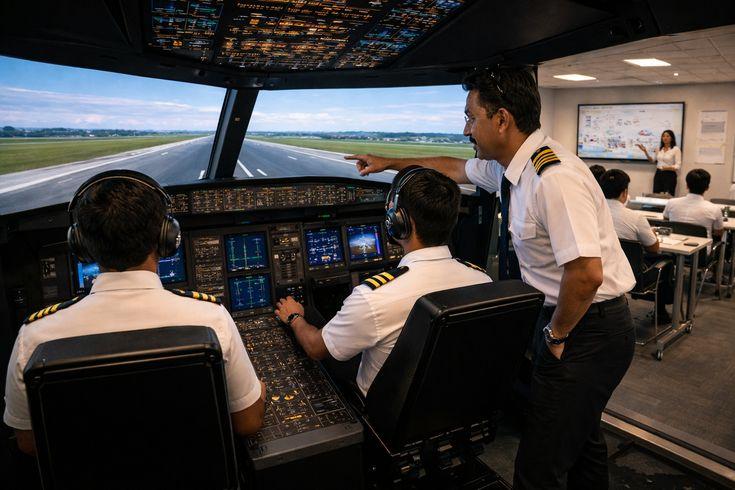
Simulator sessions provide an important bridge between classroom learning and real aircraft operations. They allow students to practise procedures, navigation, instrument flying, cockpit management, and emergency scenarios in a controlled environment.
Depending on the training program, simulator hours may be included in the package or charged separately.
4. Medical Examinations
Medical fitness is an essential part of a professional pilot's career. Students should plan for the costs associated with required aviation medical examinations and related tests.
It is wise to complete the necessary medical assessment early rather than committing significant money to training before confirming that you meet the applicable medical requirements.
5. Examination and Licensing Expenses
Students should also consider regulatory examination and licensing-related expenses. These may include examination fees, documentation, application charges, radio-related requirements, and other administrative costs.
Although these expenses may be relatively small compared with flying fees, including them in the overall budget helps prevent unpleasant surprises later.
6. Training Equipment and Study Material
Pilot training requires specialised learning materials and equipment. Depending on the institute, students may need items such as aviation textbooks, charts, navigation tools, uniforms, and headsets.
These are smaller expenses compared with aircraft training, but they still form part of the total investment.
Does the Course Duration Affect the Total Cost?
Absolutely.
AirStar Academy lists its CPL program with a duration of approximately 18–24 months on its dedicated CPL page, while its broader program information describes a 12–18 month pathway depending on the training structure.
The actual completion time can depend on weather, aircraft availability, student progress, examination schedules, maintenance, and operational planning.
A longer training period can increase expenses such as accommodation, transportation, living costs, and sometimes additional training hours. Therefore, students should ask about the academy's average completion time and not rely only on the minimum advertised duration.
What About Type Rating?
Another important point is that CPL training and airline-specific type rating are not necessarily the same expense.
A CPL provides the professional licensing foundation, while pilots seeking airline careers may subsequently require training associated with a specific aircraft type, depending on the employer and career pathway.
For example, type-specific training can involve aircraft such as the Airbus A320 or Boeing 737. The cost varies considerably and may be separate from the initial CPL investment.
Students should therefore distinguish between the cost of obtaining their CPL and the larger investment they may eventually make as they progress toward an airline cockpit.
How to Compare Commercial Pilot Courses
Choosing a flying school purely because it has the lowest fee can be risky. A better approach is to compare the complete training package.
Here are some useful questions to ask before enrolling:
What is included in the quoted fee?
Ask whether ground classes, flying hours, simulator sessions, examinations, equipment, and administrative charges are included.
How many flying hours are included?
Confirm the exact number and understand the charges for additional hours.
How frequently do students fly?
Regular flying can help students maintain continuity and complete training efficiently.
What aircraft are used?
The aircraft fleet, availability, maintenance standards, and training environment can influence both learning and cost.
What is the expected training duration?
Ask for the average completion time rather than simply the shortest possible duration.
Are there additional charges?
Get clarity about accommodation, transportation, medical examinations, examination fees, repeat tests, additional flying hours, and other possible expenses.
AirStar Academy itself recommends looking at factors such as flying frequency, aircraft scheduling, weather conditions, student backlogs, and course duration when choosing a flying school.
Why Choosing the Right Academy Matters
Pilot training is a major financial and professional commitment. The quality of instruction can have a significant impact on a student's confidence and progress.
A good training environment should combine classroom education with practical exposure, experienced guidance, structured flying, simulator preparation, and career-oriented support.
AirStar Academy's CPL program focuses on DGCA-oriented ground training and guided flying, with preparation related to areas such as RTR(A), English Language Proficiency, mock interviews, and Crew Resource Management.
The academy also highlights placement and career support for students pursuing opportunities with airlines, charter operators, and other aviation organisations.
Of course, students should always verify the current scope of any placement assistance and understand that training support does not guarantee an airline job.
Financial Planning for Aspiring Pilots
For many families, pilot training represents a significant investment. Good financial planning can make the journey more manageable.
Start by creating a realistic budget that includes the course fee as well as living expenses and possible additional costs. It is also sensible to keep an emergency financial reserve because weather disruptions, maintenance delays, examination attempts, or extra flying requirements can sometimes extend the training period.
Students can explore options such as education loans, family financial planning, scholarships where available, or structured payment arrangements offered by institutions.
The key is to avoid planning around the lowest possible figure. A realistic budget gives students much more confidence throughout their training.
Is Becoming a Commercial Pilot Worth the Investment?
For someone who genuinely enjoys aviation and is prepared for the responsibility, discipline, and continuous learning involved, commercial pilot training can be a rewarding career path.
The profession offers opportunities in airlines, charter operations, corporate aviation, cargo operations, and other areas of the aviation industry. However, students should not choose the career solely because of the potential salary or travel opportunities.
Flying requires concentration, technical knowledge, communication skills, sound decision-making, professionalism, and the ability to remain calm under pressure.
The investment makes the most sense when the student has both a genuine interest in aviation and a realistic understanding of the training process.
Final Thoughts
Understanding commercial pilot course fees in India is an important part of planning an aviation career. While the overall cost can commonly fall in the ₹35 lakh–₹60 lakh-plus range, there is no single fee that applies to every student or flying school.
The final amount depends on several factors, including flying hours, aircraft type, ground training, simulator sessions, training duration, medical requirements, accommodation, examinations, and additional career training.
Instead of asking only, “Which academy has the cheapest pilot course?”, students should ask a more useful question: “Which training program offers transparent fees, quality instruction, reliable flying opportunities, and strong preparation for my aviation career?”
AirStar Academy offers a structured CPL pathway covering DGCA-focused ground training and practical flying preparation for aspiring commercial pilots. Students interested in understanding the current course structure, eligibility requirements, and applicable fees can explore the academy's official information and speak directly with its admissions team.
Ultimately, becoming a commercial pilot is not just about paying a course fee. It is an investment in knowledge, skill, discipline, and a future profession. With careful financial planning, the right training environment, and a genuine passion for aviation, aspiring pilots can take their first confident step toward a career in the skies.

 English
 Arabic
 French
 Portuguese
 Deutsch
 Turkish
 Dutch
Dutch
 Italiano
 Russian
 Romaian
 Portuguese (Brazil)
 Greek
Greek
