


Takeout Packaging Guide: Keep Meals Hot, Fresh, and On Brand
Takeout Packaging Guide: How to Keep Meals Hot, Fresh, and Memorable
A great meal can fall apart in the ten minutes between the kitchen and the customer's table. Fries go soft, buns turn soggy, sauces leak, and a burger that looked perfect at the pass arrives slumped in a bag. For restaurants and food brands, packaging is no longer an afterthought. It is the last thing the kitchen touches and the first thing the customer sees, so it deserves real attention.
Why Packaging Matters More Than Ever
Takeout has moved from side business to core business. The National Restaurant Association's 2025 Off-Premises Restaurant Trends report found that nearly 75% of all restaurant traffic now happens off-premises, covering takeout, delivery, and drive-thru. That means most customers judge a restaurant by what arrives in the bag, not by the dining room.
Because of this shift, many operators now invest in Custom Food Packaging Boxes that protect the meal, keep temperatures steady, and carry the brand from kitchen to doorstep. A well-built box also reduces complaints, refunds, and bad reviews tied to spills and cold food.
Choosing the Right Structure
Different foods behave differently in transit, so the box should match the menu.
Burgers and Sandwiches
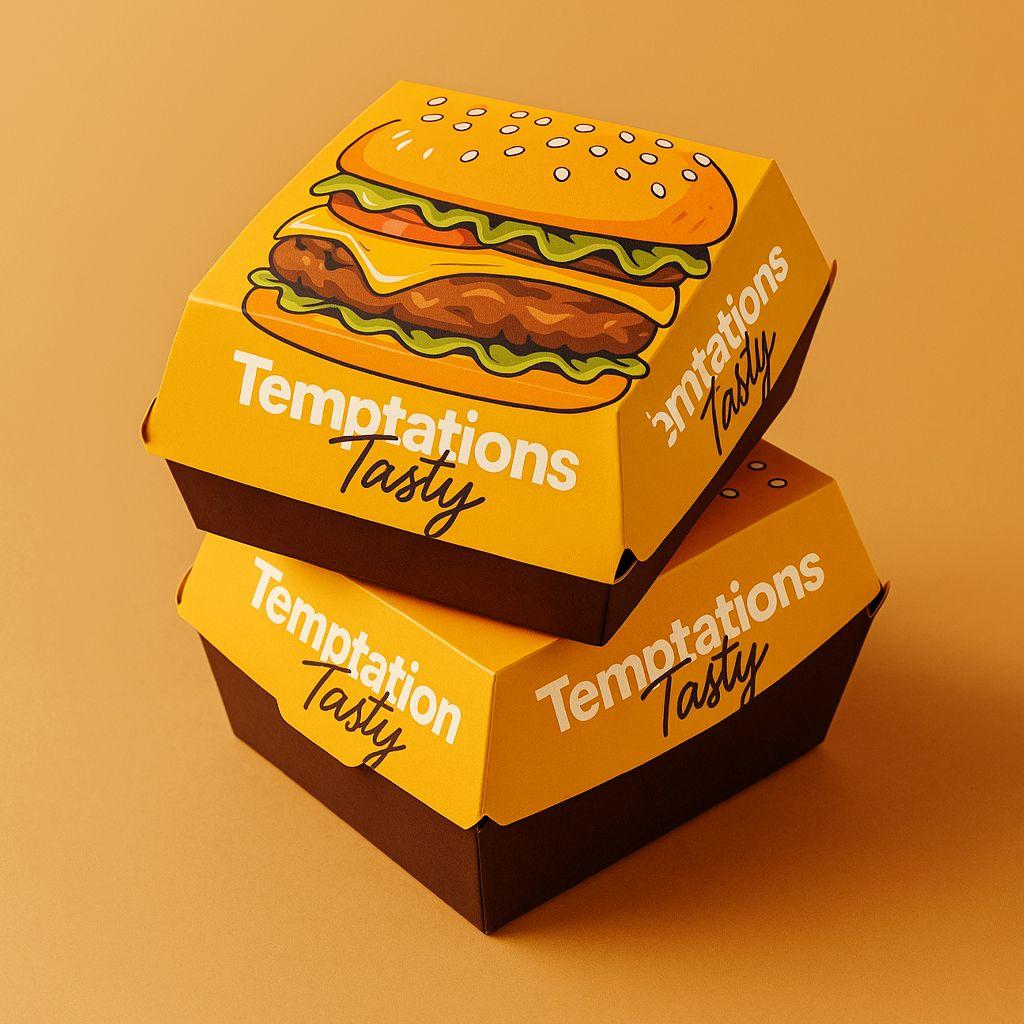
Burgers need a snug fit with some room for steam to escape. Custom Burger Boxes with small vents help keep buns from turning soggy, while a sturdy base stops toppings from sliding. A tight fit also keeps the stack neat so the burger arrives looking close to how it left the kitchen.
Fries, Sides, and Fried Foods
Anything crisp needs airflow. Boxes with small vent holes or paper liners absorb steam and oil, which keeps coatings crunchy for longer. Keep sauces in separate cups so they do not wilt the food.
Bowls, Pasta, and Saucy Dishes
Wet foods need leak-resistant structures and tight closures. Choose coated paperboard or rigid containers with secure lids, and avoid overfilling so nothing sloshes at the first turn.
Materials, Grease Resistance, and Safety
The material you pick decides how well the box handles heat, oil, and moisture. Kraft paperboard is popular for its natural look and strength. Coated stock resists grease and moisture, which matters for burgers, fried chicken, and anything with sauce. Whatever you choose, make sure it is food-safe and approved for direct food contact, and ask your supplier for documentation if you are unsure.
Sustainability also matters to many diners. Recyclable and compostable options are widely available, and water-based inks keep the print lighter on the environment. Many Custom Food Packaging Boxes can be made from recyclable stock without losing durability, which helps brands meet customer expectations and local rules.
Branding That Travels
A printed box works like a mobile billboard. Logos, colors, and short messages turn every order into a small marketing moment, especially when customers photograph their meal or leave the box on a shared table. Keep the design simple and clear so the brand reads well at a glance. A short thank-you line or a social handle inside the lid gives customers a reason to remember you, and consistent look across every order helps build recognition over time. Custom Food Packaging Boxes also reinforce quality, since customers often connect a sturdy, polished box with a carefully made meal.
Ordering Without the Guesswork
A short checklist keeps the process smooth.
- Know your top sellers. Choose box sizes for your most popular items first.
- Request samples. Pack real food, close the box, and test a short delivery trip.
- Check the proof. Confirm spelling, colors, and logo placement before printing.
- Plan for volume. Estimate weekly usage and add a small buffer for busy periods.
Smaller restaurants sometimes worry about minimums, but digital printing has made shorter runs more realistic. If you want to test a new menu item, ask about smaller batches of Custom Burger Boxes before committing to a large order. Placing your order for Custom Food Packaging Boxes early also leaves time for adjustments before peak season.
Frequently Asked Questions
How do I keep fried food crisp in a box?
Choose a box with ventilation or a paper liner, pack food while it is hot but not steaming, and keep sauces separate. Short delivery times help too.
Can one box style work for my whole menu?
Rarely. A few well-chosen sizes usually cover most items, but burgers, sides, and bowls often need different structures. Testing samples with your real menu will show what works best, and Custom Food Packaging Boxes can be tailored to fit each category.
Are printed boxes worth the extra cost?
For many restaurants, yes. Printed packaging builds brand recognition, supports higher perceived value, and replaces separate labels or stickers.
Final Thoughts
Great food deserves packaging that protects it all the way to the customer. Match each box to the menu item, choose materials that handle heat and grease, and keep the branding clean and consistent. If you want every order to arrive looking as good as it tastes, Custom Food Packaging Boxes are a smart place to start.

 English
 Arabic
 French
 Spanish
 Portuguese
 Deutsch
 Turkish
 Dutch
 Italiano
 Russian
 Romaian
 Portuguese (Brazil)
