


How Does Rip Rap Gradation Influence Water Flow and Erosion Control?
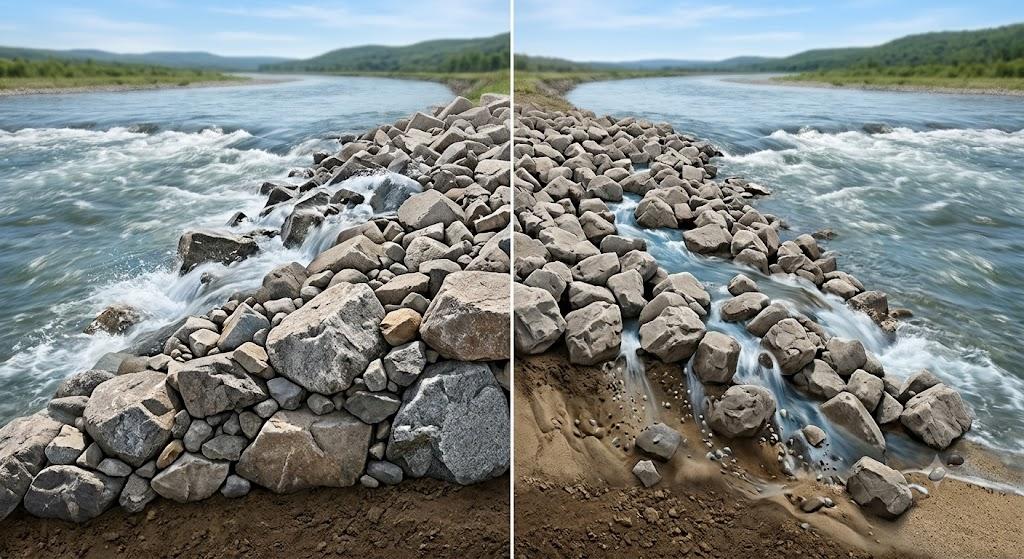
When water starts washing away soil near a slope, drainage channel, or shoreline, a few rocks thrown into the area may not be enough to solve the problem. The size and mix of those rocks matter more than many people think. If you are searching for rip rap rock near me in California, it helps to know how rock gradation affects water movement, ground stability, and long-term erosion control. Getting the right mix from the start can save you plenty of trouble later.
What Does Rip Rap Gradation Actually Mean?
Let us keep it simple. Rip rap gradation refers to the range of rock sizes used in a protective layer. Some projects need larger stones, while others work better with a mix of large, medium, and smaller pieces.
Think about a pile of rocks with nearly identical sizes. You may notice large gaps between them. Now picture a well-graded mix where smaller stones fill some of those spaces. The arrangement changes, and so does the way water moves through it.
That difference matters when protecting slopes, drainage paths, and areas exposed to flowing water. Choosing the right gradation helps create a rock layer that suits the site instead of leaving you with a pile of stones that does not do its job properly.
How Rock Size Changes Water Flow
Water is tricky. It can look harmless one minute and start moving soil the next, especially when it gains speed during heavy rain.
The size of rip rap rocks affects the openings between stones. Larger rocks can create bigger spaces, depending on how they are placed. Smaller pieces may fill some of those gaps and change how water passes through the layer.
The goal is not always to block water. In many applications, we want water to move through or around the rock protection without carrying away the soil beneath it.
A suitable rock size and arrangement can help spread the force of flowing water. Poorly selected material may leave exposed gaps, shift under strong flow, or fail to protect the ground as intended.
Why Gradation Matters for Erosion Control
Erosion often begins with small changes. Water loosens a little soil, carries it away, and gradually leaves the surface weaker. Before long, a slope may develop bare patches or a drainage channel may become deeper.
A properly selected rip rap layer helps protect the soil from direct water impact. The larger stones provide weight and resistance, while a suitable range of smaller stones can improve the overall arrangement.
But there is a catch. Smaller rocks should not simply be added wherever they fit. If the material is poorly graded, fine particles may wash out, leaving empty spaces behind. The larger rocks can then lose support and move out of place.
For many projects, the rock layer also needs a suitable filter layer or geotextile beneath it. This helps keep the underlying soil from escaping through the openings. The right setup depends on soil conditions, water speed, and the purpose of the installation.
Does Every Project Need the Same Rip Rap Mix?
Not at all. A drainage ditch beside a property has different needs from a steep embankment exposed to fast-moving water.
For a small drainage area, the design may call for a different rock size range than a site exposed to strong runoff. A shoreline or steep slope may need heavier stones that can resist movement.
Before choosing material, consider a few things:
- Water speed: Faster water can move smaller or poorly supported stones.
- Slope angle: Steeper slopes may need larger rock and careful placement.
- Soil type: Loose soil may require extra protection beneath the rock layer.
- Drainage needs: The rock arrangement should suit the amount and direction of water flow.
When we look at these details first, choosing suitable rip rap becomes much easier.
Common Mistakes to Avoid When Choosing Rip Rap
One common mistake is focusing only on the largest available rocks. Bigger is not automatically better. If the stones do not suit the site, they may leave awkward gaps or create an uneven protective layer.
Another mistake is ignoring what sits underneath the rocks. Even a heavy layer can perform poorly if flowing water removes the supporting soil.
Placement matters, too. Rocks dumped randomly may not provide the same protection as a properly prepared and installed layer. Matching the material to the project is only one part of the job.
If you need help comparing rock sizes, talk with a supplier who can help you identify suitable options for your application.
Find the Right Rip Rap for Your Project
Choosing rip rap is about more than filling an area with stone. You need a gradation that works with the water, the slope, and the soil underneath.
At Western Materials, we supply construction aggregates and specialty materials for projects across California. If you are looking for rip rap rock near me in California, tell us about your site and what you need to protect. We can help you review available material options and find a suitable starting point for your project.
Get a quote now and take the next step toward reliable erosion control.
Frequently Asked Questions
1. What is rip rap gradation?
Rip rap gradation describes the range of rock sizes in a protective layer. It affects how stones fit together, how water passes through the gaps, and how well the material resists movement.
2. Are larger rip rap rocks always better for erosion control?
No. Larger rocks can provide more weight, but the correct size depends on water speed, slope conditions, soil type, and project requirements. Using the wrong size can reduce performance.
3. Can poorly graded rip rap cause erosion?
Yes. If the rock arrangement allows underlying soil to wash through the gaps, the layer may lose support. A suitable filter layer and correct rock selection can help reduce this risk.
4. Does rip rap stop water from flowing?
No. Rip rap is generally used to protect soil from the force of flowing water, not to stop water completely. Its design should account for drainage and the direction of flow.
5. How do we choose the right rip rap size in California?
Start by assessing the water flow, slope, soil conditions, and area that needs protection. For demanding drainage or erosion-control projects, follow the recommendations of a qualified engineer and check local project requirements before ordering material.

 English
 Arabic
 French
 Spanish
 Portuguese
 Turkish
 Dutch
 Italiano
 Russian
 Romaian
 Portuguese (Brazil)
 Greek
