


HID Amico: Smarter Security Solutions for Saudi Arabia
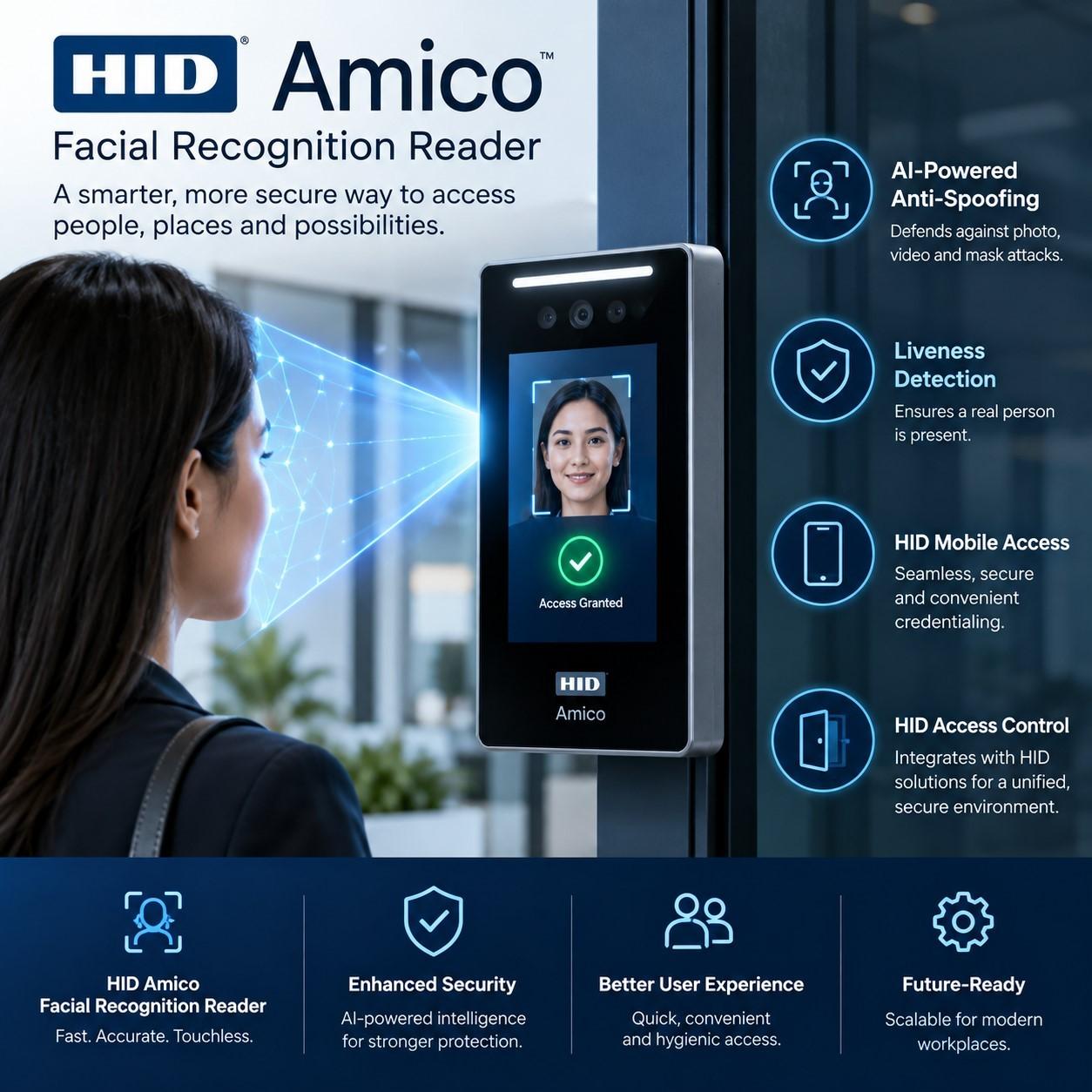
Security that slows people down gets bypassed, and security that is easy to bypass is not security at all. The most effective systems are the ones people barely notice because they simply work. HID Amico follows that principle, offering a facial recognition reader that admits authorized people quickly while keeping a firm line against imposters, which is why it is attracting attention from Saudi facility owners and security consultants.
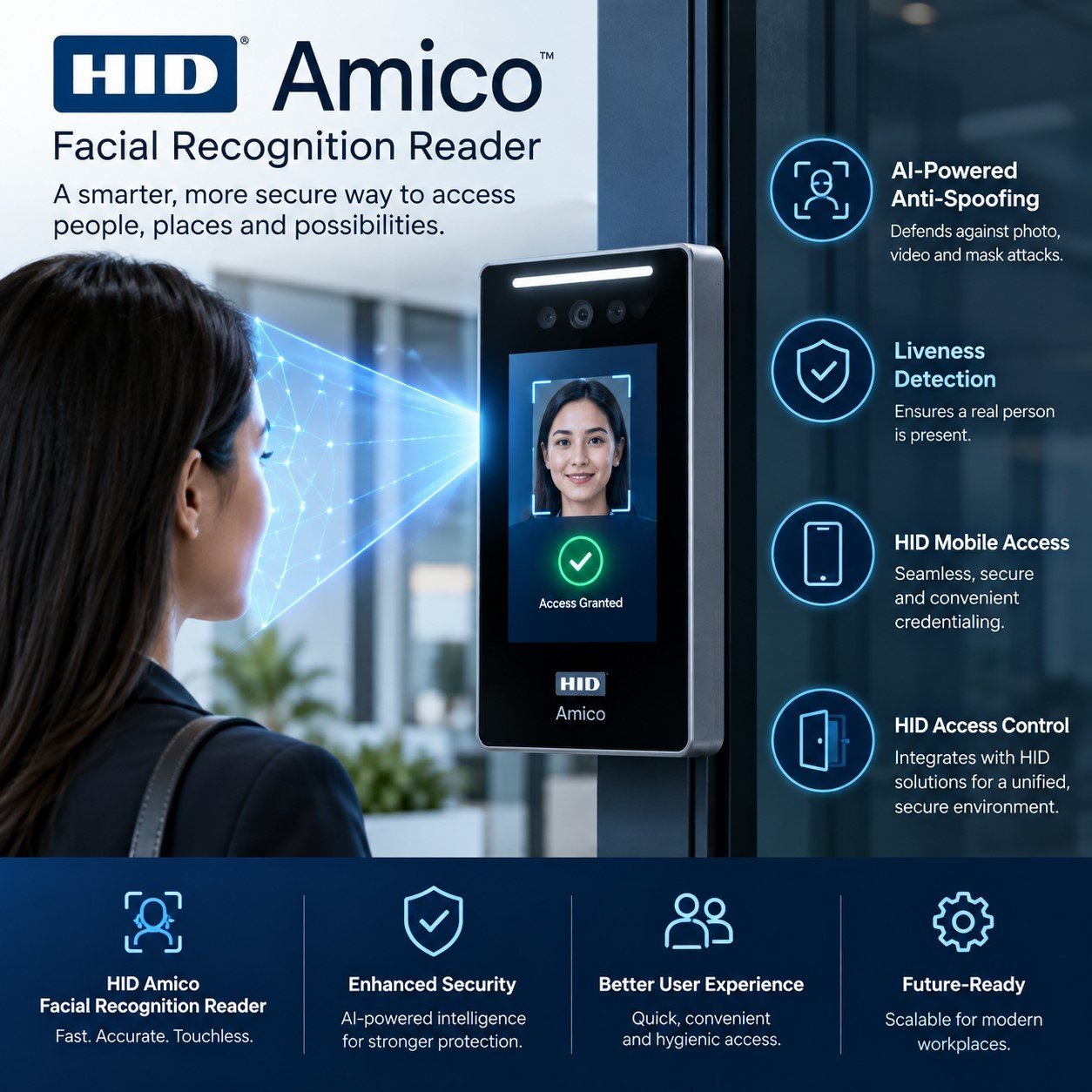
Tektronix supplies and installs HID security hardware across the Kingdom, and its HID Amico solutions for Saudi Arabia help organizations turn that principle into a working deployment. This article explains what makes the platform smarter than traditional entry methods, how its components fit together, and how different Saudi sectors can use it.
What Smarter Security Really Means
Smarter does not mean more complicated. It means security that fits how people actually move through a building. A smart system recognizes authorized people without making them stop, applies stricter checks only where risk is higher, records every event automatically, and tells administrators when something looks wrong. It also adapts as an organization grows, adding doors, credential types, and sites without a complete rebuild. These qualities matter more to long term success than any single technical specification.
HID Amico Facial Recognition in Everyday Use
HID Amico Facial Recognition lets an enrolled person walk up to a door, look toward the reader, and be admitted in moments, with no card to find and no keypad to touch. In a busy lobby at shift change, that saves seconds per person that add up to minutes of queue time across hundreds of people. For staff it feels effortless, and for administrators it produces a clear record of who entered each space and when.
Inside the HID Amico Biometric Reader
The HID Amico Biometric Reader combines a camera, processing, and a display in one wall mounted unit and supports several ways to authenticate, including face, existing HID cards, mobile credentials, QR codes, and a PIN. It is offered in different screen sizes, which helps designers choose a unit that suits the look and traffic of each entrance. Supporting multiple credentials means a single reader can serve staff, visitors, and contractors with different methods.
HID Aero Controller: The Brain Behind the Door
Every reader depends on a controller to decide whether a door should open. The HID Aero Controller belongs to a family built on HID's established Mercury technology. It supports encrypted communication with management software, keeps enforcing permissions locally if the network drops, and handles features such as anti passback and lockdown. Because the decision is made at the controller, a network fault does not leave staff locked out or doors unprotected.
HID Access Control as an Open, Expandable Platform
Many Saudi buildings already contain HID cards and readers installed over the years. A complete HID Access Control ecosystem lets owners add facial recognition where it matters most while leaving older readers in place elsewhere, spreading cost across several budget cycles. Because the platform supports different credential technologies, owners are not forced into a single approach, and they can introduce new methods as needs and budgets change.
HID Mobile Access for Flexible Credentials
HID Mobile Access allows employees, tenants, and invited guests to use a smartphone as their credential. Administrators can issue or revoke access remotely within minutes, which suits organizations with frequent visitors or contractors. In practice, many sites use all methods together: a face at the main entrance, a phone at a secondary door, and a card in an area where phones are not permitted, with one platform managing all three.
AI Powered Anti Spoofing That Keeps Imposters Out
A facial reader must be able to tell a real face from a copy. AI Powered Anti Spoofing analyzes what the camera sees to spot printed photos, screen displays, and masks, using trained models that look at texture and other cues that copies struggle to reproduce. Strong protection against these presentation attacks is what separates a secure deployment from one that merely looks modern, and it is worth asking any supplier how it has been tested.
Liveness Detection Working Quietly in the Background
Liveness Detection confirms that a living person is physically present at the moment of capture. It checks for depth and natural movement that a flat image or video cannot provide. Done well, it runs without asking users to blink, smile, or turn their heads, so security improves without adding friction at the door and legitimate users never feel they are being tested.
HID Amico KSA: A Platform for the Kingdom's Growth
Saudi Vision 2030 has produced a wave of new offices, campuses, hospitals, and industrial sites, and many of them specify entry technology from the first design stage. HID Amico KSA projects should also account for the Personal Data Protection Law, since facial templates are personal data. Plans should cover consent, secure storage, retention periods, and deletion when people leave, and owners should confirm their obligations with their own legal advisers.
HID Amico Riyadh: Corporate and Government Deployments
The capital is the centre of corporate and government activity. HID Amico Riyadh installations typically protect headquarters lobbies, tenant floors, and sensitive rooms, often linking entry with visitor management and parking so that one identity follows a person from the car park to the office. Speed at peak hours is a priority, because thousands of people may pass through the same lobby within a short period.
HID Amico Jeddah: Coastal Conditions and Diverse Sites
On the western coast, sites range from ports and logistics hubs to hotels, hospitals, and universities. HID Amico Jeddah projects must contend with humidity, salt air, and bright coastal light, all of which influence reader placement and housing choices. A careful site survey before installation helps ensure that recognition remains accurate through the seasons and that hardware lasts.
How Different Sectors Use the Platform
Banks use layered verification at vaults and records rooms. Hospitals value touchless entry at wards and pharmacies, where shared surfaces are a concern. Universities and schools protect laboratories, server rooms, and staff areas while keeping public spaces open. Industrial sites control access to hazardous zones and record who entered each one. Hotels restrict back of house areas, and residential compounds manage staff, residents, and contractors. The same reader supports all of these with different rules behind each door.
The Business Case: Efficiency, Accuracy, and Risk
The value of better entry control shows up in several places. Faster lobbies reduce wasted time. Records tied to people rather than cards make attendance and payroll more accurate. Fewer lost cards cut replacement costs and administrative effort. Better audit trails support investigations, insurance conversations, and client assurance. Organizations that measure these effects before and after deployment can show a clear return, which helps justify further rollout.
A Practical Buyer's Checklist
Before choosing a supplier, confirm how the reader performs in your lighting, how anti-spoofing has been tested, what happens when the network is down, how enrolment and data retention are handled, and how existing HID equipment will be reused. Ask about spare parts inside the Kingdom, response times for faults, and whether software updates are included. Request references from comparable sites, because a supplier with relevant experience will anticipate problems that a newcomer would discover only after installation.
Planning, Pilot, and Rollout
A smooth deployment starts with a site survey, continues with a pilot at a few doors, and then expands in stages. The pilot reveals practical issues such as glare, mounting height, and queue behaviour, and it lets administrators tune settings before the whole building depends on the system. Quality enrolment, with good lighting and clear instructions, improves daily accuracy, and a maintenance agreement keeps readers performing as designed.
Designing the Entrance Experience
How a person feels at the door shapes their view of the whole building. Readers mounted at a comfortable height with clear feedback lights make entry feel effortless. Placing them away from reflective glass and strong backlight improves recognition and reduces repeated attempts. Architects and security consultants who agree on positions early avoid costly changes after construction has finished, and the result is an entrance that looks tidy and works smoothly from the first day.
Accessibility and Inclusive Design
Touchless entry helps people carrying equipment, pushing trolleys, or using wheelchairs, since they do not need to reach for a card or keypad. Buildings should still offer alternatives, such as a card or mobile credential, for individuals who cannot or prefer not to use facial recognition. Several methods on one reader keep the building welcoming while preserving a consistent level of security at every door.
Maintaining Performance Over the Years
A reader in a Saudi lobby faces dust, heat, and constant use. Regular cleaning of the camera window, firmware updates, and periodic checks of mounting and cabling keep performance steady. Administrators should review rejection rates monthly, because a rise at one door usually points to a lighting or positioning issue that is easy to fix. A maintenance agreement that includes fast replacement ensures that a failed unit never leaves an entrance unprotected for long.
Engineering Experience and Trust Behind Every Deployment
Tektronix has engineered and commissioned access control, surveillance, and biometric systems across Saudi Arabia and the wider Gulf for many years. An in-house engineering team handles site surveys, network integration, and controller configuration rather than passing installation to a subcontractor unfamiliar with the HID product line, and regional support and spare parts help keep a failed reader from leaving an entrance unprotected for long.
Technical information covering supported credentials, controller options, and integration paths is available through the company's HID Amico Biometric Reader page, giving consultants and procurement teams specific detail to review rather than a marketing summary alone.
Choosing the Right Partner for Saudi Projects
Selecting a supplier is as much about experience as hardware. Owners should look for comparable projects, openness about data handling, willingness to run a pilot, and clear commitments on support. Organizations that want one accountable partner for readers, controllers, software, and service can review Tektronix's full range of HID readers and access control products before finalizing a shortlist.
Conclusion
HID Amico delivers smarter security by admitting authorized people quickly and keeping imposters out. HID Amico Facial Recognition and the HID Amico Biometric Reader support face, card, mobile, and PIN credentials on one device. A HID Aero Controller and an open HID Access Control platform let owners add doors and credentials as they grow. HID Mobile Access, AI Powered Anti Spoofing, and Liveness Detection add flexibility and protect every match. Owners planning HID Amico KSA, HID Amico Riyadh, and HID Amico Jeddah projects should choose a partner like Tektronix with proven local engineering.
FAQs
1. How fast is entry with a facial reader?
Entry typically takes moments once an enrolled person approaches and looks toward the reader, and actual speed depends on lighting, mounting, and how the approach path is designed.
2. Can one reader support staff, visitors, and contractors?
Yes, because the device supports face, cards, mobile credentials, QR codes, and PIN entry, each group can use the method that suits them while one platform manages every permission.
3. Will the system still work if the network is interrupted?
The controller can keep enforcing stored permissions locally during an interruption, so doors continue to follow the last approved rules until the connection returns.
4. How are fake faces such as photos or masks handled?
Anti-spoofing and live presence checks examine texture, depth, and movement to reject copies, and buyers should ask suppliers how these protections have been tested.
5. How long does a typical deployment take?
A few doors can be commissioned in days, while large buildings with many doors, enrolment, and integrations are usually delivered in stages over several weeks.

 English
 Arabic
 French
 Spanish
 Portuguese
 Deutsch
 Turkish
 Dutch
 Russian
 Romaian
 Portuguese (Brazil)
 Greek
