


Video Analytics Fire & Smoke Detection in Saudi Arabia: A Complete Guide
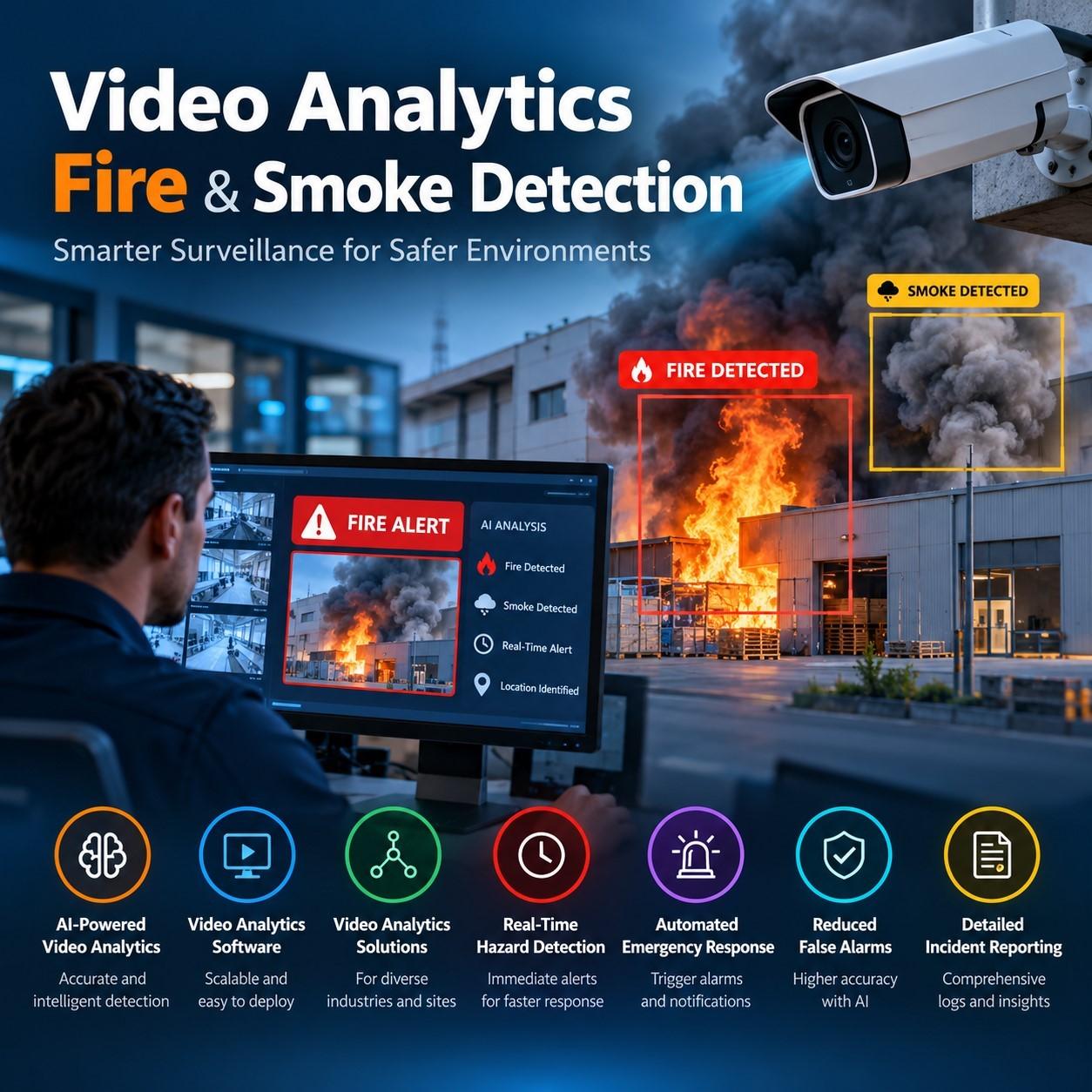
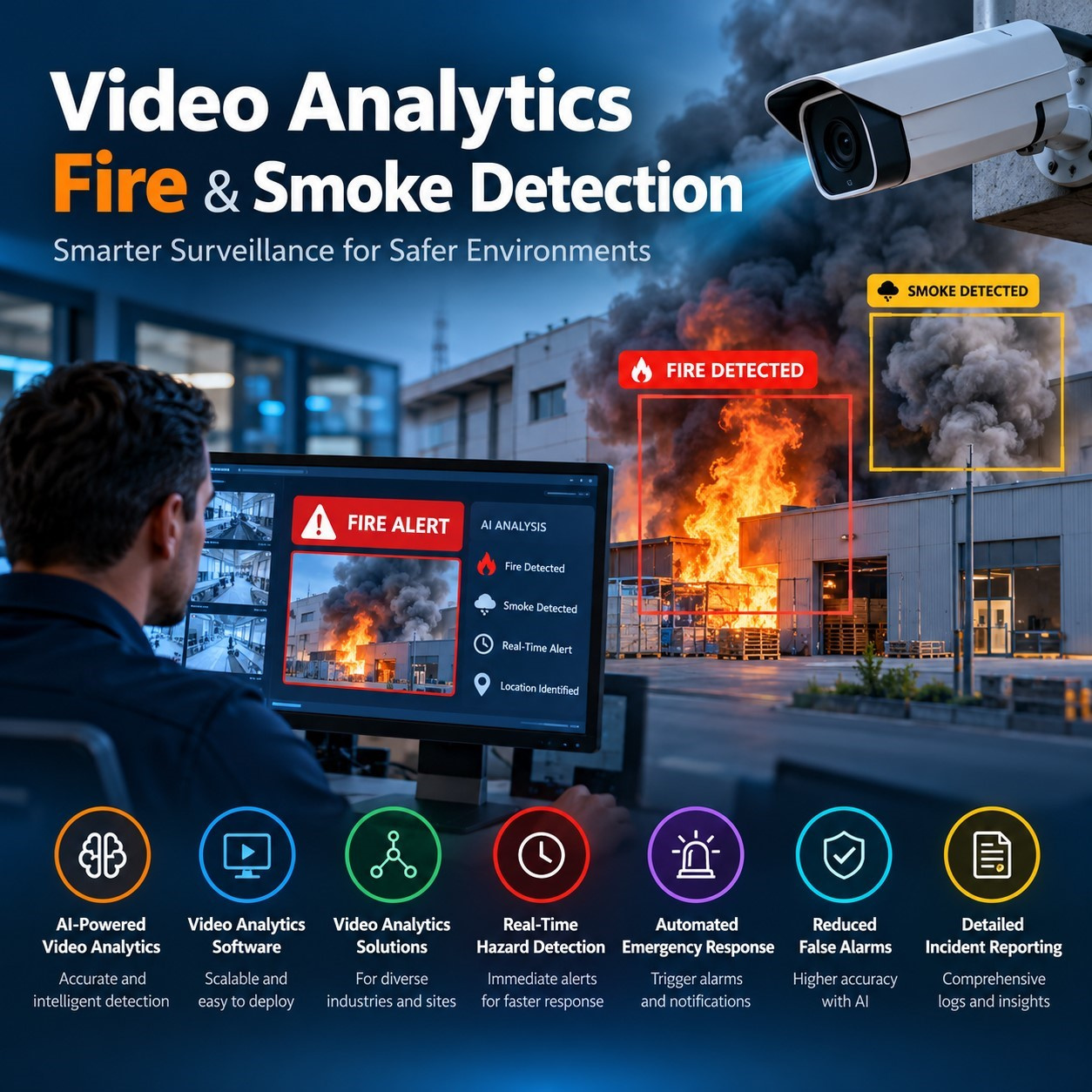
Warehouses, refineries, malls, tunnels, and car parks across the Kingdom already have cameras on every wall, and Video Analytics can turn those cameras into an early warning system that spots flames and smoke in seconds, often before conventional detectors in a large, open space have sensed anything at all.
Who This Guide Is For
This guide is written for facility managers, safety officers, security directors, and consultants who want to understand what video-based fire and smoke detection can do, where it fits, and how to buy and run it responsibly. It follows the order of the questions most buyers ask.
Technical terms are explained in plain language, so both engineers and decision makers can use the material.
The Problem with Waiting for Smoke to Reach a Sensor
Conventional smoke detectors work when smoke reaches them. In a high ceiling warehouse, an open industrial yard, or a long tunnel, smoke may take minutes to rise, spread, and trigger a point detector, and those minutes decide whether a small fire is put out with an extinguisher or becomes a major loss.
Cameras see the event from a distance, so they can notice a flame or a growing smoke plume at the moment it begins to appear.
How the Technology Works Step by Step
Video from existing cameras is analyzed continuously. The engine looks for the color, shape, flicker, and movement patterns of flames, and for the texture, spread, and rise of smoke. When enough evidence builds up, an alert is raised with a snapshot and a short clip so an operator can confirm quickly.
From Pixel to Decision
The chain is short: capture, detect, classify, verify against rules for that zone, and notify. Each step is designed to be fast, so the person who needs to act receives clear information within seconds.
Why Modern Learning Based Detection Is Better
Older systems used fixed rules that confused sunsets, welding sparks, and steam with fire. Today, AI-Powered Video Analytics learns from very large collections of real fire and non-fire examples, so it handles different lighting, camera angles, and backgrounds far better and keeps improving as new examples are added.
This is what makes the technology practical in busy, messy industrial environments rather than only in clean laboratory demonstrations.
Catching Hazards at the Earliest Moment
The main promise is speed. Real-Time Hazard Detection analyzes live video frame by frame, so a flame, a smoke plume, or a developing fire is flagged as it appears, giving staff precious extra minutes to act, evacuate, or start suppression.
Visual confirmation also helps responders, because they see exactly where the hazard is before they arrive.
Software That Runs the Whole System
Cameras only collect images, while capable Video Analytics Software processes streams, applies rules, stores events, and presents dashboards that operators read at a glance. Good software also works with the cameras and recorders you already own, so deployment does not require a costly replacement.
Event search lets investigators jump straight to a moment instead of scrolling through hours of footage.
Acting Quickly Without Waiting for a Person
Detection is only useful if someone acts. Automated Emergency Response links a confirmed alert to actions such as notifying the control room, sounding a local alarm, unlocking escape doors, calling the fire team, or sending the camera view to a responder phone, all within seconds and according to a written plan.
Sensible designs keep a human in the loop for critical decisions while automating the steps that save the most time.
Why False Alarms Matter and How They Are Reduced
Too many false alarms train people to ignore warnings and disrupt operations. A well-tuned system aims for Reduced False Alarms by combining several clues, such as flame shape, flicker, and persistence, by using confirmation steps, and by ignoring known sources like vehicle exhaust, cooking, or welding in designated zones.
Pilot Testing on Your Own Site
The best proof is a pilot using your own cameras and conditions. Measure detection and false alarm rates over several weeks, then agree on clear pass criteria before a full rollout.
Where It Works Best in the Kingdom
Large warehouses and logistics parks, oil and gas yards, power stations, shopping centers, car parks, tunnels, recycling facilities, and open storage areas all benefit, because they are big, hard for point detectors to cover well, and expensive to lose to fire.
Camera placement matters, with clear views, protection from glare, and coverage of high-risk areas such as battery charging bays, fuel stores, and electrical rooms.
A Complement to Certified Fire Systems, Not a Replacement
Video detection should be treated as an additional layer of protection. Fire alarm systems, sprinklers, and detectors must still meet Saudi Building Code fire protection requirements and Saudi Civil Defense rules, and any link with the alarm panel should be designed by qualified fire engineers.
Used properly, the two approaches support each other, with video giving earlier visual warning and certified detectors giving the code compliant backbone.
Complete Packages Instead of Loose Parts
Buying cameras, software, integration, and support from different suppliers invites finger pointing. Complete Video Analytics Solutions bring these pieces together under one design. You can see how projects are scoped and supported on our fire and smoke video analytics page, including installation, training, and maintenance.
Ask who installs, who trains operators, and who answers the phone when an alert stops arriving at two in the morning.
Heat, Dust, and Harsh Conditions
Saudi summers, sand, and glare challenge both people and equipment. Cameras need protective housings, regular cleaning, and mounting away from direct sun, and the analytics must be tested in dust, haze, and low light so night shifts receive the same protection as day shifts.
Maintenance schedules for lens cleaning and firmware updates keep detection reliable through the long hot season.
Privacy, Data Protection, and Cybersecurity
Video can include images of people, so deployments should follow the Personal Data Protection Law overseen by SDAIA and the cybersecurity controls of the National Cybersecurity Authority. Clear signage, restricted access to footage, defined retention periods, and secure networks protect both people and systems.
Fire detection zones can often be configured so that analysis focuses on hazards rather than on identifying individuals.
Experience and Trust Signals for Saudi Buyers
Our engineering team has delivered video and safety projects across Saudi Arabia, the UAE, Qatar, Bahrain, and Kuwait, giving direct field knowledge of Gulf climate, site conditions, and approval routes rather than assumptions copied from other markets.
Each deployment is handed over with camera layouts, rule settings, test results, and training records, so safety teams and auditors can verify exactly what the system watches and how it responds.
Rollout Plan and Measuring Results
A sensible rollout starts with a site survey and a pilot in one zone, followed by tuning, operator training, and expansion. Results are measured through detection time, false alarm rate, and response time rather than by the number of cameras installed.
Regular drills with real alerts keep operators confident and show where procedures need improvement.
Choosing Video Analytics KSA Providers Carefully
When comparing offers for Video Analytics KSA projects, buyers should weigh local references, accuracy proven on their own footage, integration with existing cameras and alarm systems, and the quality of local support, and treat price as one factor among several.
Riyadh Priorities
Riyadh combines logistics parks, towers, malls, and industrial zones, so Video Analytics Riyadh deployments often need several sites on one dashboard, fast mobilization, and local support that reaches the site within hours when a fault appears.
Early coordination with civil defense consultants and fire engineers keeps integration smooth and avoids rework.
Jeddah and the Western Region
Jeddah adds a busy port, humid coastal air, large warehouses, and dense commercial districts, so Video Analytics Jeddah projects should use correctly rated equipment, plan for salt and moisture, and be maintained on a regular schedule.
Good planning protects cameras near exposed yards and keeps detection dependable through humid summers.
Conclusion
Video Analytics gives Saudi sites an early visual warning of fire and smoke, and AI-Powered Video Analytics with dependable Video Analytics Software turns camera footage into action. Complete Video Analytics Solutions deliver Real-Time Hazard Detection and Automated Emergency Response backed by Reduced False Alarms. For Video Analytics KSA, Video Analytics Riyadh, and Video Analytics Jeddah projects, local experience and accuracy proven on your own site decide long term success. It works best as a layer beside certified fire systems that meet Saudi Civil Defense rules. Contact our team today to plan a safer facility.
FAQs
1. How does AI-Powered Video Analytics tell real flames from sunlight or welding?
It learns from many real examples and combines flame shape, flicker, and persistence, so ordinary bright lights are far less likely to trigger an alert.
2. How early can Real-Time Hazard Detection warn compared with a point detector?
Cameras see flames and smoke plumes from a distance, so warning can come before smoke reaches a ceiling detector in a large space.
3. What can Automated Emergency Response do after an alert is confirmed?
It can notify the control room, sound alarms, unlock escape doors, and send the camera view to responders within seconds.
4. How are Reduced False Alarms achieved in practice?
Systems combine several clues, use confirmation steps, and exclude known sources such as exhaust or welding in marked zones.
5. Does Video Analytics Software work with existing cameras?
Often yes, because many existing cameras can be connected after a survey confirms image quality, angle, and lighting.

 English
 Arabic
 French
 Portuguese
 Deutsch
 Turkish
 Dutch
 Italiano
 Russian
 Romaian
 Portuguese (Brazil)
 Greek
