


Next Level Fire and Smoke Detection with Video Analytics Across Kuwait
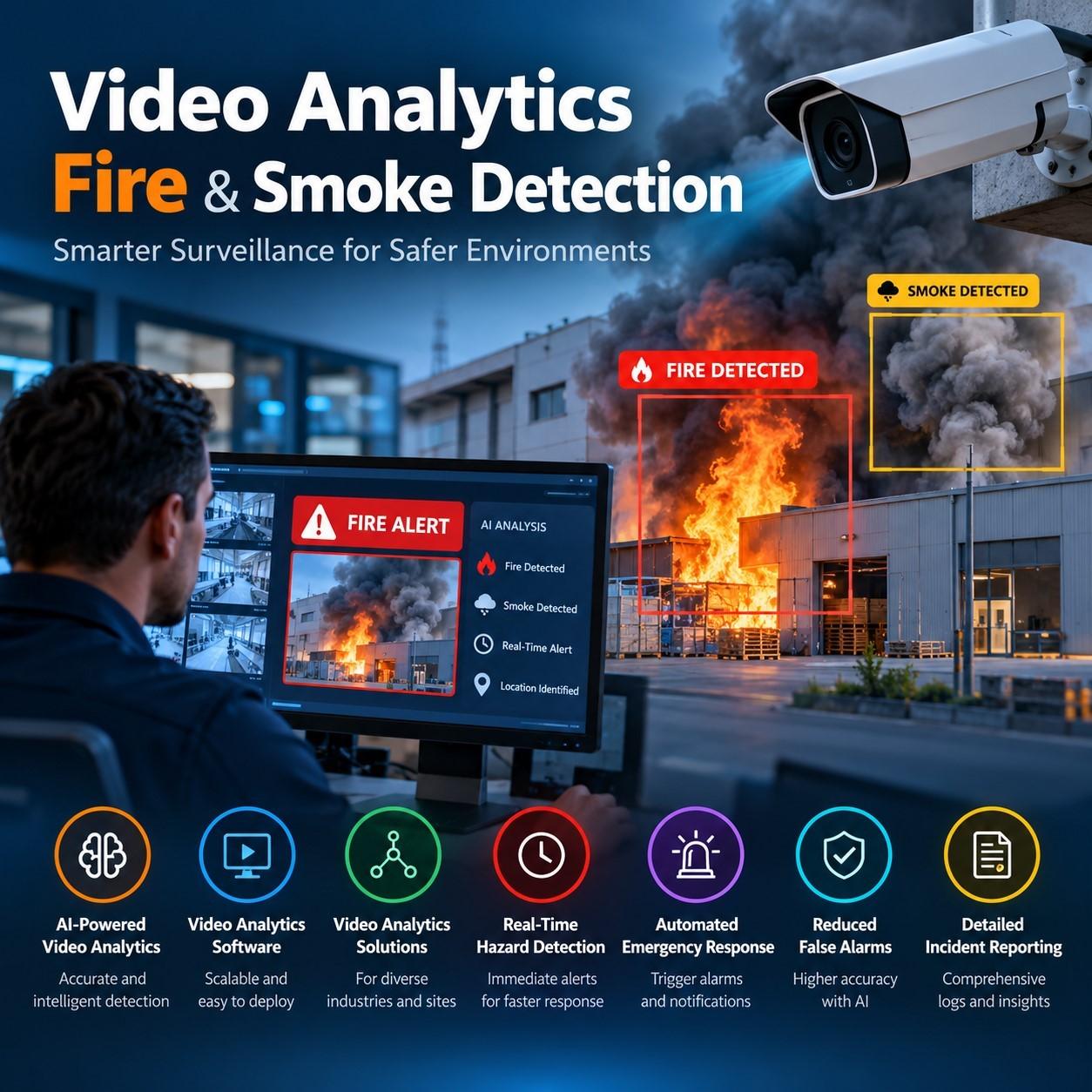
Traditional smoke detectors were designed for a world of ceiling mounted sensors waiting for particles to drift upward, which works reasonably well indoors but struggles across large warehouses, open industrial yards, and outdoor fuel storage sites common across Kuwait. Video Analytics changes that equation entirely by letting existing camera infrastructure watch for the visual signature of flame and smoke directly, often catching a developing hazard long before a conventional sensor would ever register it.
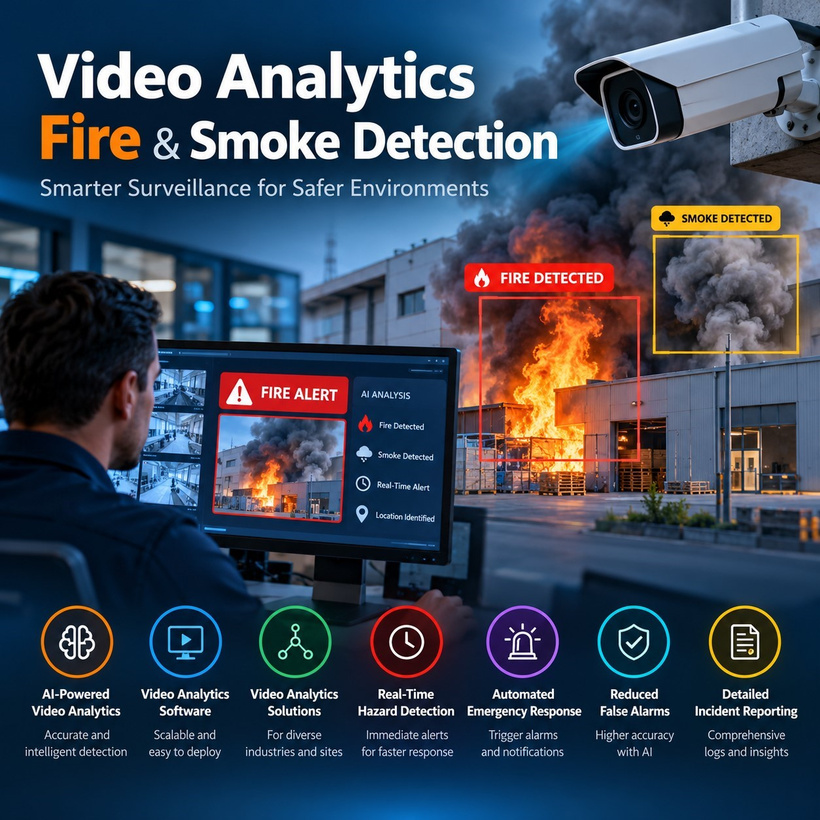
Tektronix has deployed camera-based detection and monitoring systems across Kuwait and the wider Gulf for many years, and its video analytics solution for fire and smoke detection brings this capability to facilities that need faster hazard recognition than ceiling sensors alone can provide. This article explains how the technology works, what sets a genuinely capable platform apart from a basic motion detector, and why facilities across the region are adopting it for safety and security together.
How Video Analytics Is Changing Fire and Smoke Detection
A camera running proper detection software continuously analyzes the visual scene for the color, movement pattern, and texture characteristic of flame or smoke, rather than simply detecting any motion in frame. This approach catches hazards that traditional point sensors cannot reach at all, such as a fire starting in an open yard, a loading dock, or a remote section of a large industrial site where installing a dense grid of ceiling sensors would be impractical or prohibitively expensive.
AI Powered Video Analytics for Early Smoke and Flame Recognition
AI Powered Video Analytics trains on thousands of real-world examples of flame and smoke under different lighting and weather conditions, which allows the system to recognize an actual hazard while filtering out visually similar but harmless events, such as steam rising from a vent or dust kicked up by a passing vehicle. This learned recognition improves considerably over simpler rule-based motion detection, since it responds to what is actually happening in the scene rather than reacting to any change in pixel values.
Video Analytics Software Behind Modern Fire Detection Cameras
The camera hardware itself is only part of the picture. Video Analytics Software running either on the camera or on a central server performs the actual analysis, manages alert rules, and connects the detection event to the rest of a facility's security and safety platform. Facilities should confirm whether this processing happens locally at the edge or requires a constant connection to a remote server, since edge processing keeps detection working even during a network outage, which matters considerably during exactly the kind of event that also tends to disrupt other building systems.
Choosing Complete Video Analytics Solutions for a Facility
A single camera with detection software is rarely enough for a full site. Complete Video Analytics Solutions combine fire and smoke detection with broader security analytics, such as perimeter intrusion alerts and crowd density monitoring, running on the same camera network and management platform rather than requiring separate standalone systems for every use case. This consolidated approach reduces both the cost and the complexity of a facility's overall monitoring setup compared with running several unrelated point solutions side by side.
Real Time Hazard Detection for Faster Response
Real Time Hazard Detection means an alert reaches a security or safety team within moments of a hazard first appearing on camera, rather than after it has grown large enough to trigger a traditional sensor. This speed advantage can be the difference between a small, easily contained incident and one that spreads significantly before anyone even realizes it has started, particularly in large open spaces where a ceiling mounted detector might sit a considerable distance from where a fire actually begins.
Automated Emergency Response Integration with Building Systems
Automated Emergency Response links a confirmed detection event directly to a facility's broader safety infrastructure, triggering actions such as sounding an alarm, notifying the nearest response team, unlocking emergency exits, or shutting down ventilation to slow the spread of smoke, all without waiting for a person to manually initiate each step. Removing this manual delay matters enormously during the first critical minute of an emerging incident, when every second spent deciding what to do next is a second the hazard continues to grow unchecked.
Reduced False Alarms Compared to Traditional Smoke Detectors
Reduced False Alarms is one of the most practical benefits facility teams notice once a proper analytics platform replaces older point sensors that struggle to distinguish real hazards from dust, steam, or sudden lighting changes. Fewer false alarms means security and safety staff respond to genuine events with full attention rather than becoming desensitized after repeated false triggers, a pattern that unfortunately causes real incidents to be taken less seriously once a site has suffered through enough nuisance alarms.
Detailed Incident Reporting for Investigation and Compliance
Every detection event generates footage, a timestamp, and a record of the system's confidence in its classification, giving facility teams Detailed Incident Reporting for insurance claims, regulatory review, and internal investigation after any incident. This recorded evidence removes much of the guesswork that used to follow a fire or safety event, replacing it with a clear visual and data trail showing exactly when and where a hazard first appeared and how quickly the facility's systems responded.
Video Analytics KSA: Regional Deployment Across Saudi Arabia
Alongside its growing presence in Kuwait, this same detection technology is seeing rapid adoption across neighbouring Saudi Arabia, where giga project construction sites, logistics parks, and industrial facilities face similar hazard profiles at an even larger scale. Video Analytics KSA deployments are increasingly specified into new facility designs from the outset, reflecting a broader Gulf wide shift toward camera-based hazard detection as a standard safety layer rather than an optional upgrade added later.
Video Analytics Riyadh: Where Regional Demand Is Concentrated
Riyadh's concentration of new commercial towers, logistics hubs, and government facilities has made it one of the busiest markets in the region for this technology. Video Analytics Riyadh installations frequently combine fire and smoke detection with broader perimeter security analytics on the same camera infrastructure, giving facility operators a single platform covering both safety and security needs rather than two separate systems competing for budget and attention.
Engineering Experience and Trust Behind Every Deployment
Tektronix has engineered and commissioned camera-based detection and surveillance systems across Kuwait and the wider Gulf for well over a decade, with an in-house engineering team handling site surveys, network integration, and system configuration rather than outsourcing installation to a subcontractor unfamiliar with the platform. Every deployment is tuned to the specific hazards and layout of the site it protects, and the company maintains regional technical support so a malfunctioning camera or analytics server does not leave a facility without working detection for an extended period.
Full technical documentation covering supported hardware, detection accuracy, and integration options is available through the company's video analytics solution page, giving facility and safety teams verifiable detail to review rather than a marketing summary alone.
Choosing a Video Analytics Partner Across Kuwait and the Region
Selecting a vendor for fire and smoke detection analytics is as much about tuning and ongoing support as it is about the underlying camera hardware. Facility and safety teams should ask any prospective supplier how the system is calibrated for their specific site conditions, how false alarm rates are measured and improved over time, whether detection events integrate with existing fire panels and building management systems, and how quickly local support can respond if a camera or server fails. Organizations that want a single accountable partner for hardware, software, and ongoing tuning can review Tektronix's full video analytics and hazard detection range before finalizing a shortlist of suppliers.
Deployment Considerations for Industrial and Outdoor Sites
Open yards, fuel storage areas, and large warehouse roofs present a very different detection challenge from an indoor office corridor. Camera placement needs to account for wide fields of view, long detection distances, and weather conditions such as dust, fog, or heavy rain that can all interfere with a camera's ability to distinguish genuine smoke from atmospheric haze. A proper site survey before installation, rather than simply mounting cameras wherever existing infrastructure happens to be convenient, makes a measurable difference in how reliably the system performs once it goes live.
Facilities with multiple buildings or a large perimeter often benefit from a tiered camera layout, using wide area cameras for initial detection and closer range units to confirm and track a hazard once flagged, giving both the broad coverage and the detail needed for a confident, low nuisance alert.
Planning for Scale Across Multiple Sites
An organization operating several facilities across Kuwait and the wider region should choose a video analytics platform that manages detection rules and alerts from one central dashboard rather than requiring a separate standalone system at every location. This centralized approach lets a safety team apply consistent detection standards across every site while still allowing local tuning for the specific hazards and layout unique to each one, and it keeps reporting and compliance documentation in one place rather than scattered across disconnected systems.
Conclusion
Video Analytics now gives facilities across Kuwait a faster, more reliable way to catch fire and smoke hazards than traditional sensors alone.AI Powered Video Analytics and capable Video Analytics Software recognize genuine hazards while filtering out harmless lookalikes such as steam or dust. Complete Video Analytics Solutions deliver Real Time Hazard Detection and Automated Emergency Response that traditional point sensors simply cannot match. Reduced False Alarms and Detailed Incident Reporting together improve both daily operations and post incident investigation significantly.
Facilities evaluating Video Analytics KSA and Video Analytics Riyadh projects alongside Kuwait should choose a partner like Tektronix with proven regional engineering experience.
FAQs
1. Can video analytics replace traditional smoke detectors entirely?
Most facilities run video analytics alongside traditional detectors rather than replacing them outright, since the two technologies catch different scenarios well and together provide a more complete layer of protection than either alone.
2. Does video-based detection work in low light or at night?
Modern systems are typically paired with infrared or thermal camera options specifically for low light and nighttime detection, since standard visible light cameras alone can struggle to identify flame and smoke accurately after dark.
3. How is a false alarm rate actually measured and improved?
Vendors typically track the ratio of confirmed hazards to total alerts over a defined period, then adjust detection sensitivity and retrain the underlying model using site specific footage to reduce triggers from recurring harmless events such as steam or vehicle exhaust.
4. Can detection events trigger building systems automatically without a person present?
Yes, when properly integrated with a facility's fire panel and building management system, a confirmed detection event can automatically sound alarms, unlock exits, and notify response teams without requiring someone to be monitoring a screen at that exact moment.
5. What kind of footage and data does an incident report typically include?
A complete incident record usually includes the original video clip, a timestamp, the system's confidence level in its classification, and a log of any automated actions taken, giving investigators and insurers a clear evidence trails after the event.
 Arabic
 English
 French
 Spanish
 Portuguese
 Deutsch
 Turkish
 Dutch
 Italiano
 Russian
 Romaian
 Portuguese (Brazil)
 Greek
