


Advanced Facial Recognition System in Kuwait for Secure Access
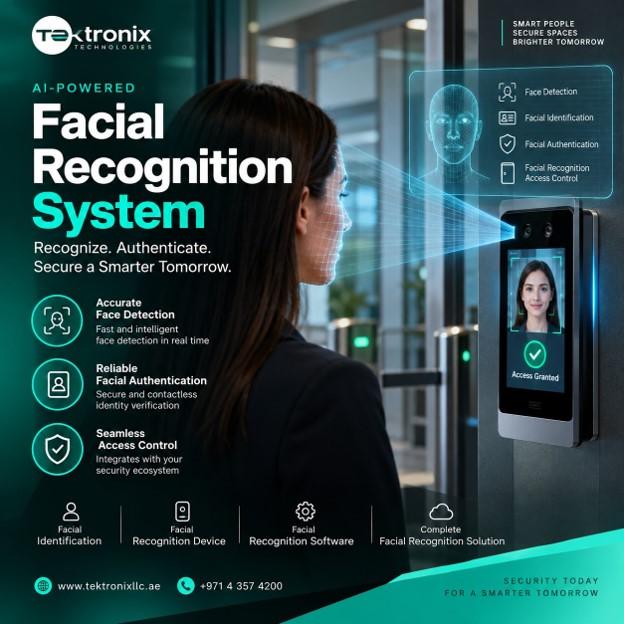
Kuwait's economy runs heavily on banking, finance, and sovereign investment institutions, sectors where the cost of a single unauthorized access event can be measured in far more than a security incident report. A Facial Recognition System gives these organizations a way to verify identity with considerably more assurance than a card or PIN, confirming the actual person standing at a vault door or a trading floor entrance rather than simply confirming that someone is holding a valid credential.
This distinction carries particular weight in Kuwait's financial sector specifically, where regulatory scrutiny and client due diligence increasingly expect organizations to demonstrate rigorous, auditable physical security alongside cybersecurity policy. A biometric verification layer that ties access directly to a confirmed individual, rather than a transferable token, has become a genuine expectation rather than a discretionary upgrade for institutions handling sensitive financial data.
Why Kuwait's Financial and Government Sectors Are Moving Toward Biometric Verification
Card-based access control carries a structural weakness that no amount of policy enforcement can fully close: a card only confirms that someone is holding a valid credential, not that the individual holding it is the person authorized to use it. Lost cards, shared badges between colleagues, and occasional cloning remain among the most common ways unauthorized individuals gain entry to secured buildings, regardless of sector.
For Kuwait's banks, sovereign wealth institutions, and government ministries, this gap carries consequences well beyond a typical office setting. Facial recognition closes it directly by tying access to a verified individual rather than a physical object they carry — a shift from verifying a credential to verifying a person that represents a genuine security upgrade rather than a cosmetic technology refresh.
Face Detection and Facial Identification: The Two-Step Verification Process
At a technical level, verification begins with Face Detection, where the system's camera locates a human face within its field of view, distinguishing it from the surrounding background before any identity matching takes place. Once a face is detected, the system captures key facial landmarks and geometry to build a mathematical representation used for comparison.
This representation then undergoes Facial Identification, comparing the captured data against a database of enrolled profiles to determine whether a match exists, and which specific individual it corresponds to. For a busy Kuwait City financial district lobby, this entire process typically completes in well under a second, fast enough that staff and authorized visitors barely need to pause during their morning arrival.
Facial Recognition Access Control for Tiered Financial Sector Security
Identification alone doesn't secure a building — it needs to be tied to a permissions system enforcing what a recognized individual is actually allowed to do. Facial Recognition Access Control connects the identification result to door and vault hardware, automatically unlocking only the specific zones that individual's role permits, whether that's a general banking floor, a trading operations area, or a restricted vault requiring the highest verification tier.
This tiered enforcement matters considerably in financial institutions specifically, where different roles genuinely warrant different access levels — a teller's daily access needs look nothing like a vault custodian's, and the system needs to enforce this distinction automatically and consistently rather than relying on staff discretion or manual override.
Facial Authentication: Addressing the Spoofing Risk Financial Institutions Cannot Accept
A more rigorous concept than basic identification, Facial Authentication incorporates liveness checks and anti-spoofing measures confirming that a genuine, present person is being verified — not a photograph, video replay, or mask presented to the camera. For a Kuwaiti bank or financial institution, this distinction isn't optional; the reputational and regulatory consequences of a spoofed entry into a restricted financial area are simply too significant to accept a verification method vulnerable to something as simple as a printed photo.
Robust authentication analyzes subtle depth and motion cues a static image cannot replicate, giving security and compliance teams a credible, testable answer when internal auditors or regulators ask specifically how spoofing risk is mitigated across the institution's physical security controls.
Selecting a Facial Recognition Device for High-Security Financial Environments
Hardware selection should reflect both an entry point's traffic volume and its security classification. A retail banking floor needs a fast-Facial Recognition Device capable of processing customer and staff volume without creating a queue, while a vault or trading operations entrance benefits from a device prioritizing verification accuracy and anti-spoofing rigor over raw processing speed.
Environmental factors specific to Kuwait also matter during device selection — high ambient temperatures, strong sunlight through glass-fronted financial district towers, and humidity near coastal areas all influence which hardware specification genuinely holds up under continuous, security-critical use rather than only performing well in a controlled demonstration.
Facial Recognition Software: Supporting Audit and Regulatory Reporting
Hardware alone cannot deliver secure access without the software managing it. Facial Recognition Software handles enrollment, stores and encrypts biometric templates, applies access policy per role, and generates detailed audit logs of every recognition event — precisely the kind of documentation Kuwaiti financial institutions increasingly need to produce during a regulatory examination or internal compliance review.
Well-designed platforms also give security teams proactive visibility — dashboards flagging unusual access patterns or repeated failed recognition attempts that might indicate an attempted spoofing event, supporting both routine security operations and the kind of documented risk management financial regulators expect institutions to demonstrate.
A Complete Facial Recognition Solution Rather Than Disconnected Components
Organizations evaluating vendors should think in terms of a complete Facial Recognition Solution rather than hardware and software purchased separately from unrelated suppliers. A cohesive solution ensures the camera, recognition engine, access control integration, and reporting dashboard were designed to work together from the outset, avoiding the integration gaps that can create genuine security weaknesses at the seams between mismatched components.
This matters particularly for Kuwaiti institutions operating multiple branches or facilities, where consistency in enrollment quality, recognition accuracy, and anti-spoofing rigor across every installed device determines whether the system delivers genuinely uniform security or inconsistent protection from one branch to the next.
Key Benefits of Advanced Facial Recognition for Kuwait's Secure Facilities
Organizations adopting facial recognition specifically for secure access typically report improvements across several practical areas:
● Meaningfully reduced risk from shared, lost, or cloned physical credentials
● Defensible anti-spoofing protection meeting financial sector audit expectations
● Faster, touchless verification reducing bottlenecks at high-traffic branch entrances
● Detailed audit trails supporting regulatory compliance and incident investigation
● Lower administrative burden through instant, centralized credential management
● Consistent verification rigor across every branch or facility in a network
Facial Recognition System Kuwait: Regional Deployment and Governance Considerations
Rolling out a Facial Recognition System Kuwait-wide involves careful attention to how biometric data is stored, encrypted, and retained, in line with the country's data protection expectations, particularly for institutions handling client financial information subject to specific regulatory scrutiny.
Local certified integrators with genuine experience in Kuwait's financial and government sectors specifically play an important role here, since a deployment team unfamiliar with these institutions' particular compliance language and enrollment requirements may overlook considerations a generic commercial installer would never anticipate.
Integrating Facial Recognition into a Broader Financial Sector Security Strategy
Facial recognition delivers its full security value when connected to an institution's broader access control ecosystem rather than functioning as an isolated identification tool. Linking recognition events to visitor management ensures registered guests are handled with the same rigor as enrolled staff, while integration with building-wide access control extends consistent verification standards across every entry point rather than just the main lobby.
Facial Recognition System technology gives Kuwaiti institutions genuine secure access rather than mere convenience. Face Detection and Facial Identification verify presence and identity, while rigorous Facial Authentication closes the spoofing gap financial institutions cannot accept. Facial Recognition Access Control enforces tiered policy through the right Facial Recognition Device and Facial Recognition Software, combining into a complete Facial Recognition Solution driving Facial Recognition System Kuwait adoption.

 English
 Arabic
 French
 Spanish
 Portuguese
 Deutsch
 Turkish
 Dutch
 Italiano
 Russian
 Portuguese (Brazil)
 Greek
