


GST Registration for Non-Resident Taxable Persons in India: A Complete Guide
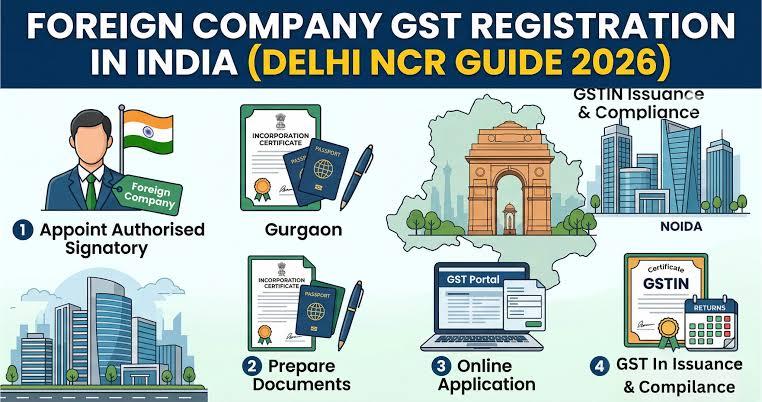
India provides several opportunities for foreign businesses, international suppliers, and overseas entrepreneurs who want to participate in its growing market. However, non-residents planning to make taxable supplies in India must understand the Goods and Services Tax (GST) rules that apply to their activities.
GST Registration for Foreign Companies is an important consideration for eligible overseas businesses, particularly when they undertake taxable transactions in India. Depending on the nature of their activities, some non-residents may need registration as non-resident taxable persons, while others may be covered by different GST provisions.
This article explains the meaning of a non-resident taxable person, registration requirements, required documents, the application process, tax payments, and ongoing compliance responsibilities.
1. What Is a Non-Resident Taxable Person?
Under Indian GST law, a non-resident taxable person is generally someone who occasionally undertakes transactions involving the supply of goods or services, or both, in India but has no fixed place of business or residence in the country.
For example, an overseas business may participate in an Indian trade exhibition and sell taxable products during the event. A foreign supplier carrying out certain temporary taxable commercial activities in India may also need to examine whether this category applies.
This registration category has specific requirements and is different from regular GST registration. Businesses should review their planned activities before deciding which registration procedure is appropriate.
2. Who Needs Registration as a Non-Resident Taxable Person?
Registration may be required when a non-resident undertakes taxable supplies in India under circumstances covered by the GST law.
Examples of activities that may require assessment include:
-
Selling taxable products at an Indian trade exhibition.
-
Conducting temporary commercial activities involving taxable supplies in India.
-
Making occasional taxable supplies without a fixed place of business or residence in India.
-
Participating in certain events where goods or services are supplied for consideration.
Not every foreign company providing services to Indian customers automatically qualifies as a non-resident taxable person. Cross-border services supplied from outside India may be governed by other provisions, including import-of-services rules and reverse charge, depending on the transaction.
Before applying, businesses should evaluate their business model, place of supply, customer details, and the relevant GST provisions.
3. Key Features of Non-Resident GST Registration
Non-resident taxable person registration differs from regular registration in several important ways.
Limited Registration Period
Registration is generally valid for the period specified in the application or 90 days from the effective registration date, whichever is earlier. An extension for a further period of up to 90 days may be available under the prescribed procedure.
Advance Tax Deposit
Applicants generally need to estimate their GST liability and deposit the prescribed advance amount. This requirement should be considered when planning the cost and timing of business activities in India.
Specific Compliance Requirements
Registered non-residents must comply with the applicable invoicing, tax payment, return filing, and record-keeping rules during the registration period.
Correct Registration Category
A foreign company operating through an established Indian business presence may need a different registration arrangement. The appropriate category depends on the actual circumstances and legal requirements.
4. Documents Required for Registration
Before beginning the application process, applicants should prepare the documents and information required under the applicable procedure.
Commonly relevant documents may include:
-
A valid passport or other prescribed identification.
-
Proof of the applicant's overseas address.
-
Business registration or incorporation documents, where applicable.
-
Details of the authorised representative or signatory.
-
Information about proposed taxable supplies in India.
-
Estimated turnover and tax liability for the registration period.
-
Supporting documents relating to the proposed business activities.
-
Bank or payment information, where required.
The precise list may vary according to the applicant's circumstances. Documents issued outside India may require authentication, notarisation, apostille, or certified translation where prescribed.
Applicants should check the current requirements on the official GST portal before submitting an application.
5. Step-by-Step Registration Process
Understanding the process for GST Registration for Foreign Companies can help overseas businesses determine their obligations before undertaking taxable activities in India.
Step 1: Check Eligibility
Determine whether the proposed transactions meet the legal definition of a non-resident taxable person. If another registration category applies, follow the relevant procedure instead.
Step 2: Prepare the Documents
Collect identification documents, proof of overseas address, business information, and details of the planned taxable supplies.
Step 3: Submit the Application
Complete the prescribed registration application through the GST portal using the procedure applicable to non-resident taxable persons.
Step 4: Estimate the Tax Liability
Calculate the expected value of taxable supplies and the associated GST liability for the proposed registration period. Use realistic estimates based on the planned transactions.
Step 5: Deposit the Prescribed Advance Amount
Pay the required advance tax amount in accordance with the applicable rules. Applicants should confirm the current procedure before completing the application.
Step 6: Complete Registration Formalities
After registration is granted, review the registration certificate, effective date, validity period, and compliance requirements before making taxable supplies.
6. GST Rates and Advance Tax Payments
The GST rate depends on the classification of the goods or services supplied and the applicable notifications. Different products and services may attract different rates, so businesses should confirm the correct classification before calculating their tax liability.
Non-resident taxable persons generally need to estimate their tax liability for the intended registration period and deposit the prescribed advance amount. If the final liability differs from the estimate, the business should review the applicable rules for additional payments, adjustments, or refunds.
Accurate calculations can help businesses plan their cash flow and avoid unnecessary delays.
7. GST Returns and Compliance Requirements
After registration, non-resident taxable persons must follow the GST return filing and payment requirements applicable to their registration.
Key responsibilities may include:
-
Issuing appropriate tax invoices.
-
Charging GST correctly on taxable supplies.
-
Maintaining records of transactions and tax payments.
-
Filing the prescribed GST return within the applicable deadline.
-
Monitoring registration validity and extension requirements.
-
Reviewing outstanding tax liabilities.
-
Checking eligibility and procedures for any refund claims.
Businesses should verify the relevant forms and deadlines through official GST resources because the requirements may depend on the transaction and registration details.
8. Common Mistakes to Avoid
Foreign businesses can face compliance issues when they misunderstand Indian GST requirements. Common mistakes include:
-
Applying under the wrong registration category.
-
Starting taxable supplies before completing the required formalities.
-
Underestimating the advance tax liability.
-
Submitting incomplete or incorrectly authenticated documents.
-
Missing return filing deadlines.
-
Ignoring the registration expiry date.
-
Assuming that every overseas service provider needs non-resident taxable person registration.
Reviewing the applicable requirements before starting operations can help reduce these risks.
9. Benefits of Proper GST Compliance
Following the correct registration procedure helps foreign businesses manage temporary commercial activities in India more effectively. It supports accurate invoicing, organised financial records, and better tax planning.
Proper compliance can also reduce the risk of penalties, administrative delays, and disputes with customers or tax authorities. Businesses should maintain supporting documents and seek professional guidance whenever the tax treatment of a transaction is uncertain.
Conclusion
Non-residents planning taxable activities in India should review their GST obligations before beginning operations. Depending on the circumstances, they may need to submit prescribed documents, estimate their tax liability, deposit advance tax, and file the required returns within the applicable period.
GST Registration for Foreign Companies requires careful assessment because the correct registration category depends on the nature of the business activities and the relevant provisions of Indian GST law. Foreign businesses should verify current requirements through the official GST portal and consult a qualified Indian tax professional to support accurate registration and compliance.

 English
 Arabic
 French
 Spanish
 Portuguese
 Turkish
 Dutch
 Italiano
 Russian
 Romaian
 Portuguese (Brazil)
 Greek
