


How MyBharat Helps Renters Compare Real Rent Prices and Find Homes Without Brokers
Finding a rental home in India can be confusing, especially when property listings show different prices for similar apartments in the same neighborhood. Many tenants struggle to understand whether the quoted rent is reasonable, how much nearby residents actually pay, and whether brokerage charges are necessary.
Traditional property searches often begin with advertised rental prices. However, an asking price does not always represent the amount tenants finally agree to pay. This information gap can make rental decisions difficult for students, working professionals, families, and people relocating to new cities.
A real rent comparison platform helps solve this problem by making actual rental information easier to access. Instead of depending entirely on advertisements or broker estimates, renters can compare reported rental amounts, evaluate neighborhoods, and understand local housing costs.
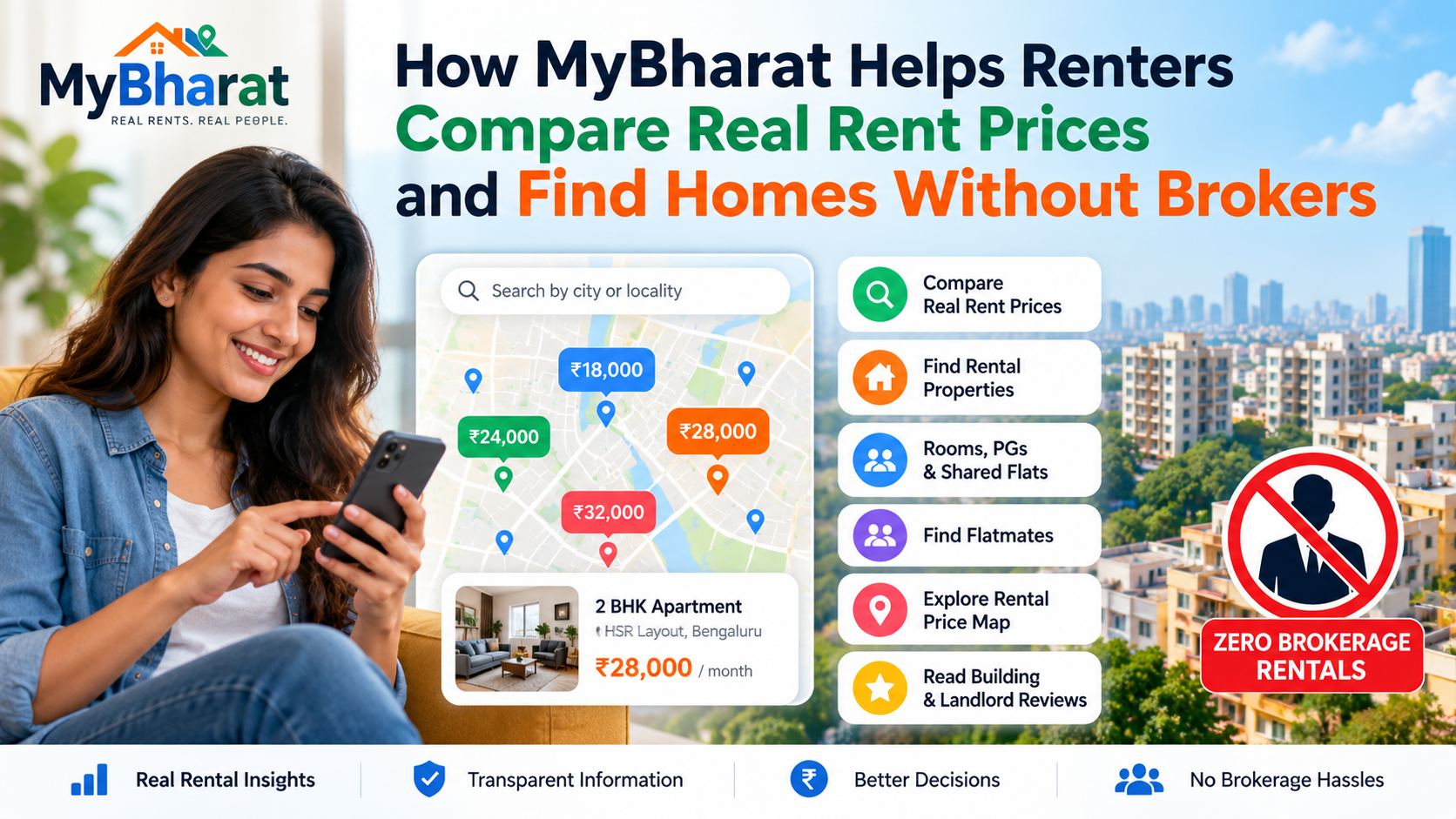
MyBharat is an Indian rent transparency platform that allows people to explore rental prices contributed by tenants. Its interactive rental map, locality information, property discovery features, and direct connections are designed to help renters make more informed housing decisions.
What Is MyBharat and How Does It Work?
MyBharat is a rental information and discovery platform focused on improving transparency in India's housing market. It allows renters to explore anonymous reports showing how much people pay for accommodation in different cities and neighborhoods.
The platform combines rental price information with tools for discovering properties, finding flatmates, and reviewing buildings or landlords. Users can browse rental information without creating an account, while certain contact features may require verification.
According to its published methodology, MyBharat uses first-hand rental reports to calculate median rents and displays the number of reports supporting those figures. This helps users understand both the estimated rental level and the strength of the available evidence.
Understanding the Rental Price Map
The rental price map is one of the platform's central features. It allows users to explore locations and see rent information contributed by people living in those areas.
Rather than comparing only advertised prices, renters can examine actual reported payments. This makes it easier to understand whether a property appears expensive or affordable relative to similar accommodation nearby.
Users can also explore rental information by city, neighborhood, and housing configuration where sufficient data is available.
How Renters Contribute Information
The platform allows tenants to share rental information through location-based reports. These contributions help create a clearer picture of housing costs across different neighborhoods.
As more renters contribute accurate information, the platform can provide stronger comparisons. However, areas with limited reports should be treated carefully because a small number of observations may not represent the entire local rental market.
Why Real Rent Comparison Matters in India
Rental housing costs vary significantly depending on location, property size, transportation access, amenities, and neighborhood demand.
Two apartments with similar layouts may have different rental prices because one is closer to a business district or metro station. Without reliable local information, renters may struggle to determine whether the difference is reasonable.
Understanding Actual Rent vs Asking Rent
An asking rent is the amount a property owner or advertiser requests. Actual rent is the amount a tenant agrees to pay.
For example, an apartment may be advertised for ₹35,000 per month, while comparable properties nearby may have reported rents closer to ₹30,000.
This does not automatically mean the advertised apartment is overpriced. It may have better facilities, additional furniture, or a more convenient location.
However, knowing the difference gives renters a useful starting point for evaluating the offer.
Making Better Rental Decisions
Access to local rent information helps people compare housing options before committing to a property.
Renters can use this information to evaluate affordability, identify alternative neighborhoods, estimate monthly expenses, and prepare for discussions with property owners.
For someone relocating to an unfamiliar city, these comparisons can be particularly valuable.
Key Features of MyBharat for Renters
1. Real Rental Price Comparison
MyBharat helps users explore rental amounts contributed by tenants rather than relying entirely on property advertisements.
This approach provides an additional source of information when evaluating rental costs.
Users should still compare properties with similar configurations, amenities, and lease conditions to make meaningful comparisons.
2. Interactive Rental Price Map
An interactive map helps renters explore rental information geographically.
Users can examine neighborhoods, understand local price differences, and identify areas that may fit their housing budgets.
For example, someone moving to Bengaluru could compare rental conditions in different residential areas before scheduling property visits.
3. Zero Brokerage Rental Discovery
Brokerage charges can increase the upfront cost of renting a home.
MyBharat supports direct connections between renters, property owners, and potential flatmates without charging a brokerage commission.
This can help users explore housing opportunities without depending entirely on intermediaries. The platform's no-brokerage model does not remove other possible expenses, such as deposits, rent advances, or applicable agreement costs.
4. Rooms, PGs, and Shared Accommodation
Not every renter needs an entire apartment. Students and young professionals often look for single rooms, paying guest accommodation, or shared flats.
MyBharat provides rental discovery information for these housing categories, helping users explore accommodation options based on their requirements.
The platform also offers locality-level information that can support comparisons between different shared-living arrangements.
5. Flatmate Discovery
Sharing an apartment can make housing more affordable, particularly in cities with higher rental costs.
Flatmate discovery features help renters connect with people seeking shared accommodation.
Before agreeing to share a property, users should discuss rent contributions, deposits, household responsibilities, visitor policies, and lease arrangements.
6. Building and Landlord Reviews
Rental costs are only one part of choosing a home.
Building maintenance, water supply, security, noise levels, and landlord communication can significantly affect the living experience.
MyBharat includes renter reviews intended to provide additional information about buildings, societies, and landlords.
These reviews can support decision-making, although users should evaluate individual experiences carefully rather than relying on a single review.
How to Compare Rental Prices Before Choosing a Home
Comparing rent requires more than identifying the lowest advertised price. A structured approach helps renters understand whether a property offers good value.
Step 1: Choose Your Preferred City and Neighborhood
Start by identifying the city where you want to live.
Consider workplace location, educational institutions, transportation, healthcare facilities, and nearby essential services.
Once you identify suitable neighborhoods, compare the rental conditions in each area.
Step 2: Check the Median Rental Price
Median rent is the middle value of a group of rental reports.
Unlike an average, the median is generally less affected by a few unusually expensive or inexpensive properties.
MyBharat uses median rental figures to help renters understand typical reported costs. Its methodology also considers the number and recency of available reports.
Step 3: Compare Similar Properties
Always compare homes with similar characteristics.
A furnished two-bedroom apartment should not be compared directly with an unfurnished one-bedroom property.
Important comparison factors include apartment size, furnishing, parking, maintenance charges, building facilities, and proximity to public transportation.
Step 4: Calculate the Total Rental Cost
Monthly rent is not the only expense involved in renting.
Tenants should also consider the security deposit, maintenance charges, electricity, internet, parking, moving expenses, and agreement-related costs.
For example, a property with slightly lower rent may become more expensive if it has high maintenance charges or significantly increases commuting expenses.
Step 5: Verify the Property Before Paying
Rental information helps users identify opportunities, but it does not replace property verification.
Visit the property where possible, confirm the owner's authority to rent it, inspect its condition, and review the rental agreement.
Avoid transferring deposits to unverified individuals or making payments solely based on online conversations.
How Rental Transparency Helps Tenants Negotiate
Negotiating rent becomes easier when renters understand local housing conditions.
Instead of relying entirely on personal opinions, tenants can discuss comparable rental amounts and property characteristics.
For example, if several similar apartments in a neighborhood have reported monthly rents between ₹25,000 and ₹30,000, a tenant can use that information to evaluate a property advertised at ₹33,000.
The final amount will still depend on the home's condition, availability, amenities, and the owner's willingness to negotiate.
Using Data During Rental Discussions
Renters should approach negotiations with reasonable comparisons rather than treating a reported median as a guaranteed market price.
A useful discussion may include the property's condition, comparable rental reports, maintenance expenses, and lease duration.
Evidence-based conversations can make the process more transparent for both tenants and property owners.
Avoiding Misleading Rental Comparisons
A neighborhood with only a few rental reports may not provide enough information to establish a dependable market benchmark.
Renters should check the sample size, reporting date, and property configuration before relying on a figure.
This is particularly important in areas where rental availability changes quickly or housing types vary significantly.
Benefits of Using a Rent Transparency Platform
Better Budget Planning
Understanding reported rental prices helps users estimate realistic housing expenses.
Students, families, and working professionals can use this information to identify neighborhoods that fit their monthly budgets.
Reduced Dependence on Brokers
Direct rental discovery gives users another way to find accommodation.
Although some renters may still prefer professional assistance, platforms supporting direct connections can reduce dependence on brokerage-based searches.
Greater Confidence When Relocating
Moving to a new city often involves uncertainty about rental costs and neighborhood conditions.
Access to locality-level information helps users research accommodation before arriving.
More Informed Housing Choices
Combining rental price information with property details and community reviews allows renters to evaluate more than the monthly payment.
This broader understanding can improve the overall property selection process.
Who Can Benefit From MyBharat?
Students and Young Professionals
Students and early-career professionals often need affordable accommodation close to colleges, offices, and transportation routes.
Rental comparisons and shared accommodation discovery can help them evaluate suitable options.
Families Searching for Rental Homes
Families may prioritize schools, healthcare access, neighborhood safety, and building facilities.
Local rent information can help them compare residential areas before arranging property visits.
People Relocating for Work
Professionals moving between cities can use rental comparisons to understand housing costs and prepare a realistic relocation budget.
Existing Tenants Planning to Renew
Current tenants can also benefit from rental information.
Before renewing a lease, they can compare their current rent with recent reports from similar properties in the same neighborhood.
This provides useful context when discussing a proposed rent increase.
The Future of Transparent Rental Housing in India
Digital rental platforms are changing how people research housing.
Traditional property portals mainly focus on available listings, while rent transparency platforms add another layer of information by showing what existing tenants report paying.
This distinction is important because property availability and actual rental costs answer different questions.
A listing tells users what accommodation is currently advertised. Rental reports help them understand whether the quoted amount is reasonable compared with other housing in the area.
As rental datasets become more comprehensive, they may help renters, researchers, and housing professionals better understand local market conditions.
However, the quality of these insights depends on accurate reporting, sufficient sample sizes, responsible data handling, and regular updates.
Platforms such as MyBharat demonstrate how renter-contributed information can support a more transparent rental experience.
Conclusion
Finding a suitable rental home requires reliable information, realistic budgeting, and careful property evaluation.
A real rent comparison platform can make this process easier by helping users understand local rental costs, compare neighborhoods, and identify housing opportunities.
MyBharat brings together anonymous rental reports, an interactive rental map, accommodation discovery, and renter-focused information to support better housing decisions.
Whether someone is searching for an affordable room, comparing apartment rents, or preparing to relocate, access to actual rental information can provide a useful advantage.
The most effective approach is to combine rental data with property visits, document verification, and a clear understanding of all housing expenses.

 English
 Arabic
 French
 Spanish
 Portuguese
 Deutsch
 Turkish
 Italiano
 Russian
 Romaian
 Portuguese (Brazil)
 Greek
