


Residential Solar Panel Installation: A Smart Energy Upgrade for UK Homes
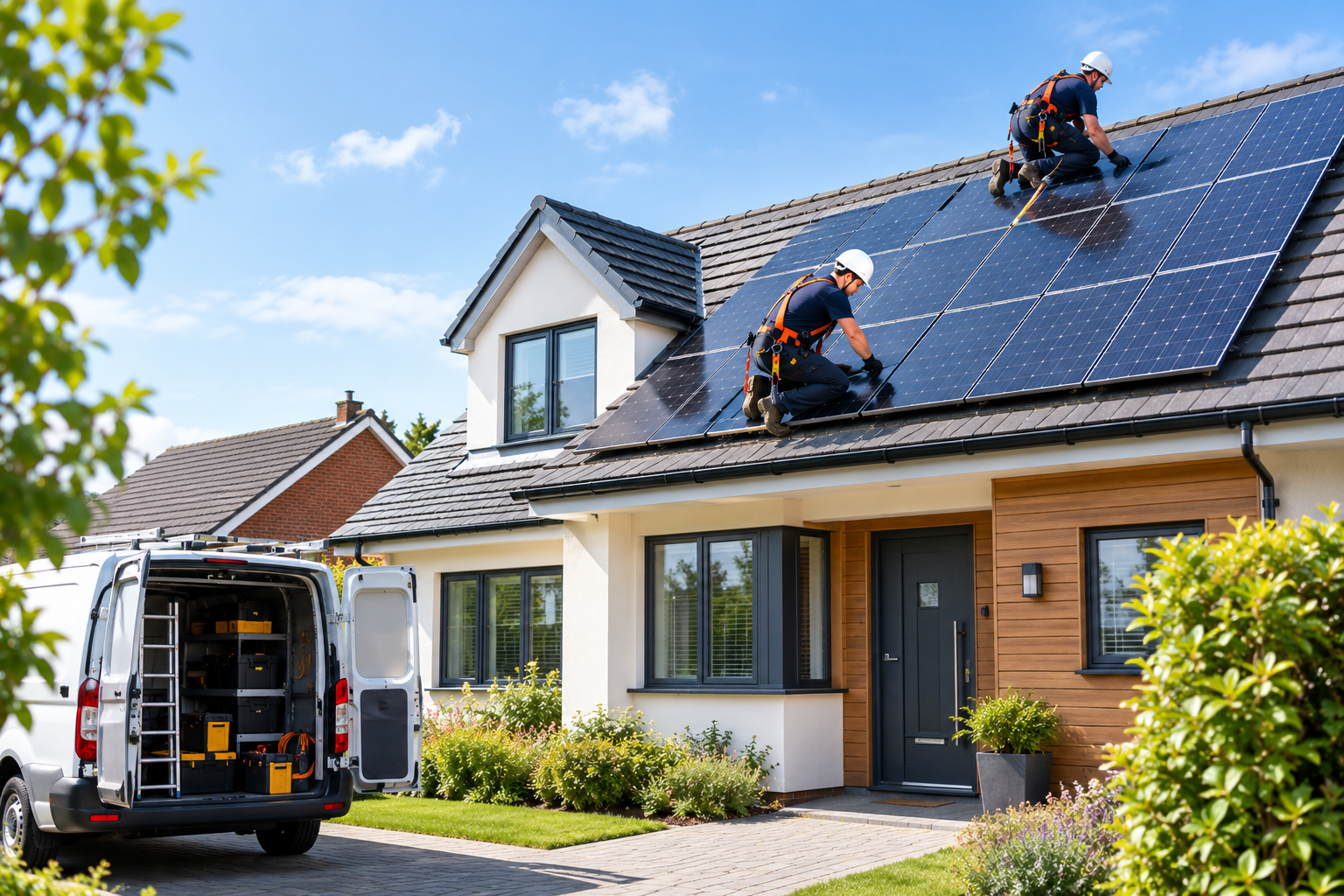
With electricity costs continuing to influence household budgets, many UK homeowners are looking for reliable ways to generate their own power. Solar energy has become an increasingly practical solution, allowing households to reduce their reliance on grid electricity while supporting a cleaner environment.
Residential solar panel installation offers homeowners an opportunity to produce renewable electricity directly from their rooftops. With advances in solar technology, modern systems are designed to deliver dependable performance and long-term energy benefits.
Understanding the installation process, costs, and available equipment can help homeowners make informed decisions about switching to solar energy.
What Is Residential Solar Panel Installation?
Residential solar panel installation involves fitting photovoltaic (PV) panels to a property's roof or another suitable location to capture daylight and convert it into usable electricity.
A typical home solar system includes photovoltaic panels, an inverter, mounting equipment, electrical wiring, and a monitoring system. Homeowners may also add battery storage to save surplus electricity for later use.
Professional residential solar panel installation services help property owners select suitable equipment, assess roof conditions, and design systems according to their household electricity requirements.
Why Should Homeowners Consider Solar Panels?
1. Reduce Household Electricity Costs
One of the biggest advantages of residential solar energy is the potential to lower monthly electricity expenses.
Solar panels generate electricity during daylight hours, reducing the amount of energy households need to purchase from electricity suppliers.
Actual savings depend on system capacity, electricity tariffs, household consumption patterns, and the proportion of solar electricity used directly.
2. Generate Renewable Electricity
Solar power provides a cleaner alternative to conventional electricity generation.
Solar panels produce electricity without direct carbon emissions during operation, helping households reduce their overall environmental impact.
3. Improve Energy Independence
Generating electricity at home gives homeowners greater control over their energy consumption.
With a suitable battery storage system, households can store some of the solar electricity generated during the day and use it during the evening.
4. Invest in Long-Term Energy Efficiency
Solar panels are designed to operate for many years, making them a potentially valuable long-term property improvement.
A properly designed and maintained installation can continue contributing to household electricity requirements for decades.
Is Your Property Suitable for Residential Solar Panels?
Before installing solar panels, homeowners should consider several important factors.
Roof orientation: South-facing roofs often provide excellent annual solar generation in the UK. However, east- and west-facing roofs can also deliver worthwhile results.
Available roof space: The number of panels that can be installed depends on roof dimensions, shape, and obstructions.
Shading: Nearby trees, buildings, and chimneys can reduce electricity generation.
Roof condition: The roof should be structurally suitable for supporting the additional equipment.
Electricity consumption: Household energy requirements influence the most appropriate system capacity.
A professional property assessment helps determine which solar configuration is most suitable.
Understanding the Residential Solar Installation Process
Installing a domestic solar system involves several stages.
Step 1: Initial Consultation
The process begins with reviewing household electricity consumption, energy goals, and property characteristics.
Installers may examine recent electricity bills to understand typical usage.
Step 2: Roof Survey and Assessment
A technical assessment determines the roof's suitability for solar panels.
The installer evaluates structural condition, orientation, shading, accessibility, and available installation space.
Step 3: System Design
Following the survey, a solar system is designed to match the property's requirements.
This stage includes selecting appropriate panels, inverter capacity, mounting arrangements, and optional battery storage.
Step 4: Solar Panel Installation
Qualified technicians install the mounting framework and securely position the solar panels.
The inverter and other electrical components are then connected in accordance with applicable safety requirements.
Step 5: Testing and Commissioning
Once installation is complete, the system is tested to confirm safe operation.
Homeowners should receive operating instructions, relevant documentation, and guidance on monitoring electricity generation.
How Much Does Residential Solar Panel Installation Cost?
The price of installing solar panels varies according to several factors.
Larger systems generally require more equipment, while roof complexity and accessibility can influence installation expenses.
Equipment quality, inverter specifications, labour requirements, and battery storage also affect the total cost.
Rather than choosing the lowest quotation, homeowners should compare system performance estimates, warranty coverage, equipment specifications, and installation quality.
Obtaining detailed quotations from multiple qualified installers can provide a clearer understanding of the investment.
Should You Add Battery Storage to Your Solar System?
Battery storage can help homeowners make greater use of the electricity generated by their solar panels.
During sunny periods, a solar installation may produce more electricity than the household immediately requires.
A compatible battery can store some of that surplus electricity for later use, such as during the evening when solar generation is lower.
However, battery storage increases upfront costs. Its financial benefits depend on household electricity consumption, energy tariffs, and the price and capacity of the chosen battery.
It is also important to understand that standard solar batteries do not automatically provide backup electricity during power cuts. Additional equipment and configuration may be necessary.
How to Choose a Reliable Residential Solar Installer
Selecting an experienced installer is essential for achieving reliable system performance.
Homeowners should consider relevant industry qualifications, professional experience, customer feedback, and aftercare services.
In the UK, MCS certification is an important credential to check when comparing solar installers.
Before making a decision, ask each provider to explain the proposed equipment, estimated annual electricity generation, warranties, and installation arrangements.
A trustworthy company should provide transparent information and realistic performance estimates without guaranteeing savings that cannot be verified.
Do Residential Solar Panels Work in Winter?
Yes. Solar panels can generate electricity throughout the year, including during cloudy and cold weather.
However, electricity generation is usually lower during winter because daylight hours are shorter and sunlight is less intense.
An appropriately designed system takes seasonal variations into account when estimating annual electricity generation.
Maintaining Your Residential Solar System
Solar panels typically require relatively little routine maintenance.
Homeowners should monitor electricity generation and check for unexpected performance changes.
Leaves, debris, or excessive shading may occasionally affect efficiency. Electrical faults and roof-mounted equipment should be inspected by qualified professionals.
Keeping installation documents and warranty information readily available can also simplify future maintenance requirements.
Final Thoughts
Residential solar panel installation provides UK homeowners with an opportunity to generate renewable electricity, reduce dependence on purchased energy, and support long-term household efficiency.
While the initial investment requires careful consideration, a properly designed solar system can deliver useful energy benefits over many years.
By evaluating roof suitability, comparing installation quotations, and selecting qualified professionals, homeowners can make informed decisions about moving towards solar energy.
With suitable equipment and dependable installation, solar power can become a valuable part of a more sustainable home.

 English
 Arabic
 French
 Spanish
 Portuguese
 Deutsch
 Turkish
 Dutch
 Italiano
 Romaian
 Portuguese (Brazil)
 Greek
