


How Jacket Project Consultants Plan Efficient Garment Finishing and Laundry Facilities
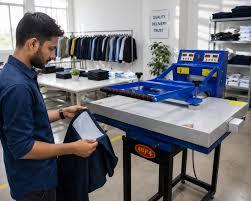
The garment manufacturing and professional laundry industries depend on more than washing, stitching, and drying. The final appearance of a garment plays an important role in customer satisfaction, product presentation, and business reputation. Jackets, blazers, coats, and structured garments require particular attention because their shape, seams, collars, lapels, and sleeves must be finished carefully.
This is where Jacket Project Consultants can help businesses plan suitable equipment, organize production workflows, and establish an efficient garment-finishing facility. Whether a company is setting up a new garment unit, expanding a finishing department, or developing a commercial laundry and dry-cleaning operation, proper project planning helps align machinery, space, utilities, and production requirements.
Why Jacket Finishing Requires Specialized Planning
Jackets often require more detailed finishing than simpler garments. Their construction includes shaped panels, structured shoulders, lapels, linings, and other features that can be affected by unsuitable pressing temperatures, pressure, or handling techniques.
A well-planned finishing department considers the types of garments being processed, expected production volumes, fabric characteristics, finishing standards, and available labor. Equipment should be selected according to these practical requirements rather than purchasing machines solely on the basis of price or advertised capacity.
Experienced project consultants can help businesses assess their requirements before making major investments. This includes determining the appropriate pressing equipment, identifying the necessary supporting machinery, planning operator workstations, and estimating the infrastructure needed for smooth operation.
Businesses evaluating specialized machinery can explore jacket pressing machines and related equipment to understand the equipment relevant to their garment-finishing requirements.
What Do Jacket Project Consultants Do?
Jacket project consultants help translate a business's production goals into a workable machinery and facility plan. Their role can extend from the initial feasibility assessment to equipment specification and installation coordination, depending on the project's scope.
1. Assess Production Requirements
The first step is understanding the operation. A garment export house processing structured jackets may have different requirements from a tailoring unit, garment factory, or commercial finishing service.
Important considerations include:
-
The number and types of garments processed per shift.
-
The range of fabrics and garment constructions.
-
Required finishing quality and production turnaround.
-
Available floor space and operator movement.
-
Budget, staffing, and future expansion plans.
These details help establish realistic production targets and guide equipment selection.
2. Select Suitable Jacket Pressing Equipment
The correct pressing solution depends on garment design, fabric behavior, finishing expectations, and production volume. Specialized jacket pressing equipment can help operators achieve more consistent results when configured and used correctly.
Consultants may assess whether the facility requires dedicated jacket presses, suitable steam and vacuum arrangements, supporting pressing tables, or other finishing equipment. The final configuration should match the actual product mix and the manufacturer's operating specifications.
A carefully selected system can help reduce unnecessary handling, improve consistency, and support a more organized finishing process.
3. Plan the Production Workflow
An efficient layout reduces unnecessary movement between finishing stages. A typical garment workflow may include inspection, spotting or stain treatment where necessary, pressing, shaping, final quality checks, and packing.
The exact sequence depends on the garment, cleaning method, and production process. Project planning should ensure that workstations are positioned logically and that finished garments can move safely through the department without becoming mixed with incoming or unfinished items.
A practical layout also allows enough space for garment handling, temporary storage, maintenance access, and safe operator movement.
Integrating Laundry and Dry-Cleaning Operations
Many businesses handle jacket finishing alongside washing, professional garment care, or dry-cleaning services. Planning these functions together can help avoid equipment mismatches and workflow bottlenecks.
Choosing a Coin Laundry Machine for Commercial Operations
A Coin Laundry Machine can be relevant when planning a self-service laundry business or a facility that includes coin-operated washing services. However, a coin-operated setup and an industrial garment-finishing department serve different operational purposes.
Before choosing equipment, business owners should consider customer demand, machine capacity, available floor area, payment arrangements, water and drainage infrastructure, electrical requirements, and service access.
A self-service laundry may require a different machine mix from a garment factory or a professional dry-cleaning establishment. The equipment plan should reflect the intended business model rather than combining unrelated machines without a clear operational need.
For businesses exploring broader laundry machinery options, Welco GM provides a starting point for reviewing equipment relevant to laundry and garment-care operations.
Planning Laundry Dry Cleaning Projects
Businesses offering professional garment care must consider cleaning processes, garment inspection, stain treatment, drying, finishing, and final presentation. The equipment configuration should support the types of garments handled and the cleaning methods appropriate to them.
Working with Laundry Dry cleaning Project Consultants can help owners evaluate the proposed service mix, equipment requirements, facility layout, utility availability, and expected workload before committing to a setup.
For example, a facility handling business suits, jackets, and other structured garments may need both appropriate cleaning equipment and specialized finishing solutions. Planning these stages together helps reduce bottlenecks and supports consistent garment quality.
Businesses considering this type of setup can review dry-cleaning project and equipment information when assessing their requirements.
Key Factors to Consider Before Investing in Machinery
Selecting machinery is only one part of a successful project. Owners should evaluate the entire operation before finalizing an equipment list.
Production Capacity
Estimate the number of garments or items that must be processed during each shift. Compare this demand with realistic machine throughput, handling time, operator availability, and the time needed for inspection and rework.
Avoid sizing the facility exclusively around peak theoretical machine output. The overall workflow determines how much finished production the facility can achieve.
Space and Layout
Measure the usable floor area and account for machine clearances, operator workstations, garment racks, storage, ventilation, and maintenance access. The layout should support a logical production sequence without creating congestion.
Utilities and Operating Costs
Review electricity, water, steam, compressed air where required, drainage, ventilation, and other services relevant to the selected equipment. Actual requirements depend on machine specifications and the facility's operating conditions.
Consider ongoing expenses as well as the initial purchase price. Energy consumption, maintenance, consumables, labor, and equipment downtime all affect the total cost of operation.
Maintenance and Operator Training
Even suitable machinery needs correct operation and regular maintenance. Staff should receive training in safe machine use, appropriate settings, garment handling, cleaning procedures, and routine inspections.
Maintenance planning should include access to replacement parts, qualified service support, and preventive servicing schedules.
How Better Project Planning Supports Business Growth
A well-designed garment-finishing facility can help businesses establish more predictable processes and make better use of their investment.
The potential benefits include:
-
Consistent finishing: Suitable equipment and operating procedures support repeatable garment presentation.
-
Improved workflow: A logical layout reduces unnecessary movement and handling.
-
Better resource planning: Matching capacity to demand helps avoid excessive or insufficient equipment.
-
More informed investment decisions: Feasibility assessments help identify infrastructure needs and likely operating expenses before installation.
-
Room for expansion: Planning for future demand can make later upgrades easier to accommodate.
These benefits depend on appropriate equipment selection, trained staff, maintenance, and effective day-to-day management. Consultants should therefore evaluate the complete production system instead of focusing only on individual machines.
Choosing the Right Project Consultant
When comparing project consultants or equipment suppliers, look for experience relevant to your particular application. Ask whether they can help with production assessment, machinery recommendations, layout planning, utility requirements, installation coordination, and operator training.
Request clear technical specifications and confirm what is included in the proposed scope of work. It is also useful to discuss after-sales service, spare parts, maintenance arrangements, and the ability to accommodate future production requirements.
The right partner should understand the relationship between garment quality, equipment performance, available space, and operating costs. Recommendations should be based on the facility's actual needs rather than a generic machinery package.
Conclusion
Setting up an efficient garment-finishing facility requires a coordinated approach to machinery selection, production planning, workflow design, and ongoing operations. From specialized jacket pressing equipment to complementary laundry and dry-cleaning systems, each decision should support the business's intended output and quality standards.
Working with experienced Jacket Project Consultants can help garment manufacturers, finishing units, and professional garment-care businesses assess their needs and plan a more suitable facility. With the right equipment configuration and a practical implementation strategy, businesses can build a foundation for consistent finishing, organized production, and sustainable operational growth.

 English
 Arabic
 French
 Spanish
 Portuguese
 Deutsch
 Turkish
 Dutch
Dutch
 Italiano
 Russian
 Romaian
 Portuguese (Brazil)
