


Keeping Every Slice Hot Fresh and Ready for a Better Takeaway Experience
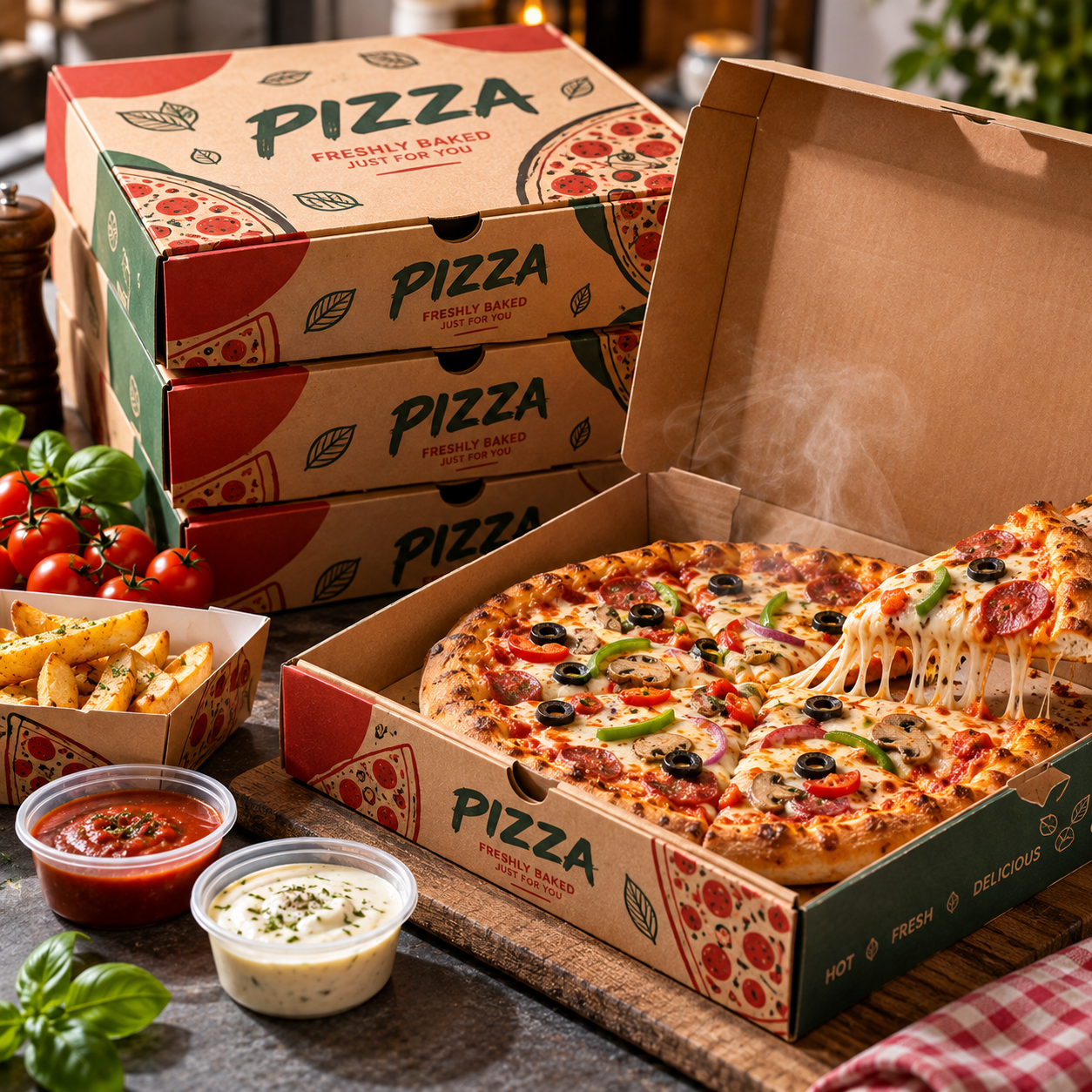
For many people across the UK, pizza is more than a quick meal. It is something ordered for a relaxed Friday evening, a family night, a gathering with friends or a convenient dinner after a busy day. Customers may choose a takeaway because they want food that is easy, enjoyable and satisfying, but their expectations do not stop when the order leaves the restaurant.
The journey from oven to doorstep can make a real difference. A pizza that arrives hot, neatly presented and in good condition creates a much better impression than one that has become cold, soggy or damaged. For pizza businesses, improving this journey is therefore an important part of delivering consistent customer service.
Why the Journey From Oven to Customer Matters
Freshly cooked pizza has qualities that customers can immediately notice. The aroma, melted cheese, crisp edges and warm toppings all contribute to the experience. However, these qualities can change during the time between preparation and eating.
A takeaway business should understand how long its typical orders spend waiting, being collected and travelling. A five-minute delivery is very different from a thirty-minute journey across a busy town.
Businesses can learn a great deal by testing their own delivery process. Take a popular pizza, prepare it normally and assess its condition at different intervals. Look at the crust, toppings, cheese and overall appearance. This practical approach can identify problems that may not be obvious during kitchen service.
Keeping Heat and Texture in Balance
Temperature is important, but keeping food extremely hot is not the only objective. Steam and moisture also affect the final eating experience.
A freshly baked pizza releases heat and moisture after leaving the oven. If this moisture remains trapped for too long, the crust may lose some of its desired texture. On the other hand, insufficient protection can allow the pizza to cool too quickly.
Businesses should therefore think about the balance between heat retention and ventilation. The right approach depends on the recipe, crust thickness, toppings and expected delivery time.
Different menu items may also behave differently. A thin crust, deep-pan pizza and heavily topped option can have different requirements.
Choosing a Suitable Format
The physical format used for serving and transporting the pizza should suit the actual product. Size, strength, shape and ease of handling can all affect the final experience.
A pizza box should provide enough room for the pizza without leaving excessive space around it. If there is too much room, the pizza may move during transportation. If the fit is too tight, the crust or toppings can be damaged.
Businesses should test different sizes with real products rather than relying solely on measurements. A pizza that fits perfectly when empty may behave differently once it has been freshly cooked and placed inside.
The package should also remain stable when stacked with other orders, particularly during busy evening services.
Making Orders Easier to Handle
Convenience is a major reason people choose takeaway food. Customers want to receive their meal without unnecessary complications.
A well-organised order is easier to carry, open and serve. This becomes even more important when customers order several pizzas along with sides, drinks and desserts.
take out pizza boxes can help businesses organise suitable pizza orders while providing a straightforward format for collection and delivery. The exact size and structure should be matched to the menu rather than selected purely for visual reasons.
Staff should also be able to assemble and close the format quickly. During a busy Saturday evening, even small delays can build into longer waiting times.
Making Presentation More Appealing
Customers often see the outside of the package before they see the pizza. This creates an opportunity for businesses to make the first impression positive.
A clean design can communicate professionalism. Branding can also help customers remember where their meal came from.
However, presentation does not need to be complicated. A recognisable logo, consistent colours and a simple visual style can be enough.
Businesses should avoid covering the surface with too much information. The customer should be able to identify the restaurant quickly without having to read a large amount of text.
The design should also reflect the personality of the business. A modern independent pizzeria may choose a bold contemporary style, while a traditional Italian restaurant could use a more classic visual approach.
Protecting Pizza During Delivery
Movement is one of the biggest practical challenges during delivery. A pizza can slide, toppings can shift and the crust can become damaged if the order is handled roughly.
Drivers should be trained to keep orders level wherever possible. Delivery bags should also be suitable for the size and number of orders being transported.
Businesses can carry out simple tests by placing finished pizzas into normal delivery bags and recreating typical journeys. Afterward, check whether the pizza remains in the expected position.
This type of testing is particularly useful for businesses that use several delivery platforms or have their own drivers.
Improving the Experience for Staff
The customer sees the finished order, but staff experience every step that comes before it.
If serving formats are difficult to assemble, employees may spend additional time preparing each order. Complicated processes can also lead to inconsistent results.
Businesses should ask staff which parts of the process slow them down. Sometimes a small change in storage, workstation layout or preparation order can save considerable time.
Popular pizza sizes should be easy to access during peak periods. Clear storage arrangements can also reduce mistakes when several orders are being prepared simultaneously.
A smoother internal process can contribute directly to a better customer experience.
Planning for Busy Periods
Pizza demand can change dramatically throughout the week. Friday and Saturday evenings are often busier than quieter weekday periods, while sporting events, bank holidays and local celebrations can create sudden increases in orders.
Businesses should use previous sales information to prepare for these periods.
Stock levels should be checked before busy sessions begin. Ingredients, serving materials and delivery supplies should all be available in sufficient quantities.
Staffing should also reflect expected demand. A process that works well with ten orders may become difficult when forty orders arrive within a short period.
Preparation is particularly valuable because customers are more likely to notice delays when they are hungry and waiting for dinner.
Reducing Unnecessary Waste
Takeaway businesses need to think carefully about waste. Food waste can result from overproduction, incorrect orders or products that do not maintain their expected quality.
Better forecasting can help businesses prepare appropriate quantities. Reviewing sales by day and time can reveal useful patterns.
Serving materials should also be appropriately sized. Oversized formats can use more material than necessary and may allow the pizza to move during transportation.
At the same time, businesses should not reduce protective features simply to use less material. If a pizza arrives damaged and needs to be replaced, additional food, transport and materials may be required.
The most sensible approach is to find a practical balance between protection and responsible use of resources.
Using Customer Feedback to Improve Quality
Customers are often the best source of information about the final delivery experience.
Reviews may mention whether food arrived hot, whether the pizza looked good and whether the order was easy to handle. Negative reviews can highlight problems that are difficult to see from inside the restaurant.
Businesses should look for repeated patterns. If several customers mention the same issue, it deserves further investigation.
Feedback can also help identify strengths. If customers regularly praise a particular pizza, delivery speed or presentation style, the business should understand what is working and maintain it.
Staff feedback should be considered alongside customer comments because employees experience the preparation process every day.
Maintaining Consistent Quality
Consistency is essential for building customer trust. Someone who orders a favourite pizza every month expects a similar experience each time.
This requires clear preparation standards. Ingredient quantities, cooking times, cutting methods and serving procedures should be understood by the team.
Consistency does not mean every pizza has to look completely identical. Handmade food naturally has some variation. Instead, the aim is to maintain a reliable standard of quality.
Businesses can periodically review popular products and check whether preparation remains consistent as staff, suppliers and menus change.
Creating a Better Takeaway Experience
A successful pizza delivery is created through many small details. The recipe needs to be reliable, the cooking process needs to be consistent and the journey from kitchen to customer needs to be carefully considered.
Businesses should test their products under realistic conditions rather than assuming that everything will work perfectly once an order leaves the oven.
Temperature, texture, presentation, handling and convenience all contribute to the customer's final impression. None of these areas needs to be unnecessarily complicated.
For UK pizza businesses, listening to customers and staff can reveal practical opportunities for improvement. A small adjustment to preparation timing, order handling or serving design can make a noticeable difference when repeated across hundreds of orders.
Ultimately, customers want a simple experience: a pizza that arrives when expected, remains enjoyable from the first slice to the last and feels like it was prepared with care. When businesses consistently deliver on those expectations, takeaway becomes more than a convenient meal. It becomes an experience customers can trust, enjoy and look forward to repeating.
 Arabic
 English
 French
 Spanish
 Portuguese
 Deutsch
 Turkish
 Dutch
Dutch
 Italiano
 Russian
 Romaian
 Portuguese (Brazil)
 Greek
Greek
