


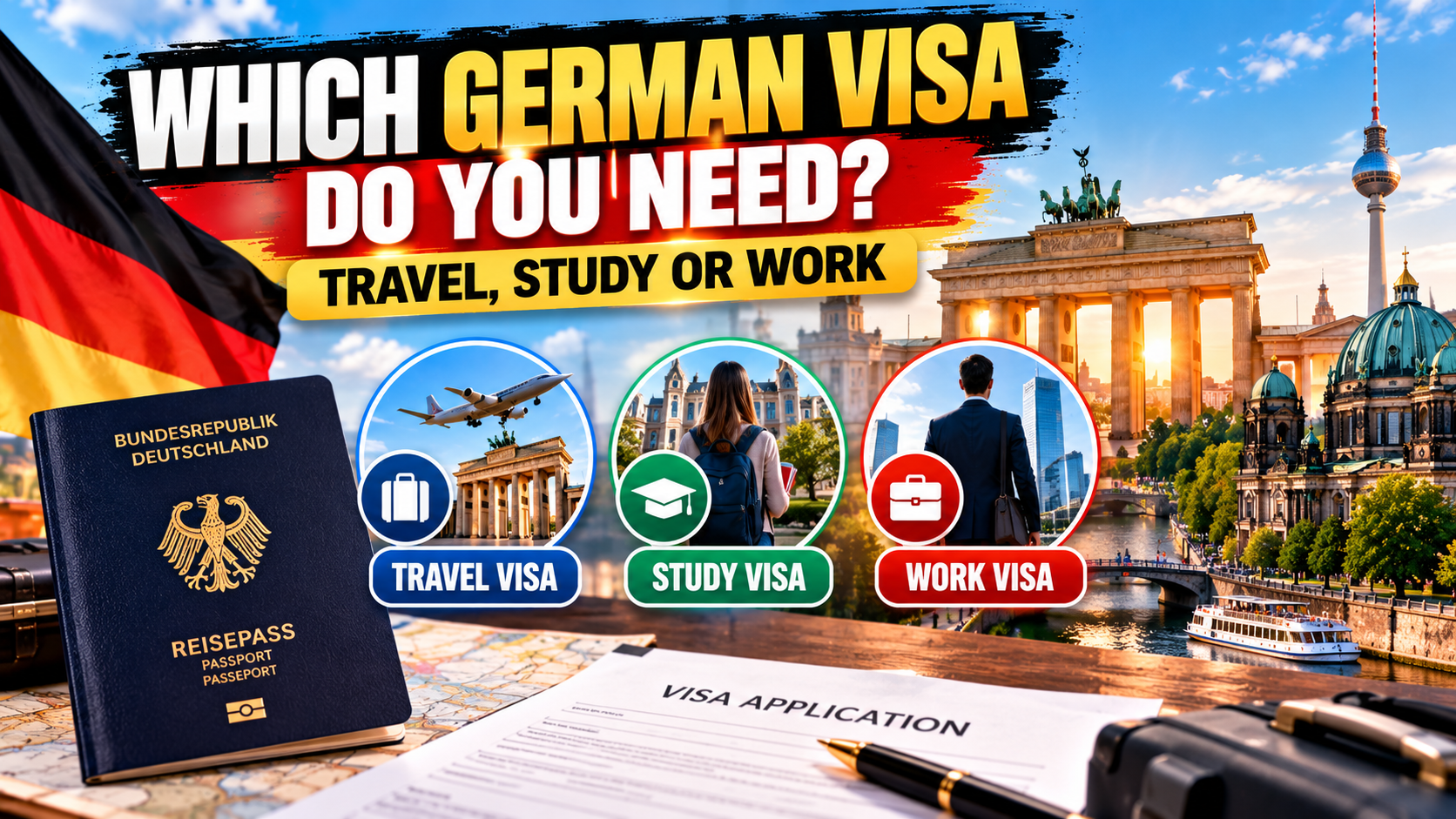
Which German Visa Do You Need? Travel, Study or Work
A friend of mine once booked a flight to Berlin before checking her visa. She later found out the visa she needed took longer to process than her trip allowed. A little research up front would have saved her money and stress.
If you are planning a move or a trip, start by learning the main Germany visa types and which one matches your plans. Once you know your category, the paperwork becomes much easier to handle. This guide explains the choices for travelers, students, and workers in plain language.
The First Question: How Long Will You Stay?
Germany separates visas by length of stay. A short-stay visa covers up to 90 days in any 180-day period, and it belongs to the Schengen system. A long-stay visa is for anything longer, such as a degree or a full-time job.
Some nationalities can enter Germany for a short visit without a visa at all. Others must apply before they travel. Check the rules for your own passport on the website of the German embassy in your country.
If You Are Traveling
A short-stay visa works for tourism, family visits, and brief business trips. It does not give you the right to work in Germany.
Typical Requirements
- A passport that is valid beyond your planned return date
- A filled-in application form and recent photos
- Travel insurance that covers medical care in Europe
- Proof of where you will stay
- Proof of money for the trip
- Your flight or travel plan
Visa centers can be busy, so book your appointment early. It is also wise to wait for approval before you pay for non-refundable tickets.
If You Want to Study
Germany attracts students from around the world. Many public universities charge little or no tuition, though you still need money for rent, food, and insurance.
Student Visa
You apply for this once a German university has accepted you. Expect to show your admission letter, proof of funds, health insurance, and school records. Many students prove their finances with a blocked account that releases a set amount each month.
Student Applicant Visa
This option is for people who do not have an admission yet. It lets you stay in Germany for a limited time to finish applications or take entrance tests. If a university accepts you, you can usually change to a standard student permit.
Language Course Visa
If your German is not strong enough for a degree, a language course visa may be the first step. These permits often come with tighter work limits, so read the conditions before you commit.
If You Want to Work
Germany has a steady need for skilled people in health care, engineering, technology, and trades. Your best route depends on your education and your job offer.
EU Blue Card
The Blue Card is aimed at university graduates who have a job offer above a set salary level. It often leads to permanent residence faster than other work permits.
Skilled Worker Visa
This route is for people with vocational training or a recognized professional qualification. Germany may need to confirm that your foreign qualification matches its own standards.
Job Seeker Visa
Qualified professionals can use this visa to stay up to six months while they search for a job. You cannot take regular full-time work during that time. After you find a role, you can switch to a work permit.
If You Are Joining Family
Spouses, children, and in some cases parents can apply to live with a relative who is legally in Germany. You will need proof of the relationship, such as a marriage or birth certificate. The sponsor usually has to show enough income and suitable housing.
Some spouses also need basic German language skills before arrival, though there are exceptions. Foreign documents often need an official translation, so leave extra time for that step.
Quick Comparison
| Your Goal | Common Visa |
|---|---|
| Holiday or short visit | Short-stay Schengen visa |
| University degree | Student visa |
| Skilled job with an offer | EU Blue Card or skilled worker visa |
| Looking for work in person | Job seeker visa |
| Living with family | Family reunion visa |
Documents That Show Up Almost Every Time
- A valid passport with blank pages
- A completed form and biometric photos
- Health insurance accepted in Germany
- Proof that you can support yourself
- Papers that prove your purpose, such as an admission letter or job contract
Each visa adds its own extra items, so always follow the checklist from the embassy or visa center that handles your case.
Common Mistakes to Avoid
- Applying under the wrong visa category
- Leaving out translations, stamps, or signatures
- Showing too little money for your stay
- Applying too close to your travel or start date
- Beginning work or study before the visa allows it
Most of these errors are easy to avoid with a careful review before you submit.
Final Thoughts
Choosing the right German visa is simpler than it first looks. Decide why you are going, how long you will stay, and what you will do there, then match those answers to a category. Rules and processing times change, so confirm the latest information with the official German mission in your country before you apply.

 English
 Arabic
 French
 Spanish
 Portuguese
 Deutsch
 Turkish
 Dutch
Dutch
 Russian
 Romaian
 Portuguese (Brazil)
 Greek
Greek
