


Embedded Control Software Systems: How Machines Respond to Real-World Inputs
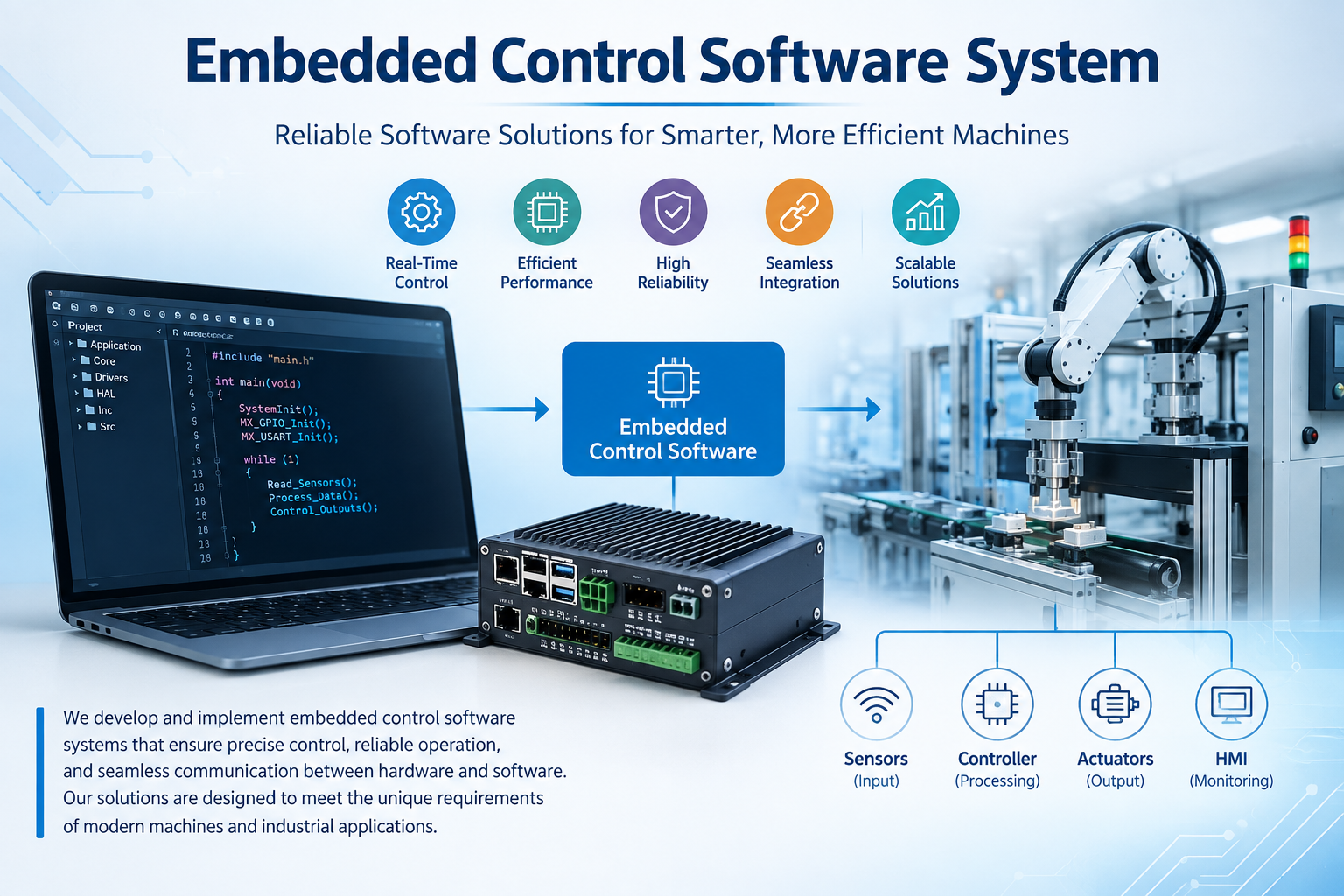
Many modern machines must monitor their surroundings, process sensor information, and respond to changing operating conditions. These tasks require software that interacts directly with electronic hardware and control components.
An embedded control software system provides the logic needed to manage the behavior of a dedicated device or machine.
How an Embedded Control System Works
An embedded control system receives information from inputs such as sensors, switches, communication interfaces, and other controllers.
The software processes this information according to programmed rules or control algorithms. It then generates outputs that may operate motors, valves, displays, or other components.
For example, a temperature-control application may read a sensor value and adjust a heating element to maintain a specified operating range.
The actual design depends on the equipment, performance requirements, and operating environment.
Where Embedded Control Software Is Used
Embedded control software supports many technologies, including industrial automation equipment, robotics, automotive electronics, and consumer devices.
In manufacturing, it can coordinate machine sequences and monitor operating conditions. In automotive systems, embedded controllers may manage particular electronic functions and exchange data with other vehicle components.
These applications often require predictable responses, appropriate error handling, and reliable communication with hardware.
What Makes Control Software Reliable?
A successful development process begins with a clear definition of system behavior.
Engineers must identify expected inputs, outputs, operating limits, timing requirements, and responses to abnormal conditions.
Software architecture is also important. Separating functions into logical modules can improve readability and simplify maintenance.
Testing should cover expected operating conditions, boundary cases, communication failures, and other relevant scenarios. Hardware integration must also be verified because real components may behave differently from simplified development models.
The Importance of Hardware and Software Integration
Control software depends on the hardware it operates.
Processor limitations, sensor characteristics, actuator response, and communication delays can influence system performance.
Depending on the application, engineers may use simulation, automated testing, or hardware-in-the-loop methods to evaluate software under representative conditions.
Servotech Inc. supports engineering-related projects involving embedded systems and control technologies. Businesses planning an embedded control software system should consider hardware compatibility, functional requirements, verification, and long-term maintainability from the beginning.
Final Thoughts
Embedded control software helps machines monitor conditions and perform tasks according to programmed requirements. Careful development, hardware integration, and systematic testing are essential for creating control systems that behave as intended.
 Arabic
 English
 French
 Spanish
 Portuguese
 Deutsch
 Turkish
 Dutch
Dutch
 Italiano
 Russian
 Romaian
 Portuguese (Brazil)
 Greek
Greek
