


How Can Petite Women Find Protective Motorcycle Gear Without Leaving the Armor Too Large?
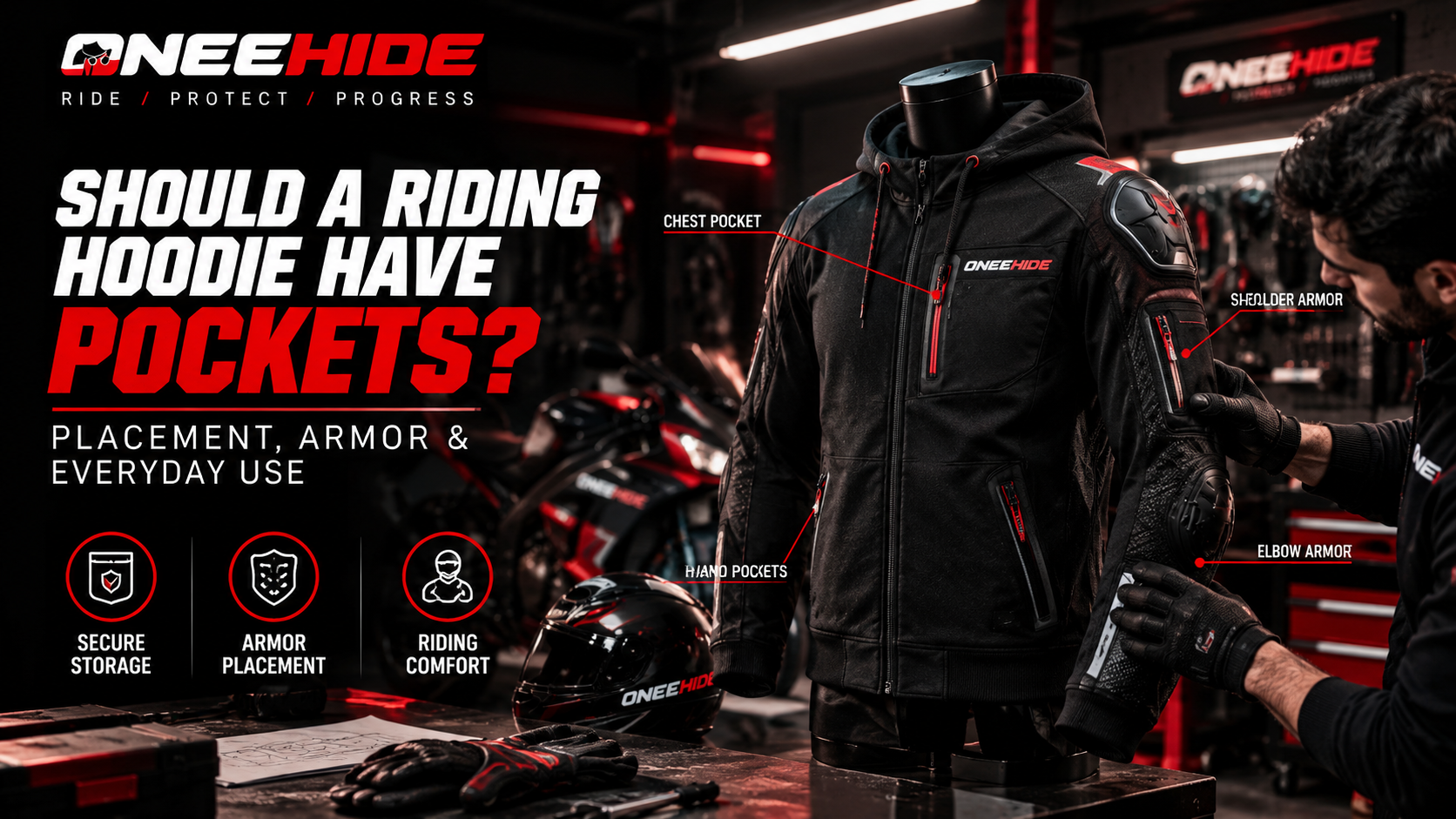
Petite women often face a frustrating problem when shopping for motorcycle gear: a jacket may fit across the chest but hang too low at the waist, sleeves may extend beyond the wrists, or knee protectors may sit below the joints they are meant to cover. Choosing a smaller size can solve one problem while creating another, especially when the garment becomes too tight through the hips, shoulders, or thighs.
The solution is not simply to find the smallest available size. Protective motorcycle clothing needs to fit the rider's proportions and keep its protective components correctly positioned during movement. A shorter rider may need shorter sleeves and legs, a different torso length, or armor designed to suit a smaller frame, rather than a uniformly smaller garment.
Understanding how garment length, body measurements, armor placement, and riding posture work together makes it easier to identify gear that is comfortable without sacrificing important protective features.
Why Does Motorcycle Gear Often Fit Petite Women Poorly?
Motorcycle gear can fit petite riders poorly because standard sizing does not always account for differences in height, torso length, limb length, and body proportions. Two riders with the same chest measurement may need different jacket lengths or sleeve proportions.
Many garments are graded between sizes by increasing or decreasing several dimensions together. This approach works reasonably well for some body shapes, but it can create problems when a rider is shorter without being proportionally smaller everywhere.
For example, a petite woman might have a relatively broad shoulder measurement and a shorter torso. Choosing a smaller jacket to reduce its length could make the shoulders restrictive, while keeping the larger size may leave excess material around the waist and sleeves.
The same issue affects motorcycle trousers. A shorter inseam does not necessarily mean a smaller waist or hip measurement. If a rider buys trousers based only on leg length, the waistband may become uncomfortable or the hips may not accommodate a normal riding position.
Three fit problems deserve particular attention:
-
Excessive garment length: Sleeves cover the hands, jacket hems bunch around the hips, or trouser legs gather awkwardly over boots.
-
Poor armor alignment: Shoulder, elbow, hip, or knee protectors sit too high or too low relative to the rider's joints.
-
Restricted movement: The garment pulls across the back, chest, crotch, or knees when the rider leans forward or bends the elbows.
These are not merely cosmetic issues. Protective clothing is intended to remain appropriately positioned while the rider moves. A garment that looks fitted while standing may behave differently on a motorcycle.
Which Measurements Matter Most for Petite Motorcycle Riders?
Height alone is not enough to determine whether motorcycle gear will fit. A useful fit assessment considers the measurements that determine both the garment's proportions and the position of its protective components.
Measure body proportions, not just overall height
Before choosing a size, record the following measurements using a flexible measuring tape. Wear the type of light clothing you expect to have underneath the gear, and keep the tape snug without pulling it tight.
|
Measurement |
Why it matters |
|
Height |
Helps narrow down suitable garment ranges, but does not establish fit by itself |
|
Chest or bust |
Helps determine jacket and suit circumference |
|
Natural waist |
Affects torso fit and the relationship between jacket and trousers |
|
Hips and seat |
Important for trousers, one-piece suits, and seated comfort |
|
Sleeve length |
Helps assess whether cuffs will align with gloves |
|
Inseam |
Helps determine trouser length and the relationship with riding boots |
|
Torso length |
Helps identify jackets or suits that are too long or too short through the body |
For a closer fit assessment, record shoulder width and compare the garment's knee and elbow protector positions with the rider's actual joints. The manufacturer's measuring instructions should take priority because measurement points can vary between brands.
A body measurement is a starting point, not a guarantee. Two products labelled the same size may have different cuts, armor dimensions, and adjustment options.
Check the fit in a riding position
Motorcycle clothing should be evaluated while sitting on the bike, not only in front of a mirror. Lean forward as you would to reach the handlebars, bend your elbows, flex your knees, and check how the fabric moves around the shoulders and hips.
Look for these signs:
-
The sleeves remain long enough to cover the wrists when reaching forward.
-
The jacket does not ride excessively high at the back.
-
Trousers do not pull sharply across the crotch or knees.
-
Armor remains over the intended joint areas as the arms and legs bend.
-
Closures and seams do not create painful pressure points.
A little stiffness in new gear may be normal, depending on the material and construction. Painful restriction, displaced armor, or gaps that expose areas intended to be covered should not be dismissed as a break-in issue.
How Can Petite Women Choose Gear With Properly Positioned Armor?
Petite riders should prioritize the position and fit of the armor rather than relying on the garment's size label. A jacket can fit closely around the body and still have protectors that are too large, too long, or poorly aligned.
Impact protectors are designed to cover particular body areas. Their usefulness depends partly on whether they remain in the intended position during normal movement and in the situations for which the garment was designed.
Shoulder and elbow protectors
Shoulder and elbow armor deserves careful attention when choosing a motorcycle jacket. If a shoulder protector extends beyond the intended area or an elbow protector sits noticeably below the elbow, the garment may not be the right pattern or size for the rider.
Check the position with the jacket fully fastened. Reach forward, bend each elbow, and move the arms as they would move while steering. The protectors should not shift excessively or force the rider into an uncomfortable position.
Some jackets include adjustable armor pockets that allow limited changes in protector height. This can be helpful, but adjustment range varies. Moving a protector should follow the manufacturer's instructions, and the final position needs to be checked rather than assumed correct.
Knee and hip protection
Trousers can be particularly difficult for petite riders because leg length and knee-protector position are related but separate considerations.
Shortening a trouser leg may improve the hem without correcting a knee protector that sits too low. Similarly, a shorter inseam does not automatically make the hip armor appropriate for a smaller frame.
Try the trousers while seated on the motorcycle with the boots you normally wear. Check that the knee protectors cover the intended areas when the knees are bent and that the leg length works with the boot overlap.
If the armor remains poorly positioned, look for a different cut or a garment with a suitable adjustment system. Do not cut into armor pockets or alter reinforced seams without consulting the manufacturer or a specialist familiar with motorcycle protective clothing.
Should Petite Women Buy Smaller Sizes or Look for Women's-Specific Gear?
A smaller size is useful when the entire garment is too large, but it is not always the right solution for a petite rider. Women's-specific or petite-oriented designs may offer a more suitable combination of chest, waist, hip, torso, and limb proportions.
The best option depends on where the fit problem occurs.
|
Fit issue |
What to look for |
|
Sleeves are too long, but the shoulders fit |
Shorter sleeve proportions or manufacturer-approved sleeve adjustments |
|
Jacket torso is too long |
A shorter-cut design that still accommodates the chest and hips |
|
Knee armor sits too low |
A different trouser pattern or correctly positioned adjustable armor |
|
Waist fits, but hips feel restrictive |
A different cut or size that accommodates hip measurements |
|
Several areas fit poorly at once |
A different model, women's-specific pattern, or made-to-measure option |
Women's-specific gear can be helpful because it may account for differences in bust, waist, and hip proportions. However, the label alone does not guarantee a better fit, and women's sizing is not standardized across every manufacturer.
Petite-oriented gear may address shorter sleeves, shorter legs, or a shorter torso more directly. Where a suitable range is unavailable, a made-to-measure garment can be worth considering, particularly if standard sizes repeatedly create problems with armor alignment.
Riders exploring women's motorcycle gear should compare the available sizing information and construction details against their own measurements. The relevant question is not whether a product is marketed to women, but whether its dimensions, protective components, and adjustment options suit the individual rider.
What Safety Standards Should Petite Riders Check?
Protective ratings and construction matter just as much as fit. A garment that fits well is not automatically protective, and a garment with a recognized protective rating still needs to fit the rider appropriately.
In Europe, the EN 17092 series covers protective garments for motorcycle riders. It includes different garment classes, such as Class AAA, AA, A, B, and C, with different requirements and intended protective functions. The class should be interpreted in the context of the garment's intended use rather than treated as a complete description of every aspect of safety.
The British Standards Institution's overview of EN 17092-1 explains that the standard's test methods address areas including ergonomics, mechanical properties, zoning, and impact abrasion resistance. These are relevant considerations because motorcycle clothing must accommodate movement while providing the protection for which it was designed.
When comparing products, check:
-
The protective standard and garment class, where applicable.
-
Whether the garment includes compatible impact protectors and where they are intended to sit.
-
Whether the manufacturer provides sizing instructions and fitting guidance.
-
Whether the garment's length and cut work with the rider's boots, gloves, and other equipment.
-
Whether proposed alterations are permitted and can be carried out without compromising the garment's construction.
A label or certification does not mean that every size will fit every body correctly. Equally, a close-fitting garment should not be assumed to meet a protective standard unless the product documentation supports that claim.
For another independent reference, the Motorcycle Clothing Assessment Program (MotoCAP) publishes assessments of motorcycle clothing, including protection and comfort ratings for tested products. Such resources can help riders compare available options, although a product's rating cannot replace an individual fit assessment.
Can Motorcycle Gear Be Altered to Fit a Petite Frame?
Some motorcycle gear can be altered, but the safe and practical options depend on the garment's construction. Shortening an ordinary clothing hem is not equivalent to modifying a protective garment with reinforced seams, armor pockets, stretch panels, and specialized closures.
Minor adjustments may be possible when the manufacturer permits them and the work does not interfere with protective components. However, reducing a sleeve, shortening trousers, or taking in a torso can become complicated if the alteration crosses a reinforced seam or changes the position of armor.
Before paying for alterations, contact the original manufacturer. Explain the fit problem, provide measurements and photographs, and ask whether an adjustment is available for that specific model.
A specialist may be able to help when:
-
The garment fits correctly through the shoulders and torso but has excess length in a suitable area.
-
The manufacturer identifies an approved way to adjust the fit.
-
The proposed work avoids critical seams, armor pockets, and structural panels.
-
The finished garment can be checked in the intended riding position.
A different garment may be the better choice when the armor is fundamentally misplaced, several connected panels need reconstruction, or the proposed alteration could affect the garment's protective performance. A tailor's ability to make leather fit more closely does not establish that the modified gear will retain its original performance or certification status.
How Should Petite Riders Compare Off-the-Rack and Custom Gear?
Off-the-rack gear is often the most straightforward option when a suitable size and cut fit correctly. It allows riders to compare different products, inspect available protection details, and avoid the additional time and expense associated with custom manufacturing.
Custom gear becomes more attractive when standard sizing repeatedly creates the same problems. For example, a rider may consistently need a shorter torso but cannot comfortably size down because the chest and shoulders become restrictive. A made-to-measure garment may provide more control over these dimensions, depending on the manufacturer's process and available options.
However, custom ordering is not automatically a guarantee of correct fit. Measurements must be taken accurately, the manufacturer must understand the rider's proportions, and the finished garment still needs to be assessed in a riding position.
Before ordering custom protective clothing, ask the maker:
-
Which body measurements are required, and how should each one be taken?
-
Can the garment's torso, sleeve, and leg proportions be specified separately?
-
What options exist for armor size and position?
-
Can the manufacturer review photographs or measurements if the delivered fit is incorrect?
-
What alterations are allowed, and how could they affect the garment's protective specifications?
A clear measurement process is especially useful when the rider's height and body proportions do not align with standard size charts. It reduces guesswork and makes it easier to identify where the garment needs to differ from a conventional pattern.
A Practical Fit Checklist Before Buying
Before committing to a motorcycle jacket, trousers, or one-piece suit, check the garment as a complete protective system rather than judging it by appearance alone.
-
Confirm the measurements. Compare your chest or bust, waist, hips, sleeve length, inseam, and torso proportions with the manufacturer's chart.
-
Wear the intended base layers. Extra clothing can change the way the garment fits and how its armor sits.
-
Test the riding posture. Sit on the motorcycle, reach for the handlebars, bend the knees, and move naturally.
-
Inspect armor alignment. Check the shoulder, elbow, knee, and hip areas as applicable, both standing and seated.
-
Check garment coverage. Make sure sleeves, jacket hems, trousers, boots, and gloves work together without leaving unintended gaps.
-
Review the protective information. Verify the product's documented protective specifications rather than relying on appearance or marketing descriptions.
-
Ask about adjustments before buying. Confirm whether the manufacturer permits changes and whether the requested fit can be achieved without disturbing protective construction.
Petite riders should not have to choose between a garment that fits the body and one that positions its protective components appropriately. The most suitable gear is the option that accommodates the rider's actual proportions, remains comfortable in a riding posture, and provides documented protection for its intended use. If a smaller size creates new restrictions or leaves armor out of position, choosing a different cut or exploring a carefully specified custom garment is usually a more sensible next step than forcing the fit.

 English
 Arabic
 French
 Spanish
 Portuguese
 Deutsch
 Turkish
 Dutch
Dutch
 Italiano
 Russian
 Romaian
 Greek
Greek
