


Can a Home Elevator Be Installed in an Existing House? A Complete Guide to Retrofit Options
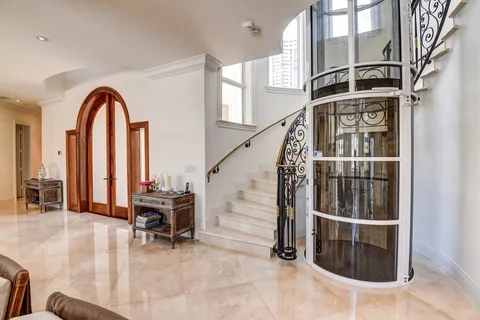
Table of Contents
- The Big Question: Can a Home Elevator Be Installed in an Existing House?
- Where Can You Put an Elevator in an Existing Home? Top Retrofit Locations
- Understanding Elevator Dimensions, Door Heights, and Pit Depths for Retrofits
- Retrofit Elevator Types: Comparing Hydraulic, Electric, and Shaftless Homelifts
- Home Elevator Cost and Retrofit Budgeting Factors
- How to Choose the Best Home Elevator Company Near Me for a Retrofit
- Step-by-Step Retrofit Installation: What Homeowners Should Expect
- Safety Engineering: Protecting Seniors, Children, and Everyday Passengers
- Smart Connected Technology, Manuals, and Long-Term Service Support
- Helpful Cambridge Elevating Links and External Industry Resources
- Conclusion
- Frequently Asked Questions (FAQs)
The Big Question: Can a Home Elevator Be Installed in an Existing House?
For decades, homeowners believed that residential elevators were exclusive amenities reserved solely for multi-million-dollar custom builds. That misconception caused thousands of homeowners to downsize prematurely or struggle needlessly with steep staircases.
Today, retrofits make up a massive percentage of all residential elevator installations.
Dispelling the New-Build-Only Myth
While designing an elevator into a new architectural build allows your general contractor to frame the vertical hoistway shaft early in the framing stage, modern engineering has made retrofitting an existing property remarkably straightforward. When homeowners ask “Can You Put an Elevator in an Existing Home?”, they are often relieved to discover that certified elevator manufacturers engineer models specifically designed to fit within standard residential ceiling heights and existing floor plans.
Why Home Retrofits Are More Popular Than Ever
Why are retrofits surging in popularity across Canada and the United States?
- Aging in Place: Moving away from a beloved neighborhood, community garden, and decades of family memories is emotionally painful and financially expensive. A retrofit allows seniors to stay in the home they cherish for life.
- Multigenerational Living: More families are welcoming grandparents into their households. A home lift for elderly relatives turns a multi-story house into an accessible shared sanctuary.
- Property Value Enhancement: Adding an elevator elevates your real estate appeal, making your home uniquely attractive to older affluent buyers planning for their future.
- Pure Everyday Convenience: From carrying bulky suitcases to moving heavy furniture, an elevator eliminates physical strain for everyone in the household.
How Modular Engineering Makes Retrofitting Faster and Cleaner
Modern systems—such as those engineered by Cambridge Elevating—utilize modular guide rail assemblies, pre-wired electrical harnesses, and customizable cab enclosures. In many retrofit scenarios, the actual mechanical and electrical assembly inside your home takes as little as 2 to 4 days once site framing is prepared!
Where Can You Put an Elevator in an Existing Home? Top Retrofit Locations
When you walk through your home, you might look at your finished drywall and wonder, “Where on earth would an elevator fit?”
An experienced residential elevator specialist views your floor plan like an architectural puzzle. In almost every multi-story house, there is underutilized vertical space waiting to be repurposed.

Stacked Walk-In Closets: The Classic Vertical Shaft Solution
By far, the most common and cost-effective retrofit location is a series of stacked closets. If your home has a foyer coat closet on the main floor directly below a bedroom walk-in closet on the second floor (and directly above a basement storage area), you already have a ready-made vertical shaft corridor!
Your framing contractor simply cuts precise openings in the floorboards between the closets, reinforces the structural headers, and builds an elevator hoistway with virtually zero disruption to your primary living areas.
Open Stairwell Voids and Architectural Atriums
Does your home feature a grand curved staircase or a spacious switchback stairwell with an open center? That open air space is often the exact dimension needed to accommodate a breathtaking panoramic glass elevator. Rather than hiding your lift behind closed drywall, an open stairwell installation turns vertical mobility into the crowning architectural centerpiece of your foyer.
Garage Ingress and Exterior Hoistway Additions
If your interior living space is strictly compact, you have two excellent alternative options:
- Garage Corner Transition: Placing the elevator in a corner of your attached garage allows you to step directly out of your vehicle into the cab and ride upstairs with heavy groceries and luggage.
- Exterior Shaft Tower: A dedicated elevator tower can be built against an exterior wall of your home. It is framed from the outside, clad in matching brick, stone, or siding, and opened into your home’s existing hallways through elegant landing doors.
To explore how these placement strategies work in real homes, visit the Cambridge Elevating Installation Services overview.
Assessing Floor Joists, Load-Bearing Walls, and Electrical Panels
Before breaking ground, a qualified technician assesses your floor joist direction, load-bearing headers, and electrical panel capacity. An elevator requires a dedicated 220V/230V electrical disconnect switch and a standard 110V circuit for cab lighting and ventilation.
Understanding Elevator Dimensions, Door Heights, and Pit Depths for Retrofits
Understanding structural requirements helps you determine what size elevator will fit inside your floor plan.
Standard Residential Elevator Dimensions vs. Custom Cabs
Standard residential elevator cabs range from 12 to 15 square feet of usable interior floor space. Common cab sizes include:
- 36" x 48" (Compact): Perfect for two standing adults or a single rider with groceries; fits easily inside modest stacked closets.
- 36" x 54" (Standard Accessibility): Comfortably accommodates a passenger in a standard wheelchair plus an attendant.
- 40" x 54" or Larger (Spacious Luxury): Ideal for power wheelchairs, multiple passengers, and custom luxury estates.
Because manufacturers like Cambridge Elevating custom-build cabs right in North America, you aren't forced into a rigid cookie-cutter size. Cabs can be fabricated to custom millimeter dimensions to maximize your available rough hoistway opening.
Typical Elevator Door Height and Landing Clearances
Landing doors are designed to match your existing interior passage doors seamlessly. The typical elevator door height is standard residential 80 inches (6'8"), though taller 84-inch or 96-inch doors can be custom engineered for luxury residences with high ceilings. Outside the elevator, ensure there is at least 36 to 48 inches of unobstructed landing clearance for smooth entry and exit.
Pit Excavation vs. Low-Profile Ramp Thresholds
Traditional residential elevators require a shallow pit excavated into the lowest floor slab—usually just 6 to 12 inches deep—so the cab floor sits flush with your landing floor. In retrofit basements where excavating concrete is difficult, low-profile threshold ramps or specialized shaftless lifts can eliminate the need for pit excavation altogether!
Retrofit Elevator Types: Comparing Hydraulic, Electric, and Shaftless Homelifts
Selecting the right drive mechanism ensures your elevator operates smoothly, quietly, and efficiently within your home’s physical footprint.

Through the Cambridge Elevating Home Elevator Models Overview, homeowners can compare several proven configurations:
- The Elmira Home Elevator: A versatile, energy-efficient electric drive engineered for smooth daily performance.
- The Heritage Home Elevator: A heavy-duty hydraulic powerhouse renowned for its whisper-quiet, cushioned glide.
- The Cambrian Home Elevator: Combines compact hydraulic engineering with premium architectural trims.
- The E50 Compact Elevator: Engineered specifically for space-conscious residential footprints.
- Shaftless Homelifts: Compact personal lifts built for rapid two-story aging-in-place retrofits.
Smooth Hydraulic Residential Elevators
Hydraulic systems—such as the Heritage elevator and Cambrian Home Elevator—utilize a submerged hydraulic fluid pump and piston cylinder. Homeowners love hydraulic drives because they offer heavy lifting capacities (up to 1,000+ lbs), ultra-smooth starts and stops, and place mechanical machinery remotely in a basement closet or utility room, keeping the cab ride practically silent.
Space-Saving Electric Machine-Roomless (MRL) Elevators
Electric counterweight and winding drum systems—such as The Elmira—eliminate the need for hydraulic fluid. They draw power only while actively traveling, offer smooth acceleration curves, and fit neatly into homes where dedicated machine room space is unavailable.
Compact Shaftless Homelifts for Seniors
If your home has limited square footage or you need a rapid mobility solution for an aging family member, a shaftless homelift is an exceptional option.
These compact lifts travel through a floor cutout along dual vertical guide stilts without requiring a framed hoistway shaft, deep pit, or machine room. If you are researching the Stiltz home lift price or searching for home lifts Canada, explore Cambridge Elevating's dedicated Homelifts for Seniors page.
(Note: If you have come across Spanish searches like salvaescaleras sin instalación, you were likely looking at basic stair chairs. An enclosed personal elevator or homelift provides vastly superior safety, privacy, and long-term property value.)
Bespoke Luxury Finishes and Custom Architectural Glass
Why conceal your elevator behind drywall when it can serve as a stunning architectural centerpiece? Through Luxury/Custom Elevators and Luxury Home Elevators, you can select frameless glass enclosures, rich hardwood paneling, integrated LED cove lighting, and custom fixtures from the Features & Finishes catalog. Browse real homeowner installations on the Cambridge Elevating Video Gallery

 English
 Arabic
 French
 Portuguese
 Deutsch
 Turkish
 Dutch
Dutch
 Italiano
 Russian
 Romaian
 Portuguese (Brazil)
 Greek
Greek
