


Sewage Treatment Plant (STP): Working, Benefits, and Applications in India
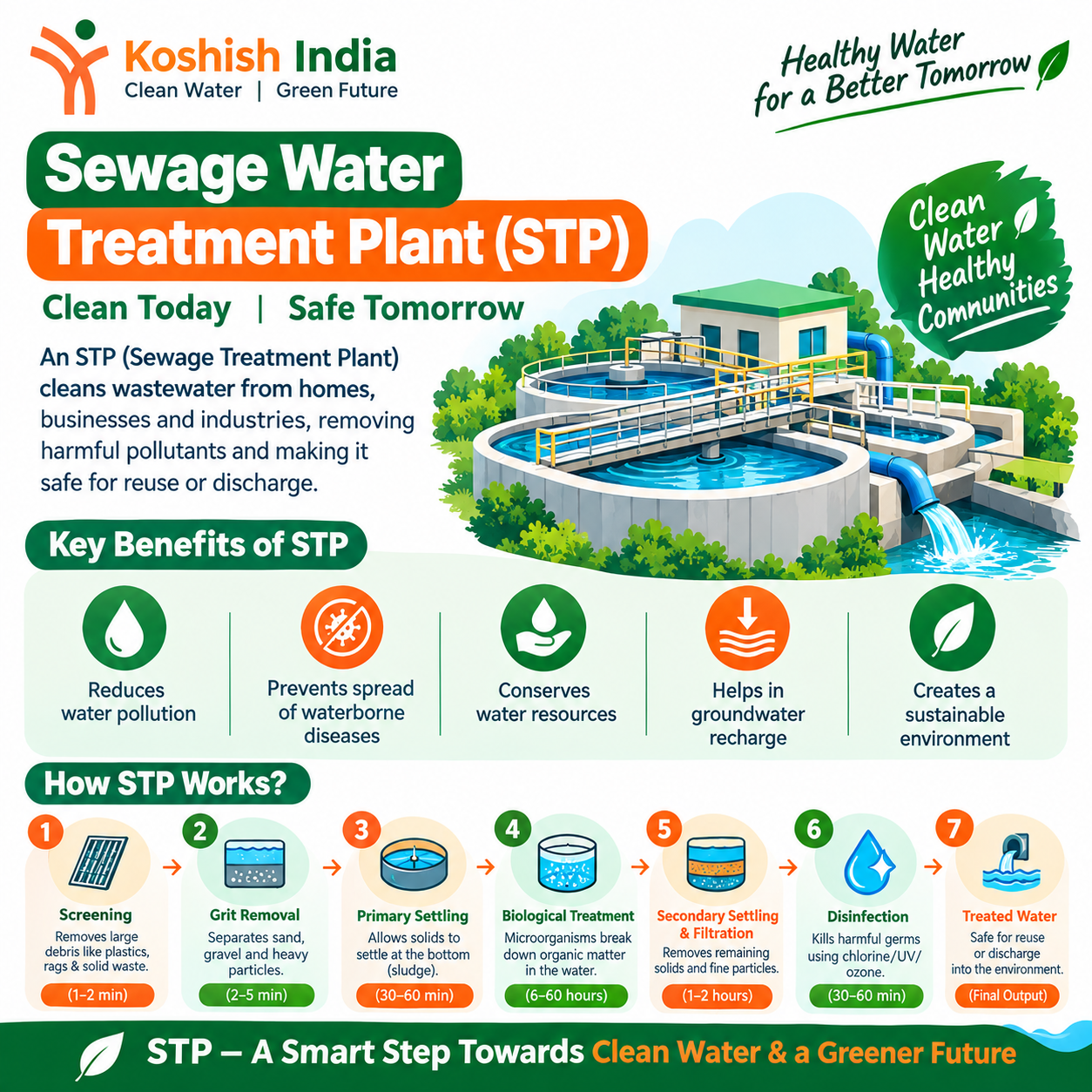
Water pollution and wastewater management are major challenges for residential societies, commercial buildings, and industries. Wastewater from bathrooms, kitchens, toilets, and other domestic activities contains organic waste, suspended solids, and harmful microorganisms. Releasing untreated sewage into the environment can pollute water bodies and affect public health.
A Sewage Treatment Plant (STP) provides an effective solution by treating wastewater and making it suitable for reuse in applications such as gardening, toilet flushing, and other non-potable purposes, depending on the treatment quality. Installing a suitable STP system helps organisations manage wastewater responsibly while supporting water conservation.
What Is a Sewage Treatment Plant (STP)?
A sewage treatment plant is a system designed to remove contaminants from domestic wastewater through physical, biological, and, where required, chemical treatment processes. It reduces pollutants before the treated water is reused or discharged according to applicable standards.
An STP is commonly used in residential societies, apartments, hotels, hospitals, educational institutions, offices, and commercial complexes. A properly designed sewage treatment plant in India can help reduce freshwater consumption and improve wastewater management.
How Does a Sewage Treatment Plant Work?
An STP generally follows several treatment stages. The exact process depends on the wastewater characteristics, plant capacity, and selected technology.
1. Preliminary Treatment
Incoming sewage passes through screens that remove large materials such as plastics, cloth, and other debris. This protects pumps and other equipment from damage.
2. Primary Treatment
Wastewater enters a settling tank, where heavier suspended solids settle at the bottom. This process helps remove a portion of the solid waste before further treatment.
3. Biological Treatment
Microorganisms break down biodegradable organic matter in the wastewater. Technologies such as Moving Bed Biofilm Reactor (MBBR) can support efficient biological treatment when appropriately designed and operated.
4. Secondary Clarification
The wastewater may pass through a settling stage to separate biological solids from the treated water. The configuration depends on the selected STP technology.
5. Tertiary Treatment and Disinfection
Additional filtration and disinfection may be used to improve water quality. The treated water can then be considered for suitable non-drinking applications, depending on testing and applicable requirements.
Key Benefits of Installing a Sewage Treatment Plant
Choosing the right STP plant offers several environmental and operational advantages.
-
Water conservation: Treated wastewater can be reused for gardening, toilet flushing, and other suitable applications, reducing freshwater demand.
-
Environmental protection: Proper treatment reduces the release of sewage pollutants into natural water bodies.
-
Improved sanitation: Effective sewage management helps maintain cleaner surroundings and better hygiene.
-
Regulatory compliance: A properly designed and operated STP supports compliance with applicable pollution control and discharge requirements.
-
Long-term operational efficiency: Reusing treated water can help reduce dependence on fresh water supplies and improve resource management.
Where Are Sewage Treatment Plants Used?
STP systems are suitable for different types of establishments, including:
-
Residential societies and apartments: Manage wastewater generated by residents and support water reuse.
-
Hotels and hospitals: Treat wastewater produced through daily operations and sanitation activities.
-
Schools and colleges: Handle sewage generated by students, staff, and campus facilities.
-
Commercial buildings: Manage wastewater from offices, washrooms, and common areas.
-
Industrial campuses: Treat domestic sewage separately from process wastewater, which may require an Effluent Treatment Plant (ETP).
The required plant capacity depends on daily sewage generation, wastewater characteristics, available space, and reuse or discharge requirements.
How to Choose the Right STP Plant for Your Project
Before selecting a sewage treatment plant manufacturer or supplier, consider these important factors:
-
Treatment capacity: Estimate the daily wastewater volume in kilolitres per day (KLD).
-
Suitable technology: Select a treatment process based on sewage quality, space availability, and operating requirements.
-
Installation space: Check the available area for tanks, equipment, and maintenance access.
-
Operating costs: Evaluate electricity consumption, maintenance, sludge handling, and staffing requirements.
-
After-sales support: Choose a provider that can support installation, commissioning, and ongoing maintenance.
-
Water quality requirements: Define the intended reuse or discharge purpose and the relevant quality standards.
STP Solutions by Koshish India
Koshish India provides wastewater treatment solutions designed to support sustainable water management across residential, commercial, and institutional projects. Its STP solutions focus on treating sewage efficiently and enabling suitable water reuse.
The company has completed projects such as a 130 KLD STP at Genesis Global School in Noida and a 50 KLD STP for Bareilly Development Authority in Uttar Pradesh.
If you are planning a new wastewater treatment project or upgrading an existing system, explore the STP solutions by Koshish India to understand the available options for your requirements.
Conclusion
A sewage treatment plant is an important investment for responsible wastewater management. By treating sewage and enabling suitable water reuse, an STP helps conserve freshwater resources, reduce pollution, and support cleaner surroundings.
Selecting the right STP technology, capacity, and maintenance plan is essential for reliable performance. With proper planning and professional support, residential communities, institutions, and commercial establishments can improve their wastewater management practices and move towards a more sustainable future.
Domestic Biogas , Commercial Biogas , BioGas , Sewage Water Treatment Plant , Effluent Water Treatment Plant , Zero Liquid Discharge Water Treatment Plant

 Arabic
 French
 Spanish
 Portuguese
 Deutsch
 Turkish
 Dutch
Dutch
 Italiano
 Russian
 Romaian
 Portuguese (Brazil)
 Greek
Greek
