


Refrigerator Monitoring System for Hotels and Cafeterias
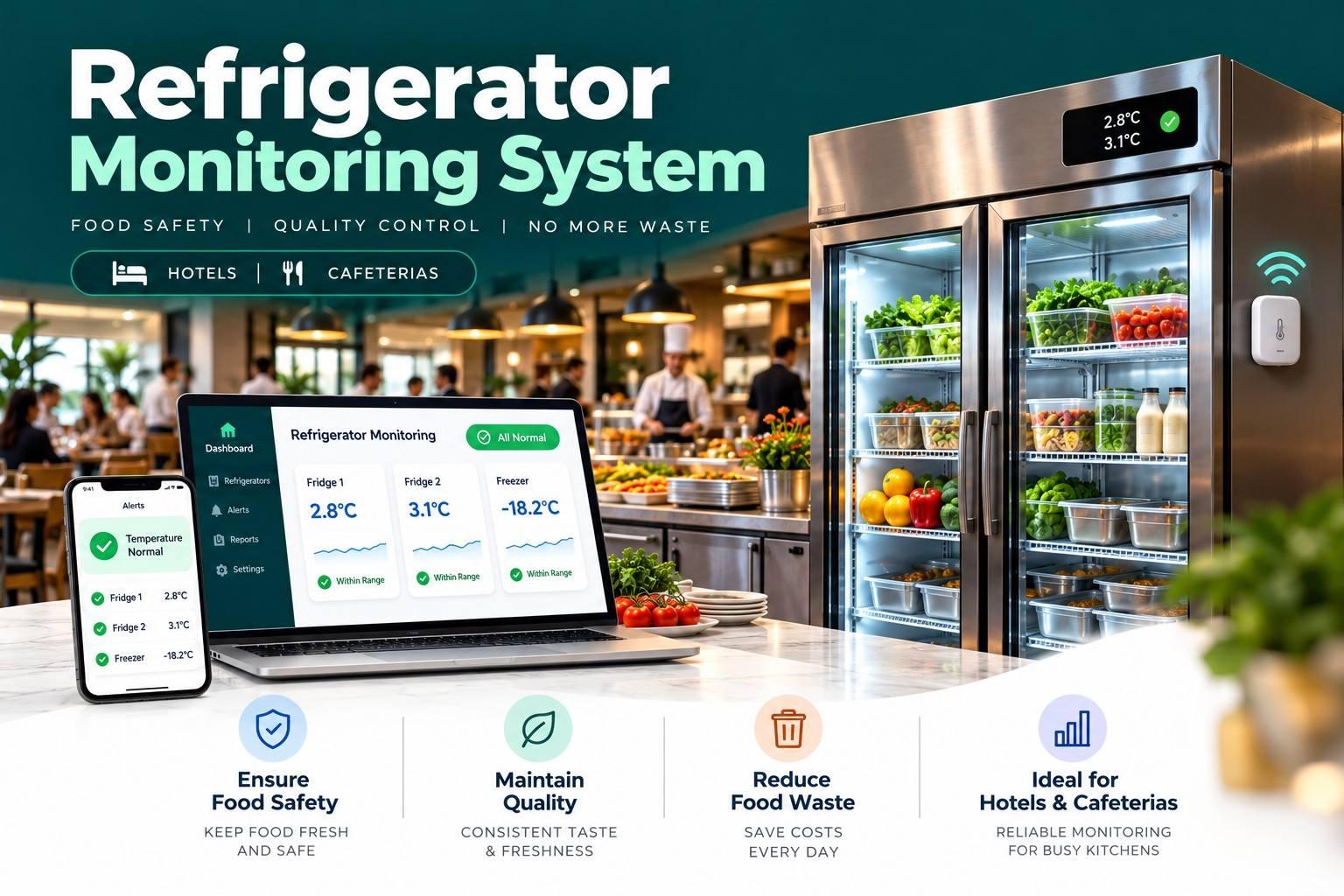
Smart Refrigerator Monitoring Solutions for Commercial Kitchens
A Refrigerator Monitoring System for Hotels and Cafeterias is an essential solution for maintaining food safety, preserving food quality, and improving the efficiency of commercial kitchen operations. Hotels, restaurants, cafeterias, cloud kitchens, and catering facilities store large quantities of perishable food items that require consistent temperature control. Even a minor temperature fluctuation can lead to food spoilage, bacterial growth, inventory losses, and food safety risks.
A modern refrigerator temperature monitoring system continuously tracks the temperature of refrigerators, freezers, cold rooms, and walk-in chillers. With real-time monitoring, automated alerts, and temperature data logging, kitchen managers can identify potential issues before they affect stored food. This technology helps businesses maintain the required storage conditions while reducing manual inspection and operational costs.
Why Do Hotels and Cafeterias Need a Refrigerator Monitoring System?
Hotels and cafeterias operate throughout the day, often storing dairy products, meat, seafood, vegetables, beverages, frozen foods, and prepared meals. Maintaining appropriate storage temperatures is crucial to preserving freshness and minimizing food waste.
A reliable commercial refrigerator monitoring system helps food service businesses monitor multiple refrigeration units from a centralized platform. Instead of manually checking temperatures at regular intervals, staff can receive continuous readings and alerts whenever temperatures move beyond predefined limits.
Key benefits include:
· Real-Time Temperature Monitoring: Monitor refrigerator and freezer temperatures continuously to identify unexpected fluctuations.
· 24/7 Remote Monitoring: Access temperature readings and system status remotely, depending on the monitoring solution.
· Instant Temperature Alerts: Receive notifications through supported channels, such as SMS, email, or mobile applications, when abnormal temperatures are detected.
· Food Safety Compliance: Maintain temperature records that support food safety procedures, internal audits, and applicable regulatory requirements.
· Reduced Food Spoilage: Detect refrigeration problems early and take corrective action before valuable food inventory is compromised.
· Automated Temperature Data Logging: Record historical temperature readings for inspections, reporting, and operational analysis.
· Improved Energy Efficiency: Identify unusual operating patterns and potential refrigeration inefficiencies to support better energy management.
Key Features of a Refrigerator Monitoring System
1. Continuous Temperature Monitoring
A digital refrigerator temperature monitoring system uses temperature sensors to measure conditions inside refrigeration units. The readings help staff verify that food storage areas remain within their configured temperature limits. Multiple sensors can be deployed across refrigerators, freezers, and cold storage rooms according to operational requirements.
2. Real-Time Alerts and Notifications
A refrigerator temperature alarm system notifies designated personnel when temperatures exceed predefined thresholds. Alerts can help staff respond to compressor failures, open refrigerator doors, power interruptions, or other issues that may affect cooling performance, where the system supports detection of these conditions.
3. Remote Monitoring and Centralized Dashboard
A remote refrigerator monitoring system enables authorized users to check temperature readings from a computer, tablet, or smartphone. Hotels with multiple kitchens, storage rooms, or food preparation areas can monitor connected refrigeration equipment through a centralized dashboard, depending on system configuration.
4. Temperature Data Logging and Reports
An automated temperature data logging system stores historical readings with timestamps. These records help managers review temperature trends, investigate incidents, maintain documentation, and demonstrate adherence to established food safety procedures.
5. Monitoring for Walk-In Coolers and Freezers
Large hotels and institutional cafeterias often use walk-in coolers, deep freezers, and cold rooms to store bulk ingredients. A cold room temperature monitoring system helps track these storage environments and provides visibility into changing conditions, helping staff respond promptly to potential risks.
Applications of Refrigerator Monitoring in Hotels and Cafeterias
A commercial kitchen temperature monitoring system is suitable for a wide range of food service environments, including:
· Hotels and Resorts: Monitor kitchen refrigerators, banquet storage areas, freezers, and cold rooms.
· Corporate Cafeterias: Maintain appropriate storage conditions for daily meal preparation and bulk food inventory.
· Restaurants and Cloud Kitchens: Monitor ingredients, prepared foods, and refrigerated supplies.
· Hospitals and Institutional Kitchens: Support temperature monitoring procedures for food storage areas.
· Catering Services: Protect perishable ingredients stored in centralized kitchens and refrigeration facilities.
· Food Storage and Distribution Facilities: Monitor refrigerated storage environments to help maintain product quality.
By implementing a smart refrigerator monitoring system, businesses can improve operational visibility, reduce dependence on manual temperature checks, and establish more consistent food storage practices.
Conclusion
Tektronix Technologies provides a professional solution approach for businesses looking to implement a Refrigerator Monitoring System for Hotels and Cafeterias. An effective monitoring solution combines accurate temperature sensors, continuous monitoring, configurable alerts, remote access, and reliable data logging to help commercial kitchens maintain suitable food storage conditions.
For hotels, cafeterias, restaurants, and institutional kitchens, investing in a commercial refrigerator temperature monitoring system can help reduce food wastage, improve response times, support food safety documentation, and optimize refrigeration management. Selecting a system based on the number of refrigeration units, required temperature ranges, connectivity, alert methods, and reporting needs helps businesses build a reliable and scalable monitoring solution.
Frequently Asked Questions (FAQs)
1. What is a refrigerator monitoring system for hotels and cafeterias?
A refrigerator monitoring system is a technology solution that continuously measures and records refrigerator, freezer, and cold room temperatures. It can provide real-time readings, alerts, and reports to help food service businesses maintain appropriate storage conditions.
2. How does a refrigerator temperature monitoring system work?
The system uses temperature sensors installed inside refrigeration units. The sensors transmit readings to a monitoring device or connected platform, where users can view temperature data and receive alerts when readings exceed configured limits.
3. Can I monitor hotel refrigerators remotely?
Yes. A remote refrigerator monitoring system can allow authorized users to view temperatures and receive notifications through a web dashboard or mobile application, depending on the system's connectivity and features.
4. How does refrigerator monitoring help reduce food wastage?
Continuous temperature monitoring helps identify abnormal temperature changes early. Timely alerts allow staff to investigate refrigeration problems and take corrective action before food quality is compromised. The actual reduction in waste depends on operating practices and the monitoring system's response time.
5. Is a refrigerator monitoring system useful for food safety compliance?
Yes. A refrigerator temperature data logging system can provide timestamped records that support food safety procedures, inspections, and internal audits. Businesses should configure monitoring limits and documentation practices according to applicable food safety regulations and the requirements for their stored products.

 English
 Arabic
 French
 Spanish
 Portuguese
 Deutsch
 Turkish
 Dutch
Dutch
 Russian
 Romaian
 Portuguese (Brazil)
 Greek
Greek
