


Venous Leak: Causes, Symptoms, Diagnosis, and Treatment
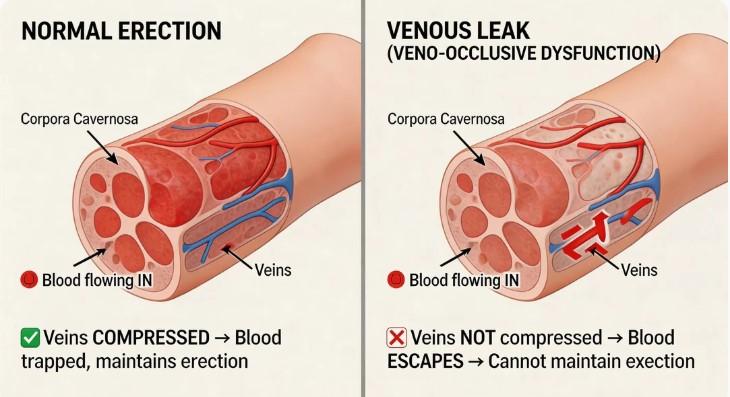
Venous leak is a condition associated with erectile dysfunction (ED) in which a man may be able to achieve an erection but has difficulty keeping it firm for long enough for satisfactory sexual activity. The medical term often used for this problem is veno-occlusive erectile dysfunction.
Although the term "venous leak" is widely used, the problem is not always caused by a literal leak in the veins. Instead, it generally refers to difficulty with the natural mechanism that helps keep blood inside the penis during an erection.
For men experiencing erection problems, venous leak can be a frustrating and sensitive issue. The good news is that erectile dysfunction has several treatment options, and a proper medical evaluation can help determine the actual cause.
What Is Venous Leak?
To understand venous leak, it is helpful to understand how a normal erection works.
When a man becomes sexually aroused, blood flow to the penis increases. The erectile tissues, particularly the corpora cavernosa, fill with blood and expand. As they expand, they compress the veins that normally carry blood away from the penis.
This compression reduces blood outflow and helps maintain a firm erection.
In suspected venous leak, this process may not work effectively. Blood may leave the erectile tissues too readily, making it difficult to maintain sufficient pressure and rigidity.
As a result, a man may experience an erection initially but notice that it becomes softer during sexual activity.
What Does Venous Leak Feel Like?
The symptoms can vary between individuals, but the most common complaint is difficulty maintaining an erection.
Common signs may include:
-
Achieving an erection but losing firmness quickly
-
An erection becoming soft during intercourse
-
Difficulty maintaining an erection without continuous stimulation
-
Erections that are not firm enough for satisfactory sex
-
Fluctuating erection firmness
-
Anxiety or frustration related to sexual performance
It is important to remember that these symptoms do not automatically mean that a person has venous leak. Several other conditions can produce similar symptoms.
Venous Leak and Erectile Dysfunction
Venous leak is associated with a particular mechanism of erectile dysfunction, but the two terms are not interchangeable.
Erectile dysfunction is a broad condition involving difficulty achieving or maintaining an erection adequate for sexual activity.
Possible causes include:
-
Poor blood circulation
-
Diabetes
-
High blood pressure
-
High cholesterol
-
Hormonal problems
-
Nerve disorders
-
Certain medications
-
Psychological factors
-
Penile injury
-
Cardiovascular disease
-
Structural changes in penile tissue
Venous or veno-occlusive dysfunction is only one possible contributor.
What Causes Venous Leak?
Several factors may contribute to problems with the normal erectile mechanism.
Penile or Pelvic Injury
Trauma involving the penis, pelvis, or surrounding tissues can sometimes affect the structures responsible for normal erections.
Diabetes
Diabetes can damage blood vessels and nerves over time. Poorly controlled blood sugar may therefore increase the risk of erectile dysfunction.
Cardiovascular Problems
Healthy blood vessels are essential for normal erections. Conditions such as hypertension, high cholesterol, obesity, and cardiovascular disease can negatively affect erectile function.
Penile Surgery
Certain pelvic, prostate, or penile surgeries may affect nerves, blood vessels, or erectile tissues and subsequently contribute to ED.
Peyronie's Disease
Peyronie's disease causes scar tissue to develop inside the penis. In some men, this can interfere with normal erectile function.
Aging
Erectile problems become more common with age because of changes in vascular health, nerve function, hormones, and erectile tissues. However, persistent erectile dysfunction should not simply be dismissed as a normal part of aging.
Other Erectile Tissue Problems
Changes affecting the structure or elasticity of erectile tissue may interfere with the ability of the penis to maintain the pressure needed for a firm erection.
Can Stress Cause Symptoms Similar to Venous Leak?
Yes.
Psychological factors can have a significant effect on erections. Performance anxiety, stress, depression, relationship difficulties, and fear of sexual failure may make it difficult to maintain an erection.
For example, a man may achieve a good erection but become anxious during intercourse. The resulting decrease in arousal may cause the erection to become softer.
This can feel similar to venous leak even when there is no significant vascular abnormality.
That is why a proper evaluation is important before concluding that venous leak is the cause.
How Is Venous Leak Diagnosed?
A healthcare professional usually begins with a detailed medical and sexual history.
They may ask about:
-
When erection problems started
-
How frequently they occur
-
Whether you can achieve an erection
-
Whether you can maintain an erection
-
Morning or spontaneous erections
-
Sexual desire
-
Current medications
-
Existing medical conditions
-
Previous injuries
-
Previous surgeries
-
Smoking and alcohol consumption
-
Psychological or relationship factors
A physical examination may also be performed.
Penile Doppler Ultrasound
One of the most useful investigations when a vascular cause of erectile dysfunction is suspected is penile duplex Doppler ultrasound.
The test evaluates blood flow within the penile blood vessels and can provide information about arterial blood flow and the veno-occlusive mechanism.
The test is typically performed after medication is used to produce an erection under medical supervision.
A specialist interprets the results alongside the patient's symptoms and other clinical findings.
Why You Should Not Self-Diagnose Venous Leak
Many men search online after experiencing difficulty maintaining an erection and assume that they have venous leak.
However, erection problems can have many causes.
For instance, anxiety, medication side effects, diabetes, cardiovascular disease, hormonal problems, or inadequate sexual stimulation can all affect erection quality.
Therefore, a diagnosis should not be based solely on the fact that an erection becomes soft.
A professional evaluation can help identify whether the problem is vascular, hormonal, psychological, medication-related, or caused by another condition.
Venous Leak Treatment Options
Treatment depends on the underlying cause and the severity of erectile dysfunction.
There is no single treatment that works for every man.
1. Lifestyle Changes
Improving overall health can support better erectile function.
Helpful lifestyle measures include:
-
Exercising regularly
-
Maintaining a healthy body weight
-
Eating a balanced diet
-
Quitting smoking
-
Limiting excessive alcohol consumption
-
Managing blood pressure
-
Controlling blood sugar
-
Managing cholesterol
-
Getting sufficient sleep
-
Reducing chronic stress
Because erections depend heavily on healthy blood vessels and nerves, improving cardiovascular health can also benefit sexual health.
2. Oral Erectile Dysfunction Medicines
Doctors may prescribe medications known as PDE5 inhibitors for erectile dysfunction.
Common examples include:
-
Sildenafil
-
Tadalafil
-
Vardenafil
-
Avanafil
These medicines help improve the natural blood-flow processes involved in an erection.
They do not necessarily correct the underlying cause of veno-occlusive dysfunction, and they may not be suitable for everyone.
A doctor should determine whether these medicines are appropriate, particularly if a person takes nitrate medications or has certain cardiovascular conditions.
3. Vacuum Erection Devices
A vacuum erection device uses controlled negative pressure to draw blood into the penis.
A constriction ring may then help reduce blood leaving the penis and maintain rigidity.
This approach can be useful for some men who cannot take oral ED medication or do not obtain satisfactory results from it.
4. Penile Injections
Intracavernosal injections involve injecting medication directly into the erectile tissue.
These medicines can produce an erection by relaxing smooth muscle and increasing blood flow.
Because incorrect use can cause complications, including a prolonged erection, injections should only be used under appropriate medical guidance.
5. Constriction Devices
A penile constriction ring may help some men maintain an erection by slowing venous outflow.
It is generally used for a limited period and according to medical or product guidance.
6. Penile Implants
For men with severe erectile dysfunction who do not respond adequately to other treatments, a penile implant may be considered.
A penile prosthesis is surgically placed inside the penis and allows the patient to create an erection when desired.
This is generally considered a later-line treatment after other appropriate options have been discussed.
Can Venous Leak Be Cured?
Whether venous leak can be completely corrected depends on its underlying cause.
Some contributing factors may be treatable or manageable. In other cases, treatment focuses on helping the man achieve and maintain a satisfactory erection rather than correcting the vascular mechanism itself.
The appropriate treatment should therefore be determined after a proper diagnosis.
Can Venous Leak Affect Fertility?
Venous leak primarily affects erectile function rather than sperm production.
Therefore, having a venous or veno-occlusive erectile problem does not automatically mean that a man is infertile.
However, severe erectile dysfunction can make intercourse difficult, which may indirectly affect attempts to conceive.
If fertility is a concern, a doctor can evaluate sperm health and other reproductive factors separately.
Can Young Men Have Venous Leak?
Yes, although erection problems in younger men can have many possible causes.
Performance anxiety and psychological factors may play an important role, but physical causes are also possible.
A younger man experiencing persistent ED may need evaluation for factors such as:
-
Diabetes
-
Medication effects
-
Hormonal abnormalities
-
Cardiovascular risk factors
-
Smoking
-
Pelvic or penile injury
-
Neurological problems
-
Psychological factors
Age alone does not determine the cause of erectile dysfunction.
When Should You See a Doctor?
Occasional difficulty getting or maintaining an erection is common. However, you should consider seeing a healthcare professional if the problem becomes frequent or persistent.
Medical evaluation is especially important if:
-
ED continues for several weeks or months
-
You frequently lose erections during sexual activity
-
Erections are consistently insufficiently firm
-
The problem is affecting your relationship
-
You have diabetes or cardiovascular risk factors
-
ED develops after an injury or surgery
-
You also experience reduced sexual desire or other symptoms
Persistent erectile dysfunction can sometimes be associated with underlying cardiovascular or metabolic health problems, so it should not always be treated as an isolated sexual issue.
Frequently Asked Questions About Venous Leak
Is venous leak a real condition?
Yes. Veno-occlusive dysfunction is a recognized mechanism that can contribute to erectile dysfunction. However, the term "venous leak" is often used broadly, and proper testing is needed to determine whether impaired veno-occlusion is actually present.
What is the biggest sign of venous leak?
The most commonly reported symptom is difficulty maintaining an erection. A man may become erect but lose firmness relatively quickly.
Can venous leak be treated naturally?
Healthy lifestyle habits can improve overall cardiovascular and sexual health, but there is no guaranteed natural treatment that permanently corrects confirmed veno-occlusive dysfunction.
Can Viagra treat venous leak?
Sildenafil and similar ED medications can help some men achieve and maintain erections. However, their effectiveness varies, and they do not necessarily repair the underlying vascular mechanism.
What test is used for venous leak?
Penile duplex Doppler ultrasound is commonly used when a vascular cause of erectile dysfunction is suspected. A qualified clinician should interpret the results in the context of the patient's overall symptoms.
Is venous leak permanent?
Not necessarily. The outlook depends on the underlying cause and the individual's response to treatment.
Does venous leak mean infertility?
No. Venous leak primarily concerns erectile function and does not automatically indicate a problem with sperm production or fertility.
Can venous leak cause loss of erection during intercourse?
Yes. Difficulty maintaining an erection is one of the main complaints associated with suspected veno-occlusive dysfunction. However, other physical and psychological conditions can cause the same symptom.
Conclusion
Venous leak, commonly referred to medically as veno-occlusive erectile dysfunction, is associated with difficulty maintaining adequate penile rigidity because the normal mechanism that restricts blood outflow during an erection is not working effectively.
The condition can be associated with vascular problems, diabetes, penile or pelvic injury, surgery, structural changes, and other health conditions. Psychological factors can also produce symptoms that resemble venous leak.
Because erection problems have many possible causes, self-diagnosis is not recommended. A qualified healthcare professional can evaluate the symptoms and, when appropriate, use tests such as penile Doppler ultrasound to investigate penile blood flow.
Depending on the cause and severity, treatment may include lifestyle changes, oral ED medications, vacuum devices, injectable therapy, constriction devices, or penile implants.
If you are experiencing persistent difficulty maintaining an erection, getting an appropriate medical evaluation is the best way to understand the cause and identify a suitable treatment plan.
 Turkish
 English
 Arabic
 French
 Spanish
 Portuguese
 Deutsch
 Dutch
Dutch
 Italiano
 Russian
 Romaian
 Portuguese (Brazil)
 Greek
Greek
