


High-Tech Architecture: When Buildings Wear Their Engineering on the Outside
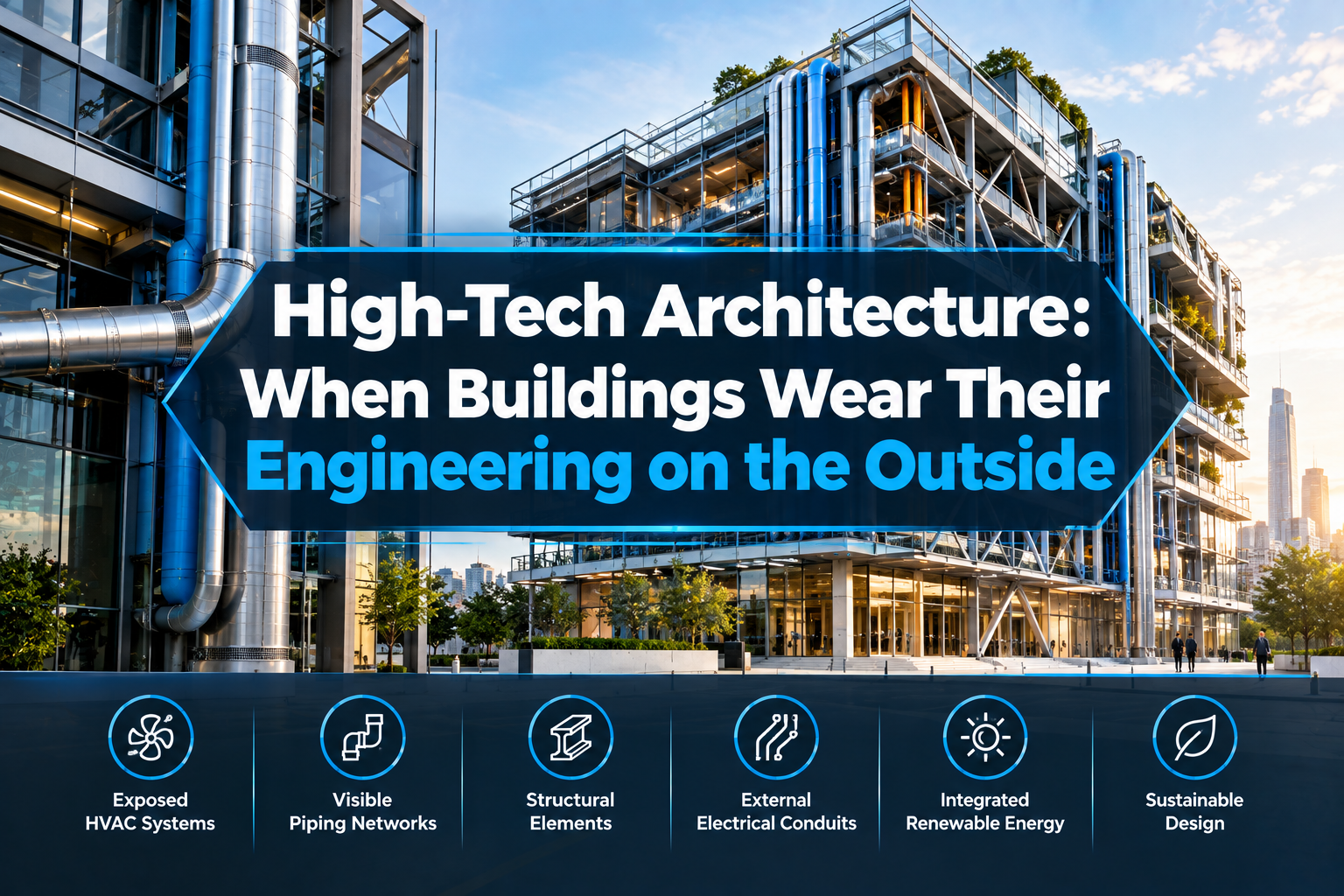
Most architecture tries to hide how it works. Pipes are buried in walls, structural beams are boxed in behind drywall, and mechanical systems disappear into ceilings where nobody has to think about them. High-tech architecture does the opposite. It puts the building's inner workings on full display, turning ducts, beams, and support structures into the design itself.
It's one of the most distinctive movements in modern architecture, and once you understand what to look for, you'll start noticing its influence everywhere from airports to office towers to museums.
What Defines High-Tech Architecture
High-tech architecture emerged in the 1970s as architects began treating a building's structure and systems not as things to conceal, but as things worth celebrating.
Structure as Ornament
In a traditional building, decoration comes from applied details moldings, columns, facades layered onto a hidden frame. High-tech architecture flips that logic. The steel beams, exposed trusses, and visible support systems become the ornament. There's nothing extra layered on top; the engineering itself is the aesthetic.
Exposed Mechanical Systems
Perhaps the most recognizable trait of this style is its willingness to show off ductwork, plumbing, and ventilation on the building's exterior or in fully visible interior spaces. What would normally be hidden infrastructure becomes a defining visual feature, often painted in bold colors to make the engineering impossible to ignore.
Industrial Materials Used Honestly
Steel, glass, and aluminum dominate high-tech buildings, and they're typically used in ways that highlight their industrial origin rather than disguise it. Glass curtain walls expose the structural frame behind them, and metal components are often left raw or lightly finished rather than dressed up.
Why This Style Emerged When It Did
Architecture doesn't evolve in a vacuum; it responds to the technology, materials, and cultural mood of its era.
A Reaction to Modernism's Limits
By the late 1960s, many architects felt modernism had become rigid and predictable. High-tech architecture is pushed back by embracing flexibility and transparency, treating engineering not as a constraint to hide but as a language to build with.
Advances in Materials and Construction
New developments in steel fabrication, structural glass, and prefabricated components gave architects tools that simply didn't exist a generation earlier. High-tech architecture leaned into these advances instead of downplaying them, using off-site manufacturing and modular construction to create buildings that looked and functioned like precision machinery.
Iconic Examples Worth Knowing
A handful of buildings did more than any manifesto to define what high-tech architecture actually looks like in practice.
The Centre Pompidou
Designed by Renzo Piano and Richard Rogers, the Centre Pompidou in Paris remains the style's most famous statement. Its brightly colored pipes, escalators, and structural framework run along the exterior, turning what's normally hidden infrastructure into the building's most memorable feature.
The Lloyd's Building
In London, the Lloyd's Building pushed the same idea into the world of corporate architecture, wrapping its lifts, stairwells, and ductwork around the outside of the structure rather than tucking them away inside.
Work by Norman Foster and Nicholas Grimshaw
Architects like Norman Foster and Nicholas Grimshaw became closely associated with this movement, exploring how modular construction and exposed structural systems could create buildings that felt simultaneously futuristic and functional.
Why High-Tech Architecture Still Matters Today
Even as architectural trends have moved on, the influence of this style hasn't faded. Many contemporary buildings still borrow its core idea that a building's function shouldn't be hidden, but expressed.
Sustainability and Transparency Go Hand in Hand
Modern high-tech-influenced buildings often incorporate visible solar panels, natural ventilation systems, and energy-efficient technology as part of the design itself, continuing the movement's original instinct to make engineering visible rather than concealed.
It Continues to Shape Visualization and Design Work
For architects, designers, and visualization studios working on ambitious modern projects, understanding this style's principles, exposed structure, honest materials, and functional transparency remains genuinely useful, whether the goal is a literal high-tech building or simply borrowing its visual language for a bold, industrial-inspired design. There's a thorough breakdown of the style's history, characteristics, and influence in this piece on high-tech architecture, which is worth a read for anyone looking to understand where the movement came from and where it's headed.
Final Thoughts
High-tech architecture asked a simple but radical question: what if a building didn't hide how it worked? Decades later, that question still shapes how architects think about transparency, materials, and the relationship between function and form. Whether you're a design student, an architect, or simply someone who appreciates buildings that wear their engineering proudly, this movement is worth understanding not just as history, but as a way of seeing structure itself as art.
For a deeper look at the style's evolution and its key examples, this guide to high-tech architecture offers a solid starting point.

 English
 Arabic
 French
 Spanish
 Portuguese
 Deutsch
 Turkish
 Italiano
 Russian
 Romaian
 Portuguese (Brazil)
 Greek
Greek
