


Do Promotional Gifts Really Increase Brand Awareness? What Businesses Should Know Before Investing
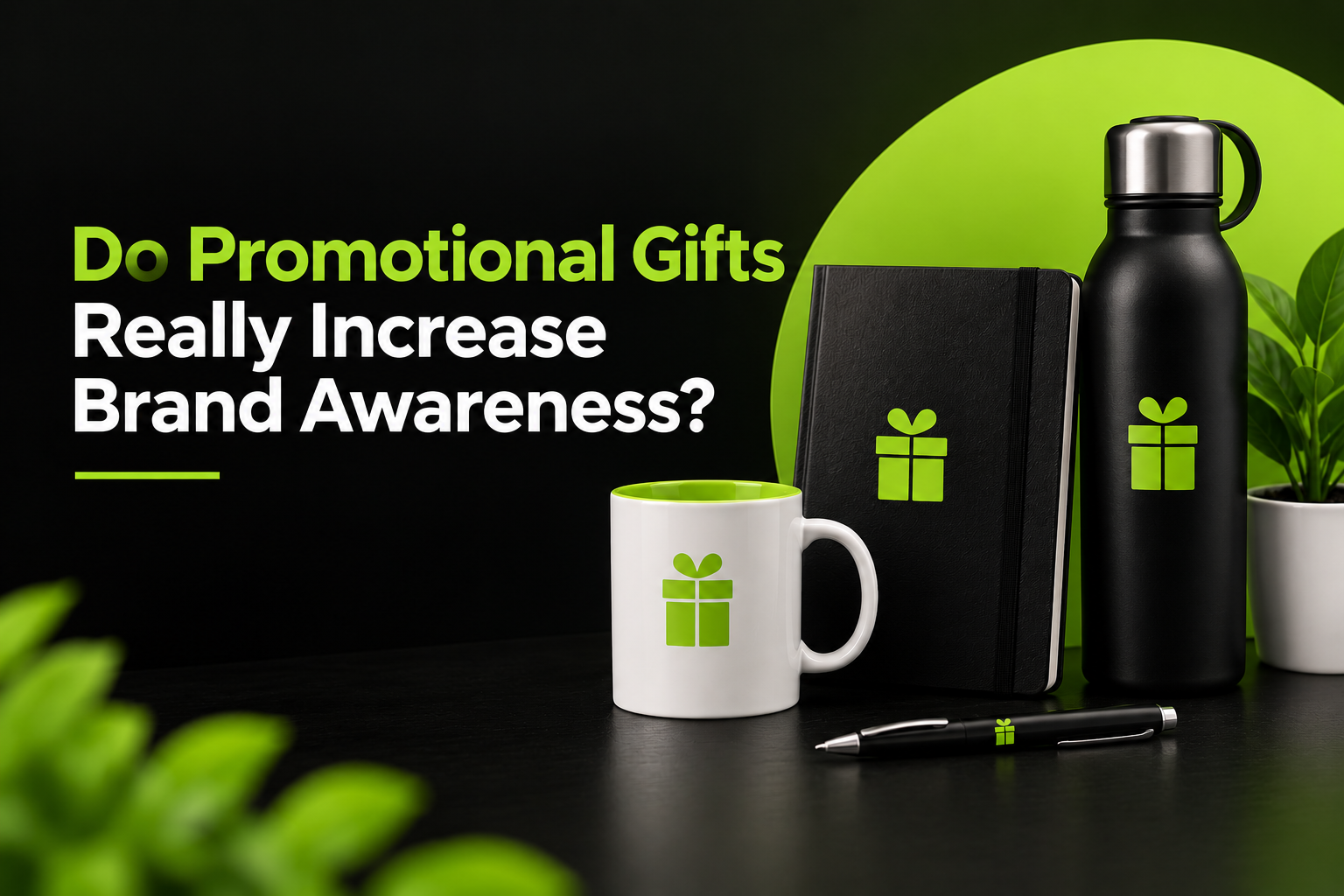
Brand awareness does not appear overnight. People usually need to see, recognize, and remember a business several times before its name becomes familiar. That is why companies use different marketing channels to keep their brands visible.
But what about something physical that customers can actually use?
A useful branded notebook, bottle, pen, bag, or office accessory can remain in someone's environment long after a marketing campaign has finished. This is where promotional gifts can become an interesting part of a broader brand awareness strategy.
Still, should every business invest in them? Not necessarily. The results depend heavily on what you give, who receives it, how you brand it, and whether the product has genuine value.
What Does Brand Awareness Actually Mean?
Brand awareness is simply how familiar people are with your business and what it offers.
Think about the brands you recognize without seeing an advertisement. You may know their colors, logo, packaging, products, or even their tone of communication. That familiarity did not happen because you saw one advertisement once. It developed through repeated exposure.
Promotional gifts can contribute to this process by putting a physical representation of your business into someone's daily surroundings.
For example, a customer may keep a branded notebook on a desk and see the company logo every morning. A bottle might travel between home, work, and the gym. A useful bag could be carried to meetings or events.
The product becomes a small but repeated reminder.
How Promotional Gifts Can Increase Brand Visibility
The biggest advantage of promotional gifting is continued exposure.
An online advertisement disappears when the person scrolls past it. An email can be buried under dozens of new messages. A physical product can stay visible for weeks, months, or even longer if the recipient finds it useful.
This does not mean every item automatically creates brand awareness.
The product has to earn its place in the recipient's life.
Usefulness Comes Before Branding
A company should not begin by asking, "What can we print our logo on?"
A better question is, "What would our audience actually use?"
That change in thinking can dramatically improve a campaign.
If your target audience works in offices, practical stationery may make sense. If you regularly attend exhibitions, useful bags or drinkware may be more appropriate. If your customers travel frequently, compact travel accessories could have stronger relevance.
When the product is useful, the branding gets more opportunities to be seen.
What Should You Put on a Promotional Gift?
Branding requires balance.
A logo is usually the obvious starting point, but it is not the only option. Depending on the product and campaign objective, businesses may also use a slogan, website address, contact details, social media information, or a QR code.
The right combination depends on the purpose.
For a simple awareness campaign, a recognizable logo and brand name may be enough. For an event campaign designed to drive visitors toward a landing page, a QR code could be more useful.
Avoid trying to place every possible detail on a small product.
A crowded design can make the item look less professional and make the important information harder to remember.
Keep the Brand Easy to Recognize
Consistency matters.
Use your established brand identity wherever possible. The logo, typography, messaging, and overall appearance should feel connected to your other marketing materials.
The objective is recognition.
When someone sees the same visual identity across your website, social media, packaging, advertisements, and physical gifts, the individual elements begin reinforcing one another.
Where Can Businesses Use Promotional Gifts?
Promotional gifting can fit into many different marketing situations.
Trade shows and exhibitions are obvious examples because businesses often need practical ways to remain memorable after an event. A useful gift can give visitors something tangible to take away while also keeping the company visible.
Customer meetings can provide another opportunity. Instead of ending a successful meeting with only a handshake and business card, a thoughtful branded product can leave an additional reminder.
Companies can also use gifts during product launches, networking events, seasonal campaigns, conferences, and community activities.
The important thing is to connect the gift with a specific marketing objective.
Can Promotional Gifts Support Customer Relationships?
Yes, but businesses should understand the difference between awareness and loyalty.
A gift can help someone remember your company. It can create a positive association. It can even encourage a conversation.
However, a branded product alone cannot turn an unhappy customer into a loyal one.
Customer experience still matters most.
Think of a promotional gift as a bridge. It can help connect your brand with the customer, but there still needs to be something meaningful on the other side.
For promotional gifts, businesses should therefore focus on thoughtful selection rather than simply maximizing quantity.
How Much Should Businesses Invest?
There is no universal budget.
A business giving products to hundreds of exhibition visitors will naturally approach purchasing differently from a company sending premium appreciation gifts to a small group of major clients.
Start with the campaign objective, audience size, and expected usefulness of the product.
Then consider:
-
Product quality
-
Quantity required
-
Personalization requirements
-
Packaging
-
Distribution
-
Production and delivery time
A cheaper product is not always the more economical choice. If recipients immediately discard it, the potential marketing value disappears with it.
Sometimes spending slightly more on a useful product can create considerably more exposure.
How Can You Measure Brand Awareness From Gifts?
Measuring physical marketing can be challenging, but it is not impossible.
Businesses can use QR codes connected to dedicated landing pages, campaign specific discount codes, or unique contact methods. These tools can provide measurable signals when recipients interact with the campaign.
Feedback can also provide useful information.
Ask customers how they discovered the company. Monitor whether event visitors follow up after receiving a gift. Track inquiries connected to specific campaigns and compare results across different approaches.
Do not expect every branded item to produce an immediate sale.
Brand awareness often works gradually. The person may remember your company today and contact you several months later when they actually need your product or service.
Mistakes That Can Reduce the Impact
Poor product selection is one of the biggest problems.
If a gift has no practical purpose, recipients may ignore it or throw it away. That means the company paid for branding that received almost no exposure.
Another issue is excessive branding. A product covered with large logos and promotional messages may feel more like an advertisement than a genuine gift.
Timing can matter too. Giving the right product at the right event can make it more memorable.
Finally, do not forget presentation. Even an affordable product can feel more thoughtful when it is packaged and presented properly.
Should Every Business Use Promotional Gifts?
Not necessarily.
Promotional gifting works best when it fits the audience and supports an existing marketing strategy. A company selling highly specialized services may need a different approach from a retailer trying to increase local recognition.
Before investing, ask yourself three simple questions.
Will people use this product?
Will they remember our brand?
Can this gift support a larger marketing objective?
If the answer to all three is yes, the campaign has a stronger foundation.
Conclusion
So, do promotional gifts really increase brand awareness?
They can, especially when businesses choose useful products, apply clear branding, understand their audience, and connect gifting with a broader marketing strategy. The real value is not simply in giving something away. It comes from creating repeated opportunities for people to see and remember your brand.
The strongest campaigns do not try to make the biggest impression for one moment. They create small reminders that continue working after the event, meeting, or campaign has ended.
When planned thoughtfully, promotional gifts can become a practical extension of your marketing rather than just another business expense.
FAQs
1. Are promotional gifts effective for small businesses?
Yes. Small businesses can use promotional gifting to increase local visibility, support networking, attract attention at events, and keep their brand in front of existing customers.
2. What makes a promotional gift effective?
Usefulness, quality, relevance, attractive presentation, and clear branding are important. The recipient should have a reason to keep using the product.
3. Should promotional gifts always include a company logo?
A logo is usually useful for brand recognition, but it should not overwhelm the product. A clean and recognizable design often looks more professional.
4. Can promotional gifts generate direct sales?
They can support sales, particularly when combined with QR codes, special offers, landing pages, or campaign specific codes. However, their primary value may be longer term brand recognition rather than an immediate purchase.
5. How can a business choose the right promotional gift?
Start with your audience. Consider their lifestyle, workplace, interests, and likely needs. Then choose a useful product that naturally gives your brand repeated visibility.

 English
 Arabic
 French
 Portuguese
 Deutsch
 Turkish
 Dutch
Dutch
 Italiano
 Russian
 Romaian
 Portuguese (Brazil)
 Greek
Greek
