


Choledochal Cyst Types: Understanding the Different Classifications and Treatment Options
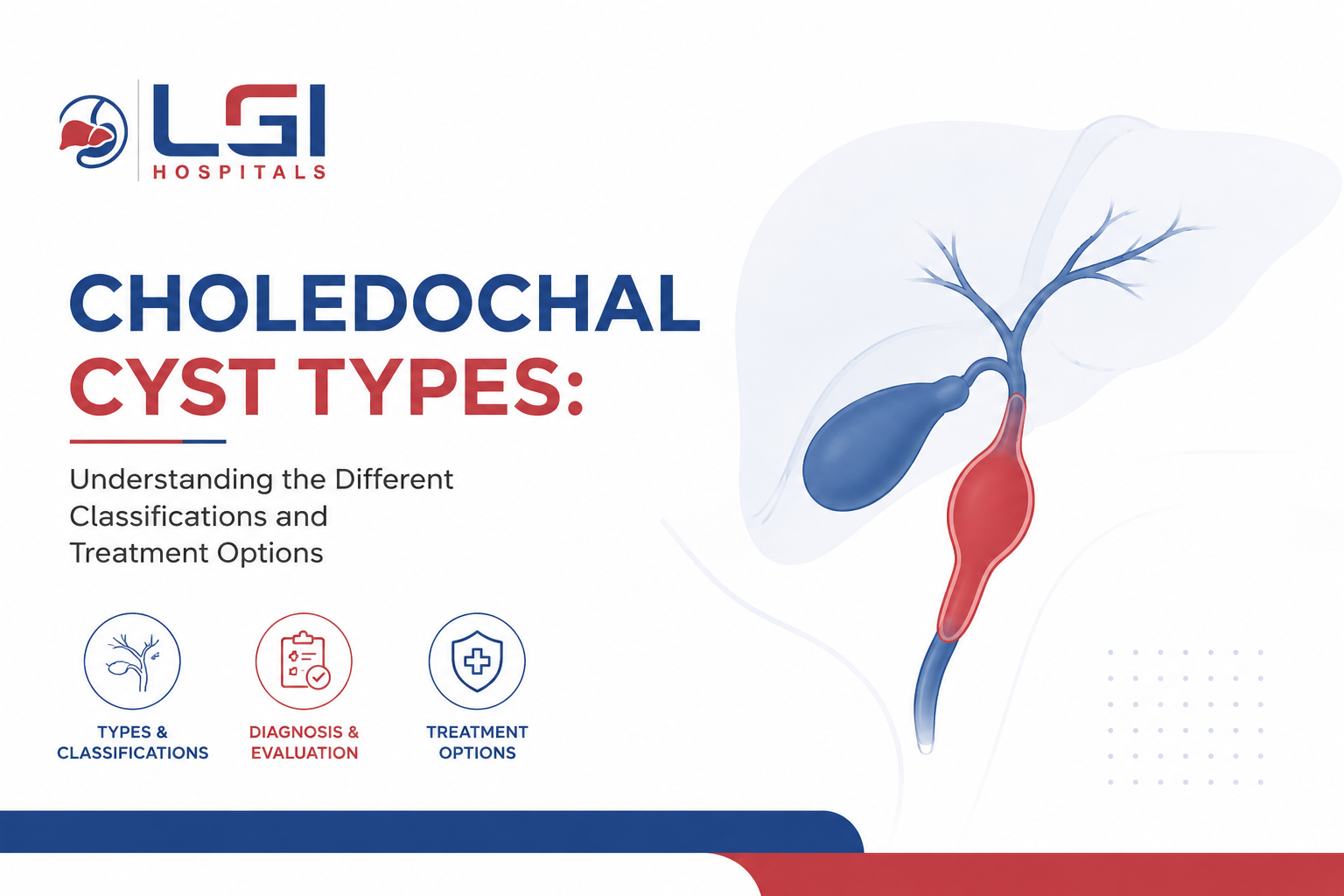
Choledochal cysts are rare abnormalities of the bile ducts that can affect both children and adults. Although uncommon, they can lead to serious complications if left untreated, including recurrent infections, pancreatitis, and an increased risk of bile duct cancer. Understanding the different choledochal cyst types helps patients and caregivers better understand the condition, the recommended treatment, and the importance of early medical care.
This guide explains the Todani classification of choledochal cysts in simple language, along with their symptoms, diagnosis, and treatment options.
What Is a Choledochal Cyst?
A choledochal cyst is an abnormal enlargement or dilation of the bile ducts, which carry bile from the liver to the small intestine. Bile plays an essential role in digesting fats and removing waste products from the body.
Doctors classify these cysts using the Todani classification, a system that groups choledochal cysts based on their location and appearance. Knowing the specific type helps specialists determine the most appropriate treatment plan and anticipate possible complications.
Types of Choledochal Cysts
Type I Choledochal Cyst
Type I is the most common form, accounting for nearly 80% to 90% of cases. It involves a balloon-like dilation of the common bile duct outside the liver.
Patients may experience abdominal pain, jaundice, or repeated bile duct infections. Treatment usually involves complete surgical removal of the affected bile duct, followed by reconstruction to restore normal bile flow.
Type II Choledochal Cyst
A Type II choledochal cyst is a true diverticulum, meaning it appears as a small pouch projecting from the common bile duct.
Although less common, surgery is generally recommended because the cyst can become infected or develop other complications over time. Surgical removal is often straightforward, with excellent long-term outcomes.
Type III Choledochal Cyst (Choledochocele)
A Type III choledochal cyst, also called a choledochocele, develops within the wall of the duodenum, the first part of the small intestine.
Symptoms may include abdominal pain, pancreatitis, or blockage of bile flow. Depending on its size and symptoms, treatment may involve an endoscopic procedure or surgery.
Type IV Choledochal Cyst
Type IV cysts involve multiple cystic dilations and are divided into two subtypes.
Type IVA
Type IVA affects both the bile ducts inside the liver (intrahepatic) and outside the liver (extrahepatic). Because multiple ducts are involved, treatment is often more complex and may require extensive surgery.
Type IVB
Type IVB involves multiple cysts affecting only the extrahepatic bile ducts. Surgical removal remains the preferred treatment in most cases.
Type V Choledochal Cyst (Caroli Disease)
Type V, also known as Caroli disease, affects only the bile ducts inside the liver. Multiple cystic dilations can lead to recurrent infections, bile duct stones, and liver damage.
Treatment depends on the extent of liver involvement and may include medications, surgery, or, in severe cases, liver transplantation.
What About Type VI?
Some recent medical literature describes a rare Type VI choledochal cyst, which involves the cystic duct connecting the gallbladder to the common bile duct. Although this type is recognized in some studies, it is not part of the original Todani classification and remains extremely uncommon.
Quick Overview of Choledochal Cyst Types
|
Type |
Location |
Main Feature |
Typical Treatment |
|
Type I |
Common bile duct |
Single dilation |
Surgical removal |
|
Type II |
Common bile duct |
Diverticulum |
Surgical excision |
|
Type III |
Duodenum |
Choledochocele |
Endoscopic or surgical treatment |
|
Type IVA |
Inside and outside liver |
Multiple cysts |
Surgery with reconstruction |
|
Type IVB |
Outside liver |
Multiple extrahepatic cysts |
Surgical removal |
|
Type V |
Inside liver |
Caroli disease |
Individualized treatment |
Common Symptoms
Symptoms vary depending on the type and severity of the cyst but may include:
-
Persistent abdominal pain
-
Jaundice (yellowing of the skin and eyes)
-
Fever
-
Recurrent bile duct infections
-
Nausea or vomiting
-
Recurrent pancreatitis
-
Abdominal lump, particularly in children
Some people may remain symptom-free for years before the condition is discovered during imaging tests.
How Are Choledochal Cysts Diagnosed?
Doctors use a combination of clinical evaluation and imaging studies to diagnose choledochal cysts.
Common investigations include:
-
Ultrasound
-
Magnetic Resonance Cholangiopancreatography (MRCP)
-
CT scan
-
ERCP in selected cases
-
Blood tests to evaluate liver function and detect infection
Accurate diagnosis helps determine the cyst type and guides treatment planning.
Treatment Options
Treatment depends on the type of choledochal cyst, its size, symptoms, and associated complications.
Most patients require surgical removal of the cyst to reduce the risk of infection and future complications. Surgery often includes biliary reconstruction to restore normal bile drainage.
Certain Type III choledochoceles may be managed using endoscopic treatment rather than open surgery.
Early treatment is important because delaying surgery may increase the risk of recurrent infections, pancreatitis, and long-term complications.
Patients seeking expert care for complex biliary disorders can benefit from the advanced gastroenterology services offered at LGI Hospitals, where experienced specialists provide comprehensive evaluation and personalized treatment for gastrointestinal and hepatobiliary conditions.
When Should You See a Specialist?
You should consult a gastroenterologist if you experience:
-
Persistent abdominal pain
-
Recurrent jaundice
-
Repeated episodes of pancreatitis
-
Fever with abdominal discomfort
-
Recurrent bile duct infections
Prompt medical evaluation can help prevent serious complications and improve treatment outcomes. If you're experiencing these symptoms, book an appointment with the experienced specialists at LGI Hospitals for timely diagnosis and expert digestive care.
FAQs
What is a Type 2 choledochal cyst surgery?
Type 2 choledochal cyst surgery involves removing the diverticulum arising from the common bile duct. The remaining bile duct is then repaired to restore normal bile flow and reduce the risk of future complications.
What is a Type 6 choledochal cyst?
Type VI choledochal cyst is a rare cyst involving the cystic duct. It is described in some medical literature but is not included in the original Todani classification.
What is a Type 3 choledochal cyst choledochocele?
A Type III choledochal cyst, or choledochocele, is a cystic dilation located within the wall of the duodenum where the bile duct enters the intestine. Treatment may involve endoscopic or surgical management depending on symptoms.
What is a Type 4a and 4b choledochal cyst?
Type IVA involves multiple cysts affecting both intrahepatic and extrahepatic bile ducts, while Type IVB involves multiple cysts affecting only the extrahepatic bile ducts. Type IVA is generally more complex and often requires more extensive treatment.
Conclusion
Understanding the different choledochal cyst types is an important step toward making informed healthcare decisions. The Todani classification helps doctors accurately diagnose the condition and choose the most appropriate treatment for each patient. Since untreated choledochal cysts can lead to serious complications, early diagnosis and timely intervention are essential. With expert evaluation and individualized treatment, LGI Hospitals helps patients manage complex biliary disorders and achieve better long-term digestive health.
Medical Disclaimer
This article is intended for educational and informational purposes only and should not be considered a substitute for professional medical advice, diagnosis, or treatment. If you have symptoms suggestive of a choledochal cyst or any other digestive condition, consult a qualified gastroenterologist for an accurate diagnosis and personalized treatment plan.

 English
 Arabic
 French
 Portuguese
 Deutsch
 Turkish
 Dutch
Dutch
 Italiano
 Russian
 Romaian
 Portuguese (Brazil)
 Greek
Greek